- English
- French
- German
- Portuguese
- Spanish
- Russian
- Japanese
- Korean
- Arabic
- Greek
- German
- Turkish
- Italian
- Danish
- Romanian
- Indonesian
- Czech
- Afrikaans
- Swedish
- Polish
- Basque
- Catalan
- Esperanto
- Hindi
- Lao
- Albanian
- Amharic
- Armenian
- Azerbaijani
- Belarusian
- Bengali
- Bosnian
- Bulgarian
- Cebuano
- Chichewa
- Corsican
- Croatian
- Dutch
- Estonian
- Filipino
- Finnish
- Frisian
- Galician
- Georgian
- Gujarati
- Haitian
- Hausa
- Hawaiian
- Hebrew
- Hmong
- Hungarian
- Icelandic
- Igbo
- Javanese
- Kannada
- Kazakh
- Khmer
- Kurdish
- Kyrgyz
- Latin
- Latvian
- Lithuanian
- Luxembou..
- Macedonian
- Malagasy
- Malay
- Malayalam
- Maltese
- Maori
- Marathi
- Mongolian
- Burmese
- Nepali
- Norwegian
- Pashto
- Persian
- Punjabi
- Serbian
- Sesotho
- Sinhala
- Slovak
- Slovenian
- Somali
- Samoan
- Scots Gaelic
- Shona
- Sindhi
- Sundanese
- Swahili
- Tajik
- Tamil
- Telugu
- Thai
- Ukrainian
- Urdu
- Uzbek
- Vietnamese
- Welsh
- Xhosa
- Yiddish
- Yoruba
- Zulu
How to Use ASTM A36 Steel Pipe in Building Frameworks Effectively?
To use ASTM A36 steel pipe correctly in building frames, you need to know how it is put together, know how it is structurally designed, and know how to use it. It's easy to make and very strong iron steel of this kind. The minimum yield strength is 36,000 psi, which means it's great for general building uses. Proper load analysis, following AISC standards for links, making sure there is enough rust protection, and keeping quality control throughout the fabrication process are all important parts of a successful execution. When designed and fitted correctly, ASTM A36 steel pipe can be used for a wide range of building jobs to provide a stable and cost-effective support.
Understanding ASTM A36 Steel Pipe Fundamentals
For making structures, ASTM A36 steel pipe is one of the most flexible materials on the market right now. This type of carbon steel has to meet strict standards that spell out both its chemical makeup and how well it works mechanically. The material has a highest carbon content of about 0.26% and managed amounts of manganese, phosphorus, and sulfur. This makes for a balanced makeup that ensures stable structural performance.
Chemical Composition and Mechanical Properties
ASTM A36 steel pipe is great for building things because it can bend and move. The yield strength of this material is at least 36,000 psi, and its tensile strength is between 58,000 and 80,000 psi. This means that it can regularly hold weight for framework uses. Because it has expansion properties, the material is fairly flexible. This means that it can safely bend under stress without breaking quickly.
People who work in buying can make smart decisions about what things to use if they know about these basic traits. The constant chemical makeup makes sure that the welding features are known, and the mechanical qualities give engineers accurate design factors for calculating the structure.
Manufacturing Standards and Quality Control
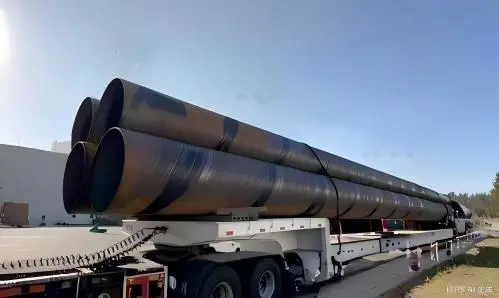
Two main methods used to make ASTM A36 steel pipes are Electrical Resistance Welding (ERW) and Spiral Submerged Arc Welding (SSAW). The other two are Longitudinal Submerged Arc Welding (LSAW). Either way can work, but it depends on the width and thickness of the pipe walls. ERW is best for smaller widths, while SSAW and LSAW can handle bigger sizes up to 7000 mm in diameter.
During production, checks are done to make sure that all the materials are the same and that the colors and sizes are correct. As part of these steps, they are chemically analyzed, mechanically tested, and looked at without damaging them to make sure they meet ASTM A252 standards. There are strict rules in the business that say the end things must meet in order to work well in making frames.
Advantages of Using ASTM A36 Steel Pipe in Building Frameworks
Because it has so many great qualities, ASTM A36 steel pipe is often chosen for use in building structures. The material is strong, lasts a long time, and doesn't cost a lot of money. It meets all the needs of current building tasks.
Strength and Durability Benefits
To hold things up, ASTM A36 steel pipes are very strong since that's how they are made. Because it can handle both tension and compression forces, it can be used for a wide range of structures, from simple support bars to complex truss systems. Because steel can be formed, it can take in energy when there is dynamic pressure. In general, this makes the house safer.
Something needs to be able to handle the weather as well as being strong. Once it is made, ASTM A36 steel pipe will last a very long time if it is done right. Over decades of use, the structure stays stable. This lowers the cost of upkeep over time and makes sure the building works well for as long as it is used.
Cost-Effectiveness and Availability
ASTM A36 steel pipe is cheaper than other choices like stainless steel or high-strength metals when it comes to general construction uses. Standardization and mass production of this material keep prices low and make sure that it is always available through supply lines around the world. Teams that are getting things can get the things they need quickly and without going over their budgets.
The cost benefits include more than just the cost of the products themselves; they also include the costs of making and installing them. It is cheap to build with ASTM A36 steel because it is easy to weld. Its basic features also make it easy to make plan quotes and get approvals. Since these things help keep project costs low, ASTM A36 steel pipe is a good choice for low-cost projects.
Excellent Weldability and Fabrication Properties
This ASTM A36 steel pipe is also great because it is easy to weld. This makes it much better for building things. It works great for SMAW, GMAW, and SAW welding because the amount of carbon and chemicals in it can be controlled. Welders can pick the best way to do their job based on the area they work in and their needs.
Cutting, forming, joining, and drilling are just some of the easy ways to work with the material. You can make links and changes that are unique and fit the style with these tools. There is less trash and work that needs to be redone in business processes when people behave in ways that can be predicted. This helps the job go more easily and get better results.
Step-by-Step Guide to Using ASTM A36 Steel Pipe Effectively in Building Framework Designs
Using ASTM A36 steel pipe in building structures needs to be carefully planned and carried out. This all-encompassing method guarantees top performance while upholding safety standards and project efficiency.
Design Considerations and Load Calculations
The first step in making a system that works well is to do a careful load analysis that looks at all the forces and events that matter. Building codes in different countries, such as AISC guidelines, tell engineers how to measure wind loads, earthquake forces, dead loads, and live loads. It's part of the planning process to figure out the best pipe sizes, wall thicknesses, and ways to join them so that they are strong and useful.
When you figure out loads properly, you think about both the stresses in different areas and how the system works as a whole. Some of the things that this study looks at are bend resistance, link capacity, and movement limits. Because we know what ASTM A36 steel pipe is made of, it is easy to do the correct math on it. In this way, engineers can make systems that work better and cost less.
Quality Assurance and Material Testing
Quality assurance methods make sure that ASTM A36 steel pipe meets all the needs of the project before it is installed. Some of these steps are checking the licenses of the materials, checking the sizes, and trying the mechanical properties. Non-destructive testing methods, like ultrasound examination, can find flaws inside a structure that could affect how well it works.
Testing materials also includes the steps used for welding and the supplies needed for construction. Qualification of welding methods makes sure that the quality of the joints stays the same throughout the project. This organized way of checking quality lowers the chance of problems happening in the field and makes sure that the framework system will work well for a long time.
Installation Best Practices and Welding Techniques
If the work is planned and done correctly in the field, ASTM A36 steel pipe frames will be installed properly. To get a place ready, you need to make rules about who can go in and out, how things can be stored, and how safe the area is. Things don't break when they are stored and handled in the right way.
To weld, you need people who know how to do it and who use standard tools and methods. Temperature and humidity can change how well the welding is done, so it's important to have the right tools and keep an eye on things. It works well and lasts a long time once the joint is fixed. You can use stress release after welding if you need to.
Corrosion Protection and Surface Treatment
For long-term structural stability, it is important to keep ASTM A36 steel pipe from rusting. Preparing the surface by cleaning and shaping it makes it ideal for coatings to stick. There are different types of security systems, from simple paint systems to complex multi-coat systems that make things last longer.
How you choose the right rust protection for structural steel pipe depends on how it will be used and how long it needs to last. Marine areas, industrial settings, and underground sites all have their own problems that need different ways to be protected. Protective systems for structural steel pipe work well for as long as the building is used, as long as they are installed correctly and are checked for quality.
Comparing ASTM A36 Steel Pipe with Other Steel Pipe Types for Construction Use
You can make smart decisions about what to use when you know the pros and cons of the different kinds of steel pipe. Building frames can be made from a lot of different solid materials, but ASTM A36 steel pipe is one of them.
ASTM A36 vs. A53 and A106 Steel Pipes
Types A53 and A106 steel pipes are not at all like ASTM A36 steel pipe. It is NOT made of steel and is NOT used for steel. Most of the time, A53 and A106 pipes are used for fluid and pressure service, while A36 grade pipes are mostly used for building. To make these drugs and get them ready for use, different steps are taken. As an example, A36 is better at welding and has better construction features for use in frameworks.
How these things work is also very different from one another. There is more yield strength in this steel than in A53 Grade B, and it is easier to shape. You can also call it A106 Grade B steel. Because of this, A36 is the best material for making frames that need to be strong and simple to put together.
| STEEL GRADE | Composition Max, % | |||||||||
| C | Mn | P | S | Si | Cr | Cu | Mo | Ni | V | |
| ASTM A106 GR B | 0.30 | 0.29-1.06 | 0.035 | 0.035 | ≥0.10 | 0.40 | 0.40 | 0.15 | 0.40 | 0.08 |
| ASTM A53 GR B | 0.30 | 1.20 | 0.050 | 0.045 | / | 0.40 | 0.40 | 0.15 | 0.40 | 0.08 |
| ASTM A36 | 0.26 | 1.35 | 0.040 | 0.050 | 0.40 | / | / | / | / | / |
| STEEL GRADE | Yield Strength , min,MPA | Tensile Strength , min,MPA | Elongation % | |||||||
| ASTM A106 GR B | 240 | 415 | 16.5 | |||||||
| ASTM A53 GR B | 240 | 415 | 20 | |||||||
| ASTM A36 | 250 | 400-500 | 21 | |||||||
Comparison with Stainless Steel and Galvanized Options
Stainless steel pipes are more expensive than ASTM A36 steel pipes, but they last longer and don't rust as quickly. Steel that doesn't rust as quickly might be worth the extra money if rust is a big problem or if it won't be used often. But A36 steel is a lot less expensive and works fine for most building projects. Just make sure to protect it with the right fillers.
Black steel and stainless steel are the two main types of steel. In the middle are the lines made of rusted steel. The cheap materials are kept in a zinc wrap, which also stops the steel from rusting better than painting it. But it's harder to weld galvanizing materials because the fumes from the zinc can weaken the joint. Coatings that protect A36 steel in the right way often make it more valuable when it is used for building structures.
Performance in Various Environmental Conditions
To use ASTM A36 steel pipes safely, you should do so in a secure area and with the right safety gear. Keep the cloth inside and take good care of it. It will last a long time. The weather and dirty air can damage security measures when they are used outside, so they need to be better.
The hot and salty air makes it hard to work near the water or on the coast. Of course, other materials, like stainless steel or some metals, may end up being more useful in rough seas. A36 steel can work well when it comes to safety. The right environmental review helps people pick things that work well and don't cost too much.
Procuring ASTM A36 Steel Pipe: What B2B Buyers Need to Know?
Successful procurement of ASTM A36 structural steel pipe requires understanding market dynamics, supplier capabilities, and quality requirements. This knowledge enables buyers to secure materials that meet project needs while optimizing cost and schedule considerations.
Supplier Selection and Certification Requirements
Identifying qualified suppliers begins with verification of manufacturing capabilities and quality certifications. Reputable manufacturers maintain certifications such as ISO 9001 quality management systems and relevant product certifications that demonstrate compliance with ASTM standards. These certifications provide assurance of consistent product quality and reliable supply capability.
Supplier evaluation should include assessment of production capacity, delivery capabilities, and technical support services. Manufacturing facilities with multiple production lines and adequate capacity can accommodate large orders and tight delivery schedules. Technical support capabilities enable resolution of application questions and customization requirements that may arise during project execution.
Pricing Dynamics and Volume Considerations
ASTM A36 steel pipe pricing reflects various market factors, including raw material costs, production capacity, and demand levels. Understanding these dynamics helps buyers time purchases optimally and negotiate favorable terms. Volume purchases typically qualify for significant discounts, making bulk procurement strategies attractive for large projects or multiple project portfolios.
Lead time considerations affect both pricing and project scheduling. Standard sizes and specifications typically offer shorter delivery times and more competitive pricing compared to custom requirements. Buyers can optimize costs by aligning material specifications with readily available products while meeting project performance requirements.
Customization Options and Technical Support
Modern steel pipe manufacturers offer extensive customization capabilities to meet specific project requirements. Available options include custom lengths up to 100 meters, specialized end preparations, and various wall thickness combinations within the 0.8-230 mm range. These capabilities enable optimization of material usage and installation efficiency for specific applications.
Technical support services provide valuable assistance throughout the procurement and application process. Experienced manufacturers can recommend optimal specifications, suggest design modifications, and provide installation guidance that enhances project success. This support becomes particularly valuable for complex applications or unusual environmental conditions that require specialized solutions.
Conclusion
ASTM A36 steel pipe delivers exceptional value for building framework applications through its combination of strength, weldability, and cost-effectiveness. The material's well-defined properties enable confident design and reliable performance across diverse construction environments. Understanding proper selection, specification, and installation practices ensures optimal results while maintaining project budgets and schedules. With appropriate quality control and corrosion protection measures, A36 steel pipe frameworks provide decades of reliable service in building applications.
FAQ
1. What are the key specifications of ASTM A36 steel pipe for structural applications?
ASTM A36 steel pipe features a minimum yield strength of 36,000 psi and tensile strength ranging from 58,000 to 80,000 psi. The material contains a maximum of 0.26% carbon content with controlled amounts of manganese, phosphorus, and sulfur. These specifications provide reliable structural performance with excellent weldability characteristics suitable for building frameworks.
2. How does ASTM A36 steel pipe compare to other structural materials in terms of cost-effectiveness?
ASTM A36 steel pipe offers superior cost-effectiveness compared to stainless steel or high-strength alloy alternatives while providing adequate strength for most structural applications. The material's widespread availability, standardized properties, and excellent fabrication characteristics contribute to lower overall project costs, including material, labor, and lifecycle maintenance expenses.
3. What welding considerations are important when using ASTM A36 steel pipe in frameworks?
ASTM A36 steel pipe exhibits excellent weldability with most common welding processes, including SMAW, GMAW, and SAW methods. The controlled chemical composition minimizes welding problems such as cracking or porosity. Proper welding procedures, qualified personnel, and appropriate consumables ensure consistent joint quality and structural integrity.
4. What corrosion protection methods work best for ASTM A36 steel pipe frameworks?
Effective corrosion protection for ASTM A36 steel pipe includes surface preparation through cleaning and profiling, followed by appropriate coating systems. Options range from simple paint systems for indoor applications to sophisticated multi-coat systems for harsh environments. Selection depends on exposure conditions, service life requirements, and maintenance considerations.
5. How do environmental conditions affect ASTM A36 steel pipe performance in building frameworks?
Environmental conditions significantly influence ASTM A36 steel pipe performance, particularly regarding corrosion potential. Indoor controlled environments with proper coatings provide excellent long-term performance. Outdoor applications require robust protection systems, while marine environments may necessitate enhanced protection or alternative materials depending on exposure severity and lifecycle cost considerations.
Partner with HYPILE for Your ASTM A36 Steel Pipe Requirements
HYPILE stands ready to support your building framework projects with comprehensive ASTM A36 steel pipe solutions. Our integrated approach combines high-quality manufacturing capabilities with expert engineering support, ensuring optimal material performance for your specific applications. With over 45 years of group expertise in foundation engineering, we understand the critical importance of reliable structural materials in demanding construction environments.
Our manufacturing capabilities encompass ERW, SSAW, and LSAW welded steel pipe production, delivering products that meet ASTM A252 standards with A36 grade specifications. Available in diameters from 21.3 to 7000 mm and wall thicknesses from 0.8 to 230 mm, our product range accommodates diverse framework requirements. As a trusted ASTM A36 steel pipe manufacturer, we maintain rigorous quality control throughout production, ensuring consistent material properties and dimensional accuracy that support successful project outcomes.
Contact with our technical team at sales@hypile.com to discuss your framework requirements and discover how our "BUILD TO THE LAST" philosophy translates into superior material solutions that withstand extreme conditions and deliver lifetime structural integrity.
References
1. American Institute of Steel Construction. "Steel Construction Manual, 15th Edition: Specification for Structural Steel Buildings." AISC, 2017.
2. American Society for Testing and Materials. "ASTM A36/A36M Standard Specification for Carbon Structural Steel." ASTM International, 2019.
3. Lincoln Electric Company. "Welding Carbon and Low-Alloy Steels: A Guide to Best Practices and Procedures." Lincoln Electric, 2018.
4. National Association of Corrosion Engineers. "Corrosion Protection of Steel Structures in Building Applications." NACE International, 2020.
5. Steel Construction Institute. "Design Guide for Structural Steel Building Frameworks Using Hot-Rolled Sections." SCI Publication, 2019.
6. Welding Research Council. "Structural Welding Code for Steel Buildings and Bridges: Application Guide for ASTM A36 Materials." WRC Bulletin, 2021.
Have a project in mind? Tell us your goals — we’ll help you make it real.