- English
- French
- German
- Portuguese
- Spanish
- Russian
- Japanese
- Korean
- Arabic
- Greek
- German
- Turkish
- Italian
- Danish
- Romanian
- Indonesian
- Czech
- Afrikaans
- Swedish
- Polish
- Basque
- Catalan
- Esperanto
- Hindi
- Lao
- Albanian
- Amharic
- Armenian
- Azerbaijani
- Belarusian
- Bengali
- Bosnian
- Bulgarian
- Cebuano
- Chichewa
- Corsican
- Croatian
- Dutch
- Estonian
- Filipino
- Finnish
- Frisian
- Galician
- Georgian
- Gujarati
- Haitian
- Hausa
- Hawaiian
- Hebrew
- Hmong
- Hungarian
- Icelandic
- Igbo
- Javanese
- Kannada
- Kazakh
- Khmer
- Kurdish
- Kyrgyz
- Latin
- Latvian
- Lithuanian
- Luxembou..
- Macedonian
- Malagasy
- Malay
- Malayalam
- Maltese
- Maori
- Marathi
- Mongolian
- Burmese
- Nepali
- Norwegian
- Pashto
- Persian
- Punjabi
- Serbian
- Sesotho
- Sinhala
- Slovak
- Slovenian
- Somali
- Samoan
- Scots Gaelic
- Shona
- Sindhi
- Sundanese
- Swahili
- Tajik
- Tamil
- Telugu
- Thai
- Ukrainian
- Urdu
- Uzbek
- Vietnamese
- Welsh
- Xhosa
- Yiddish
- Yoruba
- Zulu
What is welded steel pipe used for?
Welded steel pipe is an important part of building infrastructure, moving energy and building factories all over the world. To make these tubular goods, flat steel plates are bent into cylinder shapes and then joined at the edges using different types of welding. Welded lines are used in many fields, from oil and gas to city water systems, because they are strong, flexible and cheap. This piece talks about the different uses of welded steel pipes, how they are made, and what project managers should think about when buying them. This will help you feel more confident as you work on foundation engineering and pipeline projects that are more complicated.
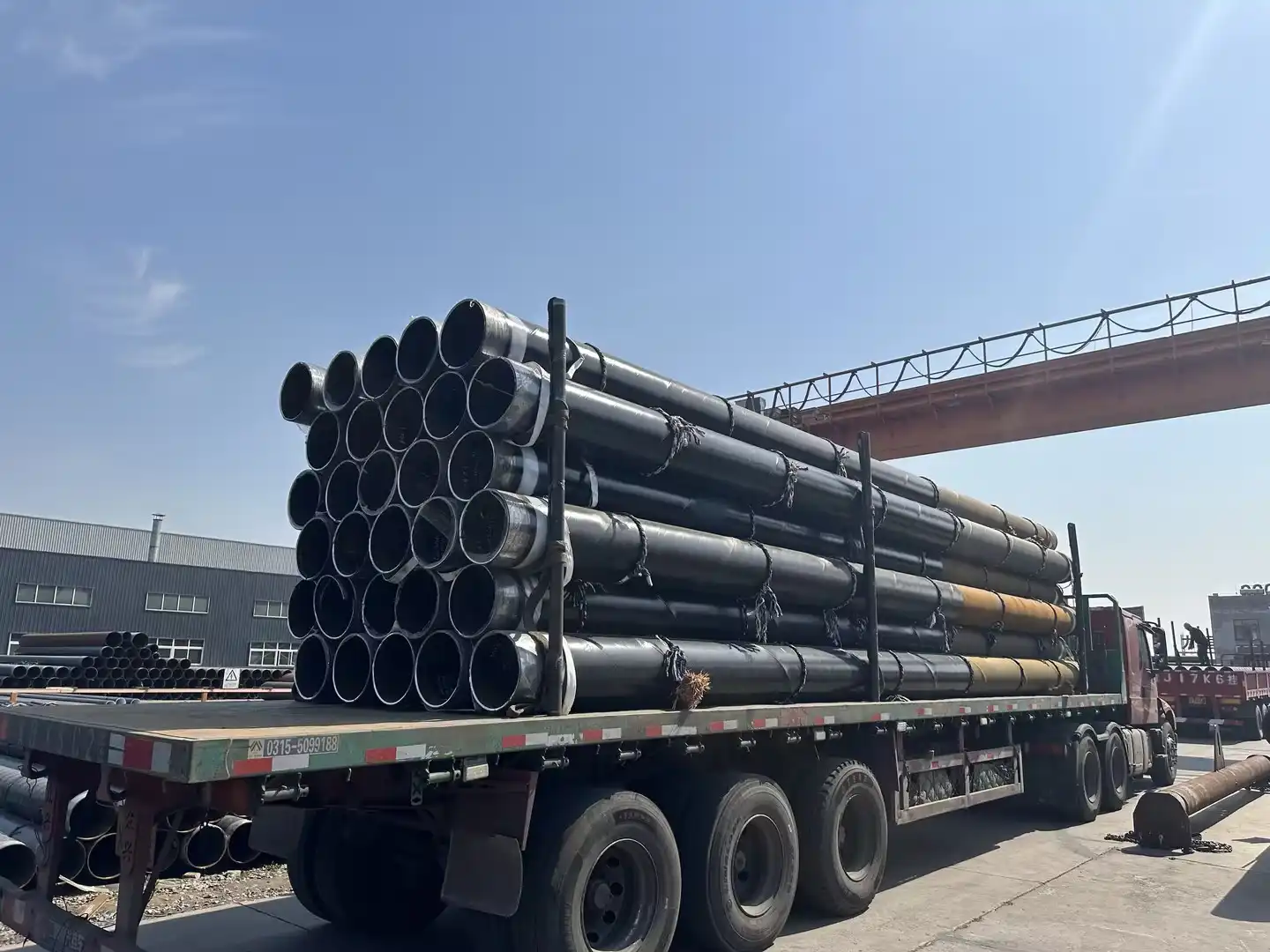
Understanding Welded Steel Pipes: Definitions and Manufacturing Process
What Defines Welded Steel Pipes
When it comes to how they are made, steel pipes made through welding are very different from seamless options. The process of making a pipe starts with high-quality steel bars or plates that are shaped into a cylinder. The long edges are then carefully joined together using special welding methods, making a single structural member that can handle high internal pressures and external loads. The choice of material is very important when it comes to pipe performance characteristics. For general uses, carbon steel grades have great strength-to-weight ratios. Alloy steel compositions, on the other hand, offer better resistance to corrosion and longer life in harsh settings. API 5L guidelines set the requirements for materials, which ensure that the quality is the same for both PSL1 and PSL2 grades.
ERW Manufacturing Process
Electric Resistance Welding is a very precise way to make things that works best for pipes with outside sizes between 21.3 mm and six hundred mm. During the process, a steel strip is fed constantly through forming rolls while an electric current is applied directly to the joint area. This creates localised heating that joins the edges without the need for extra filler material. ERW technology gives these pipes great accuracy in size and smooth weld seams, making them perfect for uses that need to stick to tight standards. Because ERW production is automated, quality control is always the same, and standard pipe shapes can be made quickly and easily. Because of these features, ERW pipes are very useful for building structures, pile supports, and systems that move medium-pressure fluids.
SSAW Production Capabilities
With the ability to produce parts up to 7000 mm in diameter, spiral submerged arc welding is a cost-effective way to handle large-diameter tasks. When SSAW is made, steel coils are repeatedly shaped into a spiral shape, and the spiral seam is made with submerged arc welding. This method lets makers make bigger pipes from smaller steel coils, which makes better use of the material. The spiral weld shape has special structural benefits; it spreads stress more evenly around the pipe's circumference compared to longitudinal welds. When big diameters are needed, like in water transmission lines, dredging projects and offshore pile foundations, SSAW pipes work really well. These lines can handle heavy loads in deep foundation engineering because API 5L GR B Welded Steel Pipe, and their walls can be up to 230 mm thick.
LSAW Technical Advantages
Longitudinal Submerged Arc Welded pipes have the benefits of being made with a straight seam and the strong welding properties of submerged arc technology. LSAW manufacturing can handle thick-walled, large-diameter needs, and each pipe length can go up to 100 meters. This is a huge benefit for reducing the number of field joints in long-distance pipeline projects. The LSAW process starts with steel plates that are precisely shaped and welded along a single longitudinal seam. This method gives you better control over the mechanical features and quality of the weld, which is especially important for high-pressure uses in oil and gas gearboxes. When made to API 5L PSL2 standards, LSAW pipes are very tough and have to pass a lot of tests. This makes sure that they work well in important energy systems.
Key Uses and Applications of Welded Steel Pipes in Various Industries
Foundation Engineering and Structural Support
One of the most difficult uses for welded steel pipes in building is in pile foundations. These building parts move weight from weak earth layers to strong rock or soil layers that can support the weight. Pipe piles made from high-strength grades like X60 to X80 can hold a lot of weight and don't break easily when they're being installed. Sheet pile walls made from welded steel profiles can be used for excavation support, flood control and building structures on the water. When U-type and Z-type sheet piles are put together, they form continuous barriers that keep dirt in place and keep groundwater out. Welded steel pipe manufacturing allows for custom strength and dimensional freedom, which is helpful for projects that have to deal with difficult geological conditions like soft clays, high groundwater tables, and seismic zones.
Oil, Gas, and Energy Infrastructure
Welded steel pipes are a big part of pipeline transportation systems because they make moving energy over long distances safe and efficient. Petroleum and gas pipes must meet API 5L Grade B as a minimum standard. Higher grades, such as X65M and X70M, offer more strength for high-pressure uses or rough terrain. The ability to make pipes up to 100 meters long cuts down on the number of field welds, which improves the efficiency of installation and the integrity of the system. Welded pipes are used throughout the process systems at refineries and petrochemical facilities, from receiving crude oil to distributing finished products. Chemical composition control built into PSL2 grades makes sure that they work the same way in settings that change temperature and are corrosive. Offshore platforms gain a lot from the coatings that prevent corrosion and the exact measurements that modern welded pipe manufacturing provides.
Municipal Water Systems and Infrastructure
Urban water distribution networks are huge investments in infrastructure that need long-lasting, low-cost pipe systems. Large-diameter SSAW pipes move drinkable water quickly and efficiently from treatment plants to distribution zones. Coatings on the pipes protect them and make them last a long time. Engineers can control project budgets and improve hydraulic performance by changing the size of pipes. Welded steel pipes are also needed for reliable operation in wastewater collection and stormwater management systems. Because these pipes are structurally strong, they can be put under roads and other load-bearing areas without needing walls that are too thick. Cities and towns like welded pipes because they offer a good mix of performance and value compared to other materials.
Industrial and Manufacturing Applications
Welded pipes are used in the designs of facilities in many API 5L GR B Welded Steel Pipe process businesses, from making chemicals to making food. Engineers can define exact sizes, material grades, and protective coatings that meet the needs of a certain process when custom fabrication is possible. The flexibility of welded steel pipe technology is useful for many things, including hydraulic systems, cooling water circuits, and distributing compressed air. Welded steel pipes are used as structural members, temporary supports during construction, and permanent foundation elements in bridge construction and transportation infrastructure projects. Because they are strong, can be welded, and can be cut to different sizes, these goods are essential for building modern infrastructure. Transportation officials are specifying API 5L grades more and more for projects that need to have documented material properties and quality assurance.
Comparing Welded Steel Pipes to Other Pipe Types for Informed Procurement
Welded Versus Seamless Pipe Selection
When making purchases, people often have to choose between bonded and seamless pipes. In ultra-high-pressure situations, seamless lines are better because they don't have a longitudinal weld, which adds to their safety. While seamless pipes work just as well in most situations, they can't be made in as many sizes and cost a lot more per square metre because of the way they're made. On the other hand, welded pipes are more cost-effective and offer more size options. Through controlled heat treatment and testing methods, modern manufacturing quality makes sure that weld zones meet or beat the properties of the base metal. Welded options are the only realistic choice for projects that need large diameters above 660mm.
Material Grade Considerations
API 5L includes a wide range of material types that meet a wide range of strength needs. At a reasonable price, PSL1 Grade B works reliably in most situations and can be used to hold structures and move fluids with low to medium pressure. Higher-strength grades, such as X52 through X70, allow thinner wall sections to have the same pressure ratings. This lowers the cost of materials and the weight of installation. The PSL2 specifications add extra requirements for chemical composition, mechanical properties, and testing that make critical applications more reliable. The "M" name in grades like X65M shows that these higher standards have been met, giving purchasing managers written proof of material consistency. This standardisation makes it easier for engineers to do calculations and make sure that regulations are followed on all foreign project portfolios.
Corrosion Protection Systems
The choice of surface treatment has a big effect on the total costs and upkeep needed over the life of the product. Hot-dip galvanising is a cheap way to protect things that are used on land by creating a strong metal bond that doesn't break easily. Fusion-bonded epoxy coatings are better at resisting corrosion in buried or submerged environments, and they last longer in harsh soil conditions. Advanced coating systems with multiple layers, like epoxy primers, intermediate coats, and polyurethane topcoats, protect completely in marine and industrial settings. The combined coating capabilities of HYPILE make sure that the right steps are taken to prepare the surface and apply the coating, which are important factors that determine how well the coating will last over time. The specifications for the purchase should make it clear what kind of coating is needed based on the expected environment and how easy it is to do upkeep.
Procurement Considerations for Welded Steel Pipes in the Global Market
Supplier Qualification and Standards Compliance
A thorough review of the supplier is the first step to successful procurement. Facilities that make things should keep certifications that show they follow API 5L and other important international standards. Quality management systems that are certified to ISO 9001 make sure that production methods and documentation practices are always the same. Production capacity analysis makes sure that suppliers can meet project deadlines without lowering the quality of their work. For big infrastructure projects that need thousands of tonnes of pipe, suppliers with various production lines and enough storage space are best. Technical support services, such as technical help, testing, and integration of fabrication, are useful for more than just supplying pipes.
Customisation and Technical Specifications
A lot of the time, foundation engineering and specialised infrastructure jobs need sizes that aren't in standard catalogues. The ability to make unique outside diameters ranging from 21.3 mm to 7000 mm and wall thicknesses ranging from 0.8 mm to 230 mm makes it possible to precisely optimise structural designs. This ability to customise keeps engineers from over-engineering while still leaving enough room for error. Material certification packages that record chemical composition, mechanical properties, and dimensional checks are necessary for quality assurance programs to keep track of what was done. Mill test reports should make it clear which standards and testing methods apply, so that they can be checked by a third party if needed. Procurement managers should set acceptance standards and testing schedules that are in line with the risk profiles of the projects they are in charge of.
Logistics and Value-Added Services
Logistics of transportation have a big effect on the total cost of delivery, especially for pipes with a large diameter or a thick wall. When suppliers have warehouses close to important project hubs, lead times are cut down, and deliveries can be made in stages to fit construction schedules. Optimising containers for export shipments increases the amount of material that can be shipped per unit of freight, which lowers the cost of international shipping. Integrated fabrication services make projects easier to complete by mixing pipe supply with cutting, beveling, and assembly tasks. HYPILE's "turnkey" method, which includes everything from the raw material to the protective coating and precise fabrication, makes it easier to work with multiple vendors. Fast-track projects and complex geometries that require tight tolerances in welded steel pipes will gain the most from this integration.
Technical Standards and Specifications: What Procurement Managers Need to Know
API 5L PSL1 and PSL2 Requirements
API 5L establishes the foundation for pipeline material specifications in energy infrastructure worldwide. PSL1 requirements cover basic material properties, dimensional tolerances, and hydrostatic testing suitable for general pipeline applications. These specifications balance performance requirements with manufacturing practicality, enabling cost-effective production.PSL2 introduces supplementary requirements addressing chemical composition limits, enhanced mechanical property testing, and non-destructive examination protocols. Impact testing ensures adequate toughness for low-temperature service and prevents brittle fracture in critical applications. Procurement specifications should align PSL levels with project risk assessments and regulatory requirements.
Dimensional Tolerances and Pressure Ratings
Outside diameter tolerances directly affect joint assembly and coating application. Standard tolerances typically specify ±1% for pipes with outside diameters above 60mm, though tighter controls are achievable for precision applications. Wall thickness tolerances influence pressure rating calculations and corrosion allowance planning. Pressure rating calculations must account for temperature effects, corrosion allowances, and applicable safety factors defined by design codes. The relationship between material grade, wall thickness, and allowable operating pressure enables engineers to optimise specifications for economic efficiency. Procurement managers should verify that quoted specifications provide adequate margins for intended service conditions.
Quality Control and Testing Protocols
Chemical analysis, mechanical testing, dimensional inspection, and non-destructive examination are all parts of complete quality assurance systems. The yield strength, ultimate strength, and elongation properties are checked by tensile testing to make sure they meet grade standards. When you flatten and bend something, you can check its ductility and the quality of the weld without making cracks or breaks. Ultrasonic testing finds flaws inside the pipe wall along the weld lines and base metal, making sure the whole wall is structurally sound. During hydrostatic testing, pipes are put under pressures that are higher than their design ratings. This proves that they can control the pressure. Shipments of materials should come with quality documentation packages that can be used for regulatory checks and to track the materials' progress.
Conclusion
It is important for infrastructure development, energy transmission, and industrial construction that welded steel pipes work well in a wide range of situations. Procurement managers can find the best options for almost any project need when ERW precision, SSAW cost-effectiveness, and LSAW capabilities for exact specifications are all combined. Knowing how things are made, the different types of materials used, and how they meet standards helps you make decisions that combine technical performance with budgetary constraints. When choosing a provider, it's important to give certifications, production capacity, customisation options, and integrated services the most weight. This will help the project succeed by ensuring reliable material quality, on-time delivery, and helpful technical support. Companies that put time and effort into carefully planning their purchases and building relationships with suppliers set up their projects to be successful and reduce the risks that come with base engineering and pipeline construction.
FAQ
1. What advantages do welded pipes offer compared to seamless options?
Welded steel pipes provide significant cost advantages while maintaining comparable performance in most applications. Manufacturing flexibility enables custom dimensions and lengths that seamless processes cannot accommodate, particularly for large-diameter requirements above 660mm. Modern welding technologies ensure weld zones meet stringent mechanical property requirements, making welded pipes suitable for high-pressure service. The ability to produce pipes up to 100 meters in length reduces field joints and installation time, delivering project efficiency that outweighs the marginal strength advantages seamless pipes offer in ultra-high-pressure applications.
2. How do API 5L grades affect pipe selection?
Material grade selection directly impacts structural capacity, cost, and fabrication requirements. Grade B serves general applications requiring moderate strength at economical pricing. Higher grades from X42 through X80M provide increased yield strength, enabling thinner walls for equivalent pressure ratings or higher pressures at given dimensions. PSL2 grades with "M" designations include enhanced chemical composition control and mechanical testing, appropriate for critical applications where material consistency is paramount. Procurement decisions should match grade selection to design pressures, temperature conditions, and regulatory requirements governing the specific application.
3. What testing ensures welded steel pipe quality?
Comprehensive quality assurance encompasses chemical analysis confirming grade composition, mechanical testing verifying strength and ductility properties, and non-destructive examination detecting internal discontinuities. Hydrostatic testing validates pressure containment at levels exceeding design ratings. Dimensional inspections ensure outside diameter, wall thickness, and length meet specified tolerances. API 5L standards define testing frequencies and acceptance criteria, with PSL2 requiring more extensive protocols than PSL1. Reputable suppliers provide complete mill test reports documenting all testing results, enabling traceability throughout project execution and providing assurance for regulatory compliance.
Partner With HYPILE for Superior Welded Steel Pipe Solutions
HYPILE brings 45+ years of foundation engineering expertise, Welded steel pipe to every project, manufacturing welded steel pipes that strictly conform to API 5L PSL1 and PSL2 standards. Our comprehensive production capabilities span ERW, SSAW, and LSAW processes, delivering pipes from 21.3mm to 7000mm in diameter with wall thicknesses reaching 230mm and lengths up to 100 meters. We cover the complete grade range from Gr.B through high-strength X80M, providing customised solutions for infrastructure construction, energy transmission, and complex foundation engineering. Our "BUILD TO THE LAST" philosophy ensures lifetime structural integrity through rigorous quality control, advanced protective coatings, and integrated fabrication services. Contact our team at sales@hypile.com to discuss your project requirements with experienced welded steel pipe suppliers who understand the technical demands and procurement priorities of discerning construction professionals worldwide.
References
1. American Petroleum Institute. "Specification for Line Pipe: API Specification 5L." Forty-Sixth Edition, 2018.
2. Zhang, L., and Wang, X. "Manufacturing Technology and Quality Control of Large Diameter Welded Steel Pipes." Journal of Materials Processing Technology, Vol. 265, 2019, pp. 89-103.
3. Morrison, R. E. "Pipeline Design and Construction: A Practical Approach." Third Edition, American Society of Mechanical Engineers Press, 2016.
4. Chen, Y., et al. "Comparative Analysis of Welded versus Seamless Pipes in High-Pressure Applications." International Journal of Pressure Vessels and Piping, Vol. 178, 2019, pp. 104-116.
5. National Association of Corrosion Engineers. "Protective Coating Systems for Carbon Steel Pipelines." NACE International Standard Practice SP0169-2013, 2013.
6. Thompson, J. M., and Richards, P. D. "Foundation Engineering Handbook: Design and Construction with the 2018 International Building Code." McGraw-Hill Professional, 2020.
Have a project in mind? Tell us your goals — we’ll help you make it real.