- English
- French
- German
- Portuguese
- Spanish
- Russian
- Japanese
- Korean
- Arabic
- Greek
- German
- Turkish
- Italian
- Danish
- Romanian
- Indonesian
- Czech
- Afrikaans
- Swedish
- Polish
- Basque
- Catalan
- Esperanto
- Hindi
- Lao
- Albanian
- Amharic
- Armenian
- Azerbaijani
- Belarusian
- Bengali
- Bosnian
- Bulgarian
- Cebuano
- Chichewa
- Corsican
- Croatian
- Dutch
- Estonian
- Filipino
- Finnish
- Frisian
- Galician
- Georgian
- Gujarati
- Haitian
- Hausa
- Hawaiian
- Hebrew
- Hmong
- Hungarian
- Icelandic
- Igbo
- Javanese
- Kannada
- Kazakh
- Khmer
- Kurdish
- Kyrgyz
- Latin
- Latvian
- Lithuanian
- Luxembou..
- Macedonian
- Malagasy
- Malay
- Malayalam
- Maltese
- Maori
- Marathi
- Mongolian
- Burmese
- Nepali
- Norwegian
- Pashto
- Persian
- Punjabi
- Serbian
- Sesotho
- Sinhala
- Slovak
- Slovenian
- Somali
- Samoan
- Scots Gaelic
- Shona
- Sindhi
- Sundanese
- Swahili
- Tajik
- Tamil
- Telugu
- Thai
- Ukrainian
- Urdu
- Uzbek
- Vietnamese
- Welsh
- Xhosa
- Yiddish
- Yoruba
- Zulu
What is galvanized steel pipe?
A structural tube product called galvanised steel pipe is made from carbon steel and has a protective zinc layer added to it through a process called hot-dip galvanisation. When zinc is metallurgically bonded to steel, it forms a strong shield against oxidation and atmospheric corrosion. This makes the steel last a lot longer than galvanized steel pipe or bare steel. The zinc coating works as a sacrificial anode, which means it corrodes more quickly to protect the steel underneath. This makes galvanised steel pipe a cheap and long-lasting option for a wide range of uses, from distributing water and building scaffolding to laying foundations and building frames.
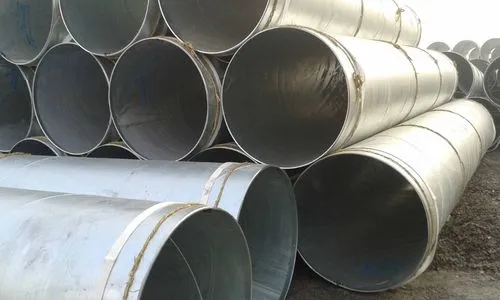
Understanding Galvanized Steel Pipe: Definitions and Manufacturing
What Sets Galvanized Steel Pipe Apart?
The defining characteristic of galvanized pipe lies in its protective zinc coating, typically ranging from 45 to 610 grams per square meter, depending on application requirements. Unlike painted or epoxy-coated steel, the galvanization process forms an intermetallic zinc-iron alloy layer that bonds permanently to the steel surface. This ensures coating integrity even when the pipe undergoes bending, threading, or mechanical stress during installation.
The Hot-Dip Galvanizing Process Explained
The first step in manufacturing is making steel pipes using ERW (Electric Resistance Welding), SSAW (Spiral Submerged Arc Welding), or LSAW (Longitudinal Submerged Arc Welding) methods. Once the pipes are finished being made, they are degreased, acid pickled to get rid of mill scale, and fluxed to help the zinc stick. After the pipes are ready, they are put into a bath of melted zinc that is kept at about 450°C (842°F). When the zinc is taken out, the extra zinc drains off, leaving a smooth covering that hardens into a protective layer. Strict standards like ASTM A53, ASTM A572, and ISO 1461 are followed throughout the whole Galvanized steel pipe process. This makes sure that the quality is the same from batch to batch.
International Standards Governing Production
Following widely recognised standards is important for making sure the quality of galvanised pipes. ASTM A53 specifies standards for both seamless and welded pipes used in general structural and pressure situations. High-strength low-alloy structural steel is defined by ASTM A572. It comes in grades from Gr. 42 to Gr. 65, with yield strengths between 290 MPa and 450 MPa. ISO 1461 lists the minimum thicknesses and standards for adhesion of zinc coatings. These guidelines help procurement professionals be very clear about technical requirements and check the credentials of suppliers while they are sourcing materials. This lowers the chance that low-quality materials will get into important infrastructure projects.
Key Specifications and Dimensions of Galvanized Steel Pipe
Standard Dimensions and Schedules
Galvanised steel pipes come in a wide range of sizes to meet a wide Grange of structural and fluid transportation needs. The outside diameters range from 21.3 mm (¾ inch) for light plumbing use to 7000 mm for big foundation piles and marine structures. Walls can be as thin as 0.8 mm for light-duty pipe or as thick as 230 mm for heavy-load piling systems. Pipe schedules, which include names like Schedule 40, Schedule 80, and Schedule 160, show how thick the wall is compared to the diameter. Higher schedules give you higher pressure values and more structural capacity. For special tasks, lengths of up to 100 meters are available, but for most businesses, lengths are between 6 and 12 meters. Knowing these specs helps project managers get exact numbers for load-bearing capacity, hydraulic flow rates, and material amounts. Detailed dimensional data also makes logistics planning easier by making sure that transportation and handling on-site are in line with the limitations of site entry and the capabilities of lifting equipment.
Corrosion Resistance and Service Life
Galvanised pipe is protected in more than one way by its zinc cover. The pure zinc layer on the outside of the galvanized steel pipe rusts slowly in the air, but the zinc-iron mixture layers below it provide extra protection. Service life depends on where it's used. In country or suburban areas with low pollution from factories, galvanised pipes can last 50 to 100 years. Service life is usually between 20 and 40 years in sea or industrial settings with a lot of chloride or sulphur dioxide. This is a lot longer than the 5 to 15 years that exposed carbon steel would last in the same conditions.
Material Comparison: Galvanized vs. Alternatives
Galvanised steel pipe has clear benefits over other options when compared to them. Compared to stainless steel, it saves between 40% and 60% of the cost while still providing enough corrosion protection for most indoor and above-ground uses. When zinc is applied to black steel, paint systems don't need to be applied in the field. This cuts down on installation time and long-term upkeep. Galvanised steel pipes are stronger, more resistant to fire, and can handle higher temperatures than PVC or HDPE pipes. This makes them essential for structural piling, scaffolding, and high-pressure systems. In the end, the choice of material relies on the specifics of the project, such as the environment, the load requirements, the budget, and following the rules.
Procurement Guide: How to Source and Evaluate Galvanized Steel Pipes
Selecting Reliable Suppliers and Manufacturers
When getting galvanised steel pipe from suppliers for big building jobs, you need to be very careful. Companies whose production facilities have been inspected to ASTM or EN standards and whose quality management systems have been approved to ISO 9001 should be given more weight by purchasing managers. These companies have also been shown to have worked on similar projects in the past. Suppliers must show proof of systems that link batches of raw materials to batches of finished products, as well as material test reports (MTRs) that show the chemical makeup and mechanical properties. Third-party inspection papers must also be shown to show the thickness and adhesion of coatings. Where things come from also affects what people buy. Companies in the US and Europe usually charge more for North American jobs, but they have shorter wait times and are better at following rules. There are manufacturers in India and other emerging markets that give better quality at prices that are competitive. They can work well with you when wait times are short, and you have strong quality control systems in place because of this.
Pricing Structures and Bulk Procurement
How much galvanised steel pipe costs relies on how much the raw materials cost, how hard it is to make, and how many people order it. Prices start at a certain amount per metric tonne or linear metre, and they can change based on the width, wall thickness, and finishing requirements. When you buy in bulk, you can get big savings from economies of scale. When you order more than 500 tonnes, you can often get 10 to 20 percent off the spot price. Long-term supply deals can help keep prices stable and make sure that production plans are met. This can make changes in the steel market less noticeable. Teams that buy things should also look at the total landed cost, which includes freight, customs taxes, security, and transportation within the country. Certain projects may need custom sizes or better finishing specs, which may mean more money. But the extra costs are usually worth it because the project turns out better and there are fewer changes that need to be made in the field.
Critical Evaluation Criteria for B2B Buyers
Besides price and wait time, there are other things that set good Galvanized steel pipe suppliers apart. Mill Test Certificates (MTC) according to EN 10204 3.1 or 3.2 should be included in compliance documents to show that the material properties have been checked by a third party. Most warranties cover flaws in the coating and corrosion that starts too soon. Reliable suppliers back their products for 10 to 25 years, based on the application. Different manufacturers have different minimum order quantities (MOQs). Some allow project quantities as low as 5 tonnes, while others need 100 tonnes as a minimum for custom specs. The operational maturity of a supplier is shown by how quickly they respond to technical questions, their ability to provide engineering help during the design phase, and their ability to speed up emergency orders. When project deadlines are short and the technology is hard to understand, these qualitative factors are often just as important as the price.
Installation, Maintenance, and Longevity Best Practices
Optimal Installation Techniques
Galvanised steel pipe systems work best and last as long as they are installed correctly. Threaded connections are still common for smaller sizes (up to 100 mm), but they need to be carefully sealed with thread sealant or PTFE tape to keep leaks from happening. When welding larger diameter pipes, you need to use certain methods because the heat-affected zone near the welds can burn off the zinc coating, leaving that area open to corrosion. After welding, using zinc-rich cold galvanising compounds or thermal spray zinc to finish the job, re-establish the protective continuity. Mechanical couplings and flanged connections are other options that keep the coating's integrity while also allowing for thermal expansion and making it easier to do upkeep in the future. Some common installation mistakes are over-tightening threaded joints, which breaks the zinc coating and starts the corrosion process, and not allowing enough support space, which makes the structure sag and puts too much stress on it. By following the manufacturer's instructions and industry standards like AWWA C206 for field welding, you can be sure that the work is done correctly and will last for decades.
Maintenance Strategies for Extended Service Life
Regular checking programs make galvanised pipes last longer and stop expensive breakdowns. Every year, it should be inspected visually to look for mechanical damage, white rust (zinc corrosion), and red rust (steel corrosion breakout). In places where people are mean, checks should be done every six months. Coating touch-ups with zinc-rich paints fix small problems before they get worse. Cathodic protection systems can help make things last longer in very corrosive soils or water, but they are usually only used for setups that are buried or submerged. Case studies from public water systems show that preventative repair lowers the total cost of ownership. A city in the Midwest switched from reactive repair procedures to scheduled inspections and touch-up programs. This increased the service life of pipes by 15 years and cut the number of emergency repairs by 60%. These results show how much better it is to spend money on upkeep than on replacements that need to be done too soon.
Environmental Considerations and Coating Enhancements
Coating improvements may be needed in harsh industrial settings, like seaside areas with salt spray, places with a lot of sulphur in the air, or places where chemicals are used. When hot-dip galvanising is combined with a covering of epoxy or polyurethane paint, the two work together to protect against damage. The zinc gives up its protection at coating flaws, while the organic layer keeps the zinc from quickly wearing away. This method can make the service life twice or three times longer in harsh conditions, and it can be used instead of expensive exotic metals. Extreme temperatures can also affect how well something works. Galvanised pipe works effectively from -40°C to 200°C, but zinc oxidation speeds up when exposed to temperatures above 200°C for a long time. The operating conditions must be taken into account in the project specs so that the right coating systems and material grades can be used.
Conclusion
Galvanised steel pipe has been used for a long time and is a reliable, low-cost option for moving fluids and supporting structures in the building, transport, and manufacturing industries. When properly chosen, fitted, and cared for, its protective zinc coating will give years of reliable service. Knowing how things are made, what the technical specs are, and the best ways to buy things gives project managers and engineers the power to choose materials that meet performance, reliability, and cost goals. Partnering with qualified suppliers who offer thorough documentation, quick technical help, and consistent product quality is key to successful procurement. Galvanised steel pipe is very useful and flexible, and it's not cheap compared to other options. It can be used for foundation piles for a bridge project, structural tubing for a factory, or piping for a city's water system.
FAQ
1. Are galvanized steel pipes safe for potable water systems?
Historically, galvanized pipe was widely used for potable water distribution. Concerns about zinc leaching and lead contamination from older galvanizing processes have led many jurisdictions to restrict its use for drinking water. Modern galvanizing adheres to stricter purity standards, reducing these risks. Regulatory guidance varies by region—NSF/ANSI 61 certification confirms suitability for potable water contact in North America. Project engineers should consult local codes and water quality data when specifying materials for drinking water applications.
2. How does the cost and durability of galvanized steel compare to stainless steel?
Galvanized steel delivers substantial cost advantages—typically 40% to 60% less expensive than stainless steel grades like 304 or 316—while providing sufficient corrosion resistance for most above-ground and moderate-exposure applications. Stainless steel excels in highly corrosive environments (chemical plants, marine immersion) where its passive chromium oxide layer offers superior protection. The choice hinges on environmental severity, budget, and required service life.
3. What certifications are essential for international trade compliance?
International procurement requires documentation aligned with destination country regulations. ASTM A53, ASTM A572, and ISO 1461 certifications ensure material and coating quality. Mill Test Certificates (MTC) per EN 10204 provide traceability and property verification. CE marking facilitates European market access, while compliance with AWWA standards supports North American municipal projects. Buyers should specify required certifications in tender documents to streamline customs clearance and regulatory approval.
Partner with HYPILE for High-Quality Galvanized Steel Pipe Solutions
HYPILE delivers comprehensive piling and foundation engineering solutions, including a full range of galvanized steel pipe products manufactured to ASTM A572 standards in grades Gr. 42, Gr. 50, Gr. 55, Gr. 60, and Gr. 65. Our manufacturing capabilities span ERW, SSAW, and LSAW welded steel pipes with outer diameters from 21.3 mm to 7000 mm, wall thicknesses from 0.8 mm to 230 mm, and lengths up to 100 meters. Each product benefits from enhanced atmospheric corrosion resistance, excellent weldability, Galvanized steel pipe, and exceptional cost efficiency for structural applications.
As a trusted galvanized steel pipe supplier, we integrate material production, precision fabrication, advanced surface treatment, and engineering support into a seamless turnkey process. Our "BUILD TO THE LAST" philosophy ensures every pipe system meets the highest standards of durability and performance, backed by 45+ years of group expertise. Project managers, procurement professionals, and engineering directors rely on HYPILE for reliable delivery, rigorous quality assurance, and responsive technical collaboration. Contact our team at sales@hypile.com to discuss your project requirements and discover how our galvanized steel pipe solutions can strengthen your infrastructure investments.
References
1. American Society for Testing and Materials. (2020). ASTM A53/A53M-20: Standard Specification for Pipe, Steel, Black and Hot-Dipped, Zinc-Coated, Welded and Seamless. West Conshohocken, PA: ASTM International.
2. American Society for Testing and Materials. (2021). ASTM A572/A572M-21: Standard Specification for High-Strength Low-Alloy Columbium-Vanadium Structural Steel. West Conshohocken, PA: ASTM International.
3. International Organization for Standardization. (2009). ISO 1461:2009 Hot Dip Galvanized Coatings on Fabricated Iron and Steel Articles — Specifications and Test Methods. Geneva, Switzerland: ISO.
4. American Water Works Association. (2017). AWWA C206-17: Field Welding of Steel Water Pipe. Denver, CO: AWWA.
5. European Committee for Standardization. (2013). EN 10204:2004 Metallic Products — Types of Inspection Documents. Brussels, Belgium: CEN.
6. National Sanitation Foundation International. (2016). NSF/ANSI 61: Drinking Water System Components — Health Effects. Ann Arbor, MI: NSF International.
Have a project in mind? Tell us your goals — we’ll help you make it real.