- English
- French
- German
- Portuguese
- Spanish
- Russian
- Japanese
- Korean
- Arabic
- Greek
- German
- Turkish
- Italian
- Danish
- Romanian
- Indonesian
- Czech
- Afrikaans
- Swedish
- Polish
- Basque
- Catalan
- Esperanto
- Hindi
- Lao
- Albanian
- Amharic
- Armenian
- Azerbaijani
- Belarusian
- Bengali
- Bosnian
- Bulgarian
- Cebuano
- Chichewa
- Corsican
- Croatian
- Dutch
- Estonian
- Filipino
- Finnish
- Frisian
- Galician
- Georgian
- Gujarati
- Haitian
- Hausa
- Hawaiian
- Hebrew
- Hmong
- Hungarian
- Icelandic
- Igbo
- Javanese
- Kannada
- Kazakh
- Khmer
- Kurdish
- Kyrgyz
- Latin
- Latvian
- Lithuanian
- Luxembou..
- Macedonian
- Malagasy
- Malay
- Malayalam
- Maltese
- Maori
- Marathi
- Mongolian
- Burmese
- Nepali
- Norwegian
- Pashto
- Persian
- Punjabi
- Serbian
- Sesotho
- Sinhala
- Slovak
- Slovenian
- Somali
- Samoan
- Scots Gaelic
- Shona
- Sindhi
- Sundanese
- Swahili
- Tajik
- Tamil
- Telugu
- Thai
- Ukrainian
- Urdu
- Uzbek
- Vietnamese
- Welsh
- Xhosa
- Yiddish
- Yoruba
- Zulu
Is galvanized steel pipe safe for drinking water?
Galvanized steel pipe is still commonly used in water distribution networks, but procurement workers and project engineers are still not sure if it is safe for use with potable water. There isn't an easy answer. Galvanised steel pipe can be safe for drinking water if it is made, installed, and maintained correctly. This is especially true for newer systems where the zinc coating stays on. But old systems do cause real worries about metals leaking and water quality getting worse. Knowing the technical details, coating quality, and long-term performance of these pipes helps people make smart choices for building projects that need to meet safety standards and save money on water supply systems.
Introduction
Water infrastructure is an important part of modern society, and the choice of materials has a direct effect on both public health and the cost of the project. Galvanised steel pipes have been used in water supply systems around the world for decades. Their zinc coating provides both structural stability and corrosion protection. It is very important for procurement managers, engineering directors, and project decision-makers to choose materials that meet strict health regulations, stay within construction budgets, and require minimal long-term maintenance. The protective zinc layer added during galvanisation stops rust from forming, which makes the steel last longer than bare carbon steel. However, this covering brings up important concerns about the release of metal ions, especially as systems age and water chemistry changes in different parts of the world. Municipalities, EPC contractors, and industrial facility managers have to weigh the benefits of galvanised systems against changing water quality standards and new materials coming onto the market. This guide addresses the practical concerns of B2B buyers who are trying to figure out how to buy pipes for potable water applications. In this paper, we look at the steps used to make the layer and how well it works. We also compare its performance to other materials and make suggestions for how to keep it safe for water throughout its lifetime. The goal is to give engineers the power to make procurement decisions based on technical proof instead of old assumptions or incomplete vendor claims.
Understanding Galvanized Steel Pipes in Drinking Water Systems
Manufacturing Standards and Processes
Carbon steel substrates that meet standards like ASTM A572 are used to make galvanised steel pipes. This standard lists the mechanical qualities of different grades of steel (GR42, GR50, GR55, GR60, and GR65). The yield strength for these grades is between 42,000 and 65,000 psi, which means they can support the spread of pressurised water. There are three main ways to weld the base pipe: Electric Resistance Welded (ERW) for smaller diameters (usually 21.3–610mm), Spiral Submerged Arc Welded (SSAW) for larger diameters up to 2540mm, and Longitudinal Submerged Arc Welded (LSAW) for high-end applications that need seamless performance. Different pressure ratings and installation conditions can be met by wall thicknesses ranging from 0.8mm to 230mm. The galvanisation process coats these carbon steel pipes with zinc, which makes them immune to corrosion. Hot-dip galvanisation, which involves putting clean steel in molten zinc at around 450°C, is still the usual method for water service. This makes a chemical bond between iron and zinc, making several intermetallic layers that are 610 g/m² thick, which is about 86 microns thick when ASTM A153 standards are met. The coating that forms sticks better and heals itself through cathodic protection, in which zinc gives up its own life to protect the steel underneath, even if the coating is scratched or damaged. Electro-galvanization is an alternative method that uses electrochemical processes to deposit 8–15 microns of zinc. This thinner coating works best indoors or in places with little contact with the air because it gives a smoother, brighter finish and better control over the dimensions. For drinking water systems, hot-dip galvanised lines are strong enough to last for decades, even when the water chemistry changes. When comparing quotes from suppliers, people in charge of buying things should check the galvanisation method and coating thickness because these things have a direct effect on lifecycle costs and safety performance.
Identifying Authentic Quality
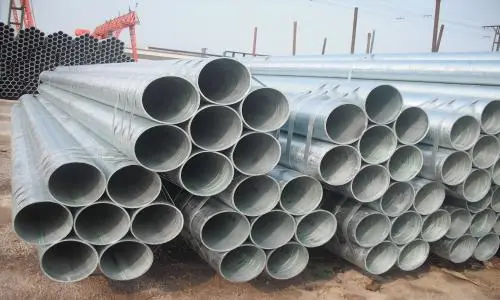
To tell the difference between real hot-dip galvanised pipe and fakes, you need to pay attention to visual Galvanized steel pipe clues and paperwork. The real coating has a unique crystalline spangled pattern, which is made up of visible zinc flower forms that happen when the coating is cooled down slowly after the dip process. The surface should feel mostly smooth, but there should be some roughness from the zinc layer that has hardened. A uniform gray-silver colouration without large bare spots or flaking shows that the coating is adhering well and is thick enough. Reliable makers stamp pipes with standard compliance markings like the ASTM designation, production heat number, and galvanisation batch codes. With these traceable identifiers, quality can be checked through mill test papers that list the chemical makeup, mechanical properties, and coating weight. Before a shipment goes out, procurement managers should ask for verified paperwork and test random samples of large orders. When you work with manufacturers who have ISO 9001 quality management systems and NSF/ANSI 61 certification for drinking water parts, you lower the risk of buying things because you know that the controls during production are always the same.
Safety Considerations of Galvanized Steel Pipes for Drinking Water
Coating Integrity and Water Quality
The zinc covering does more than just keep rust from forming; it also protects water quality by stopping the formation of iron oxide, which changes the colour of water and lets bacteria grow. The zinc layer acts as a barrier between flowing water and the steel base when it is whole. Zinc levels in modern galvanised pipe made to current standards are usually within the limits set by health officials as safe. According to the World Health Organization, zinc is an essential nutrient. Because it is not very toxic, the aesthetic taste thresholds are set at 3 mg/L instead of health-based limits. Problems arise as systems age and coatings wear down due to electrochemical reactions that are affected by water pH, dissolved oxygen, chloride concentration, and flow velocity. Acidic water (pH below 6.5) speeds up the breakdown of zinc, which could lead to the release of too many metal ions and corrosion of the steel base. Once the protected layer is gone, iron leaching causes the reddish-brown water stains that are common in older buildings. This change period, which can last anywhere from 20 to 50 years depending on the water chemistry, is the most important time when safety concerns rise, and replacement is suggested. Water utilities can greatly extend the useful life of galvanised pipes by using corrosion control methods like adjusting the pH, adding orthophosphate, and buffering the alkalinity. These cleaning methods help protective scale form on the inside of pipes, which keeps metal release rates stable. When selecting new installations, procurement professionals should work with water quality engineers to make sure that pipe materials are compatible with current treatment plans. This will ensure that the pipes are safe and last as long as they are supposed to.
Comparative Performance Analysis
When compared to other materials, galvanised steel shows unique performance traits that are important for purchasing choices. Stainless steel lines don't have any zinc leaching issues because they use chromium-based passive films, which make them more resistant to corrosion in harsh water chemicals. But stainless steel is more expensive—usually 3–5 times as much as galvanised options—and needs special welding techniques that make installation more expensive. Galvanised steel works well for low-cost municipal projects or industrial sites that need to control the quality of the water. It requires much less capital investment than black steel (ungalvanized carbon steel), and the surfaces that come into contact with water are clearly safer with galvanised pipe. When black steel is exposed to potable water, it rusts quickly, releasing high iron levels that aren't acceptable for aesthetic reasons. This rust also forms tuberculation, which are rough layers inside the steel that lower flow rates and harbour microorganisms. During the active protection phase, the galvanised coating stops these things from happening, which justifies its small price premium over bare steel for any drinking water application. The economic equation changes when looking at very long service spans of more than 50 years. In these situations, materials like cross-linked polyethylene (PEX) or ductile iron with a cement mortar lining may offer cheaper lifetime costs through longer replacement intervals, even though they cost more at first. Instead of just looking at unit prices, procurement analysis should include estimates of the total cost of ownership that take into account things like expected service life, maintenance needs, and compatibility with water quality.
Comparison of Galvanized Steel Pipes with Other Pipe Types for Drinking Water
Material Selection Framework
To choose the best pipe materials, you have to match their technical qualities with the specifics of the project, such as the chemistry of the water, the pressure needs, the installation environment, and the budget. Galvanised steel works great in situations where high mechanical strength, fire resistance, and moderate corrosion protection are needed, and the goal is to keep the original cost as low as possible. The 70,000+ psi tensile strength of the material allows for high-pressure ratings and external loading conditions that Galvanized steel pipe would weaken plastic alternatives. PVC and HDPE pipes are most commonly used for new residential water service installations because they don't rust, are easy to handle, and have fusion-welded joints that eliminate leaky threaded connections. These polymer materials don't react chemically with chlorine water, and their smooth insides make them better at hydraulics. Plastic lines, on the other hand, don't do well in fires; they give off toxic fumes when they burn and break down at temperatures above 140°F. Building codes often don't allow plastic piping in commercial and industrial buildings where fire safety rules say non-combustible materials must be used. In these places, galvanised steel is still required, even though it costs more. Copper tubing is another common alternative that has been used for decades and has great corrosion resistance in most water chemicals. Because copper is a good thermal conductor, it is better for outdoor installations in cold climates where they will be open to the elements. When compared to galvanised steel, which can handle different chemicals, this material can't be used as much because it pits easily in acidic or high-sulfate water. Also, worries about copper theft in easy-to-reach places make less valuable materials like steel more appealing for building utility infrastructure that is open to security risks.
Application-Specific Recommendations
Large-diameter gearbox mains that move water over long distances usually use welded steel or ductile iron pipe instead of galvanised pipe. These large pipelines move more slowly, so there is less chance of erosion, but they need the strongest structures possible to handle soil loads and water hammer forces. For this kind of heavy-duty use, cement mortar or fusion-bonded epoxy coatings are better at protecting the inside than zinc coating. Building distribution systems that serve commercial buildings, industrial plants, and multi-family residential buildings often ask for galvanised steel with a diameter between 21.3mm and 100mm. When it comes to these sizes, galvanised pipe has cheap threaded joints that can be used for modular installation and future changes. The rigidity of the material makes support space and seismic bracing easier than with flexible plastic systems, which need hangers more often. Fire sprinkler systems always choose galvanised steel schedules 10 and 40 because they are fire-resistant, have a high-pressure rating, and meet building codes. Cross-linked polyethylene (PEX) or polyethylene (PE) is increasingly used by municipal water services to connect individual properties to street mains because it is easier to install and doesn't rust. But at meter spots, transition fittings usually have brass or galvanised parts that connect to existing systems. When procurement teams know about these application-specific tastes, they can make the best material choices that balance performance needs with project costs in their own operational setting.
Maintenance and Handling to Ensure Safe Drinking Water Use
Installation Best Practices
Proper installation protocols significantly influence galvanized pipe performance and water safety outcomes. Threaded connections remain the predominant joining method for smaller diameters, requiring clean, properly-tapered threads cut to ANSI B1.20.1 standards. Thread sealants must specify drinking water safety approvals—typically Teflon tape or approved pipe dopes formulated without harmful solvents that could contaminate potable supplies. Over-tightening damages thread engagement and cracks the zinc coating, creating corrosion initiation sites that compromise system integrity. Welded connections for larger diameter pipes demand attention to galvanization interruption at weld zones. Heat input volatilizes zinc coating within several inches of weld seams, exposing bare steel vulnerable to preferential corrosion. Field application of zinc-rich repair coatings or galvanizing repair paint restores protection at these critical junctures. Procurement specifications should clearly define weld zone treatment requirements and inspection protocols, ensuring contractor compliance. Neglecting this step accelerates localized corrosion that often manifests as pinhole leaks requiring costly emergency repairs within the first decade of service. Flushing newly-installed galvanized systems removes manufacturing residues, loose zinc particles, and flux compounds that could affect initial water quality. A thorough velocity flush—achieving a minimum 3 feet per second flow for at least five minutes at each outlet—clears debris before the system enters service. This procedure also establishes the passive zinc carbonate layer that forms when water contacts fresh galvanized surfaces, improving long-term stability and reducing initial metal release rates.
Preventive Maintenance Programs
Routine inspection intervals should monitor key performance indicators signaling coating degradation before water quality impacts escalate. Visual examination of accessible piping during scheduled maintenance identifies surface rust blooms, white corrosion products (zinc oxide), or weeping at joints, indicating active corrosion. Water quality testing for zinc and iron concentrations at representative system locations tracks coating condition through objective measurements rather than solely relying on customer complaints about discolored water. Implementing water treatment optimization extends galvanized pipe service life substantially. Maintaining pH between 7.0 and 8.5 minimizes both zinc dissolution (accelerated below pH 7.0) and scale formation that can trap corrosion cells (common above pH 9.0). Alkalinity levels around 80–100 mg/L as CaCO₃ provide buffering capacity, stabilizing pH throughout the distribution system. Adding polyphosphate corrosion inhibitors at 1–3 mg/L creates protective films on pipe interiors that reduce metal release rates by 40–60% compared to untreated water. Scheduled replacement planning based on installation dates and water quality trends prevents catastrophic failures that Galvanized steel pipe disrupt operations and risk occupant exposure to contaminated water. Systems approaching 30–40 years of service warrant detailed condition assessments, including internal video inspection or coupon sampling that directly measures remaining coating thickness. This proactive approach allows budget allocation for systematic pipe replacement during planned maintenance windows rather than emergency response scenarios that multiply costs and business interruption impacts.
Procurement Guide and Trusted Suppliers for Galvanized Steel Pipes
Evaluation Criteria for Supplier Selection
Sourcing galvanized steel pipe for drinking water applications demands rigorous supplier vetting beyond simple price comparison. Quality manufacturing begins with certified raw material procurement—steel coils or skelp meeting ASTM A572 chemistry and mechanical property specifications. Suppliers should provide mill test reports (MTRs) documenting chemical analysis, tensile testing, and heat treatment records for every production lot. This traceability enables root cause investigation if quality issues emerge post-installation and demonstrates the manufacturing discipline essential for consistent product performance. Galvanization facility certification represents another critical qualification factor. Operations maintaining ASTM A123/A153 compliance through American Galvanizers Association membership or equivalent international certifications demonstrate commitment to coating quality standards. Inspect coating thickness uniformity, surface preparation protocols, and post-galvanization handling procedures during supplier audits. Facilities employing automated temperature controls, zinc chemistry monitoring, and proper draining techniques produce superior coating consistency compared to manual operations vulnerable to process variation. Production capacity and delivery reliability directly impact project schedules and inventory carrying costs. Suppliers operating multiple manufacturing lines with diverse diameter capabilities can accommodate expedited orders and maintain consistent lead times during peak construction seasons. Geographic proximity reduces freight expenses and transit damage risks—particularly important for large-diameter pipes susceptible to handling impacts that crack galvanized coatings. Establishing relationships with regional suppliers positioned within 500 miles of project sites optimizes logistics while supporting contingency procurement if primary sources experience disruptions.
Negotiation Strategies and Purchasing Approaches
Volume-based pricing negotiations leverage economies of scale, benefiting both buyer and supplier. Consolidating requirements across multiple projects or coordinating with other divisions generates order quantities that justify price concessions and dedicated production runs, ensuring material consistency. Annual blanket purchase orders with scheduled release dates provide suppliers with demand visibility, enabling efficient production planning while securing favorable pricing for procurement teams managing recurring material needs. Technical specification dialogue often reveals opportunities for cost optimization without compromising performance. Relaxing dimensional tolerances where project requirements permit, accepting standard lengths rather than custom cuts, or utilizing alternative coating weight specifications for low-corrosivity environments can reduce unit pricing substantially. Engage supplier technical representatives early in the specification development process to identify such value engineering possibilities before bid solicitation locks in potentially unnecessary premium requirements. Quality assurance provisions within purchase agreements protect against substandard material delivery. Requiring third-party inspection at the manufacturing facility before shipment verifies compliance with specifications through independent coating thickness measurements, dimensional verification, and visual examination. Retention clauses withholding final payment pending satisfactory installation performance and initial water quality testing create accountability incentives, ensuring suppliers deliver promised quality rather than simply meeting minimum specification language.
Conclusion
Galvanized steel pipe remains a viable material choice for drinking water systems when procurement decisions account for water chemistry compatibility, proper installation practices, and realistic service life expectations. The protective zinc coating provides decades of reliable corrosion resistance under appropriate conditions, delivering cost-effective performance for municipal infrastructure, commercial buildings, and industrial facilities. However, aging systems require monitoring and eventual replacement as coatings degrade and water quality impacts emerge. Successful material selection balances initial acquisition costs against lifecycle expenses, regulatory compliance requirements, and operational risk tolerance specific to each project context. Procurement professionals partnering with certified suppliers and implementing proper maintenance protocols can confidently specify galvanized steel where its technical and economic advantages align with project requirements while ensuring safe drinking water delivery throughout the system's operational lifespan.
FAQ
1. Can galvanized steel pipe be safely used in new drinking water installations?
Modern galvanized pipe, manufactured to current ASTM standards and properly installed, can safely serve drinking water applications in appropriate water chemistry conditions. Systems with neutral pH (7.0–8.5) and adequate corrosion control treatment typically experience 30–50 years of acceptable performance before coating degradation necessitates replacement.
2. How do I distinguish galvanized steel from stainless or black steel pipe?
Galvanized pipe displays a characteristic gray-silver surface with visible zinc crystal patterns, whereas stainless steel shows a brighter, mirror-like finish, and black steel appears dark with mill scale or paint coating. Magnet testing differentiates stainless (weakly magnetic or non-magnetic) from galvanized and black steel (both strongly magnetic).
3. What maintenance procedures prevent contamination in galvanized systems?
Regular water quality monitoring detecting elevated zinc or iron levels signals coating degradation requiring intervention. Maintaining proper pH and alkalinity, conducting periodic flushing to remove sediment, and inspecting accessible piping for corrosion evidence comprise essential maintenance protocols extending safe service life.
4. When should galvanized pipe be replaced in existing systems?
Replacement becomes advisable when water testing reveals sustained metal concentrations exceeding aesthetic standards, visual inspection shows widespread rust formation, or the system approaches 40–50 years of service in typical water chemistry conditions. Earlier replacement may be warranted in aggressive water environments.
Partner with HYPILE for Reliable Galvanized Steel Pipe Solutions
Procuring high-quality galvanized steel pipe demands a supplier combining manufacturing excellence with technical expertise tailored to complex water infrastructure projects. HYPILE specializes in delivering engineered pipe solutions manufactured to exacting ASTM A572 standards across grades GR42 through GR65, accommodating diverse strength requirements. Our advanced ERW, SSAW, and LSAW welding processes produce pipes ranging from 21.3mm to 7000mm in diameter with wall thicknesses up to 230mm—comprehensive dimensional flexibility meeting virtually any project specification. Each pipe undergoes rigorous hot-dip galvanization, ensuring coating integrity that withstands decades of potable water service.
Beyond standard product offerings, HYPILE provides turnkey support, including galvanized steel pipe encompassing material supply, protective coating enhancement, precision fabrication, and engineering consultation throughout your project lifecycle. Our "BUILD TO THE LAST" philosophy guarantees uncompromising quality and structural integrity, empowering infrastructure developments to withstand demanding service conditions. As a trusted galvanized steel pipe supplier with 45+ years of group expertise, we understand the critical importance of water safety compliance, delivery reliability, and responsive technical support, driving successful project outcomes.
Connect with our procurement specialists at sales@hypile.com to discuss your specific requirements, request certified mill test documentation, or obtain competitive quotations for your upcoming water infrastructure projects. Whether you require standard materials or customized solutions addressing unique installation challenges, HYPILE delivers the manufacturing precision and technical partnership your projects deserve.
References
1. American Water Works Association. (2020). AWWA Manual M27: External Corrosion Control for Infrastructure Sustainability. Denver: American Water Works Association.
2. National Association of Corrosion Engineers. (2019). Corrosion Control in Drinking Water Systems: A Practical Guide. Houston: NACE International.
3. U.S. Environmental Protection Agency. (2016). Optimal Corrosion Control Treatment Evaluation Technical Recommendations for Primacy Agencies and Public Water Systems. Washington, D.C.: EPA Office of Water.
4. World Health Organization. (2017). Guidelines for Drinking-Water Quality: Fourth Edition Incorporating the First Addendum. Geneva: World Health Organization Press.
5. American Society for Testing and Materials. (2018). ASTM A153/A153M-18: Standard Specification for Zinc Coating (Hot-Dip) on Iron and Steel Hardware. West Conshohocken: ASTM International.
6. British Standards Institution. (2015). BS EN 10240:2015 Internal and/or External Protective Coatings for Steel Tubes - Specification for Requirements and Test Methods for Coatings Applied to Threaded or Plain End Steel Tubes. London: BSI Standards Publication.
Have a project in mind? Tell us your goals — we’ll help you make it real.