- English
- French
- German
- Portuguese
- Spanish
- Russian
- Japanese
- Korean
- Arabic
- Greek
- German
- Turkish
- Italian
- Danish
- Romanian
- Indonesian
- Czech
- Afrikaans
- Swedish
- Polish
- Basque
- Catalan
- Esperanto
- Hindi
- Lao
- Albanian
- Amharic
- Armenian
- Azerbaijani
- Belarusian
- Bengali
- Bosnian
- Bulgarian
- Cebuano
- Chichewa
- Corsican
- Croatian
- Dutch
- Estonian
- Filipino
- Finnish
- Frisian
- Galician
- Georgian
- Gujarati
- Haitian
- Hausa
- Hawaiian
- Hebrew
- Hmong
- Hungarian
- Icelandic
- Igbo
- Javanese
- Kannada
- Kazakh
- Khmer
- Kurdish
- Kyrgyz
- Latin
- Latvian
- Lithuanian
- Luxembou..
- Macedonian
- Malagasy
- Malay
- Malayalam
- Maltese
- Maori
- Marathi
- Mongolian
- Burmese
- Nepali
- Norwegian
- Pashto
- Persian
- Punjabi
- Serbian
- Sesotho
- Sinhala
- Slovak
- Slovenian
- Somali
- Samoan
- Scots Gaelic
- Shona
- Sindhi
- Sundanese
- Swahili
- Tajik
- Tamil
- Telugu
- Thai
- Ukrainian
- Urdu
- Uzbek
- Vietnamese
- Welsh
- Xhosa
- Yiddish
- Yoruba
- Zulu
What is the difference between seamless and welded steel pipes?
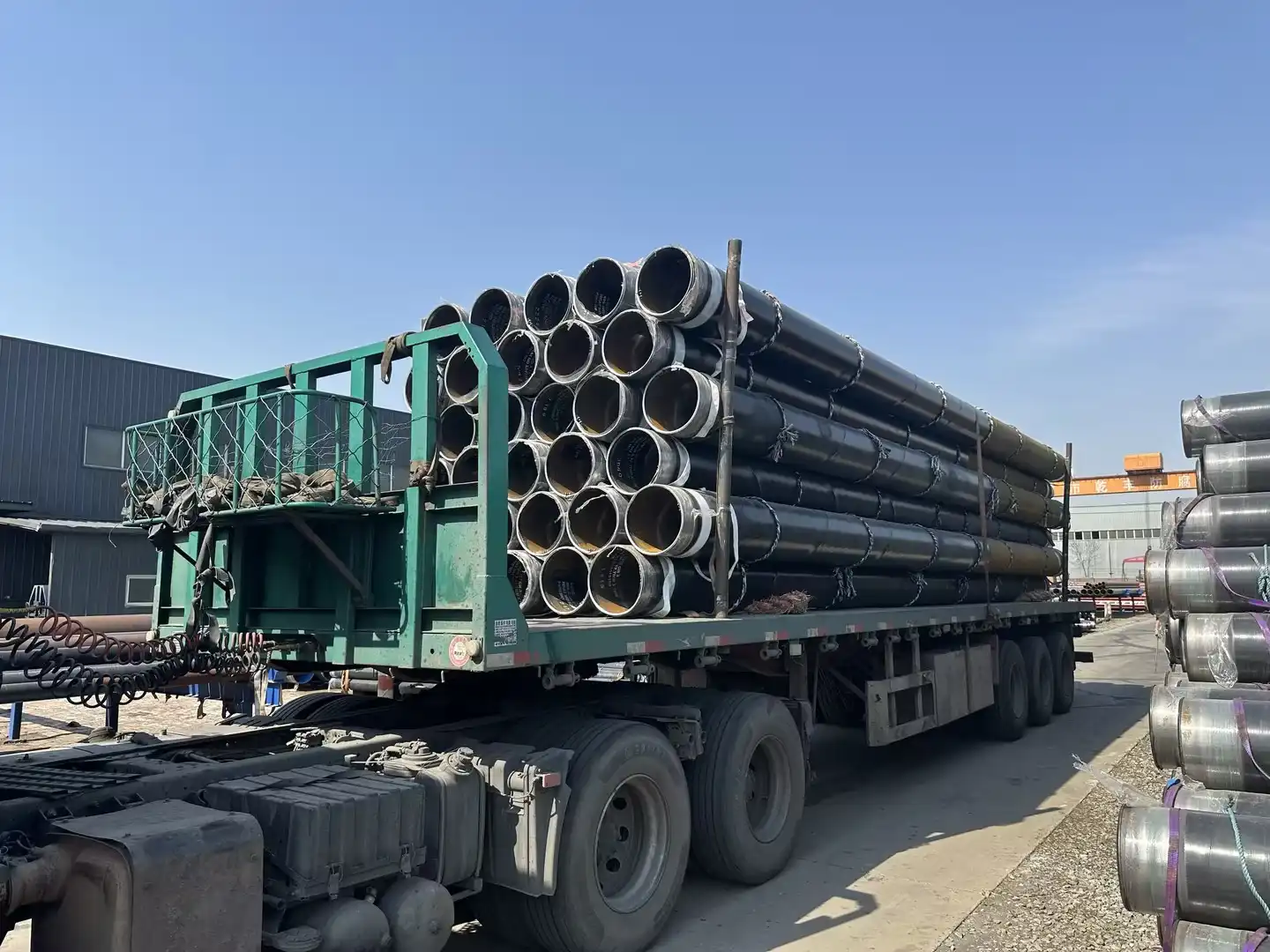
What makes seamless steel pipes different from welded steel pipes is how they are made. When you extrude a solid steel billet, you get seamless pipes with a smooth structure that doesn't have any seams or joins. To make welded steel pipe, on the other hand, steel plates or strips are bent into cylinder forms, and then the edges are joined using welding methods like ERW, SSAW, or LSAW. This difference in production has an impact on the uniformity of the structure, its ability to withstand pressure, its cost-effectiveness, and its suitability for use. Both types of pipes are very important in the infrastructure, energy, and industry sectors. The type that is chosen depends on the performance needs of the project and the budget.
Introduction
Steel pipes are an important part of modern infrastructure. They are used in everything from water systems in cities to energy platforms in the ocean. Choosing between seamless and welded options has a direct effect on the strength of the structure, the time it takes to complete the project, and the total cost of management. Over many years of engineering progress, both types of pipes have changed to meet more complex operational needs. However, their main manufacturing differences still determine their best uses. Knowing these differences helps project managers, procurement specialists, and engineering directors choose materials that meet technical needs, follow regulations, and stay within budget. This guide looks at how both types of pipes are made, how well they work, what the quality standards are, and how they can be used in real life. It gives B2B procurement workers useful information for navigating global supply chains and strict project requirements.
Understanding Steel Pipes: Seamless vs Welded
Manufacturing Process of Seamless Steel Pipes
Seamless pipes begin as solid cylindrical steel billets heated to approximately 1,200°C. The malleable billet is pierced by a mandrel or rotary piercing mill, creating a hollow shell. Subsequent rolling, elongating, and sizing operations refine the dimensions and wall thickness. This process eliminates weld seams, producing pipes with uniform grain structure and consistent mechanical properties throughout the circumference. Seamless manufacturing suits high-pressure applications but involves higher production costs and dimensional limitations compared to welded alternatives.
Manufacturing Process of Welded Steel Pipes
Electric Resistance Welding (ERW), Spiral Submerged Arc Welding (SSAW), and Longitudinal Submerged Arc Welding (LSAW) are the three main ways that welded pipes are made. ERW uses a high-frequency electrical current to heat the edges of steel strips. The strips are then pressed together under pressure, which is accurate and quick for widths up to 610mm. SSAW makes pipes by wrapping steel strips in a spiral pattern and welding along the helical seam. This is a cheap way to make pipes with large diameters. LSAW shapes plates into pipes using U-forming or O-forming presses, and submerged arc welding makes strong longitudinal seams that can handle thick-walled, large-diameter applications up to 7,000mm. Modern welded pipes made to API 5L standards—including PSL1 grades (GR B, X42, X52, X56, X60, X65, X70, X80) and PSL2 grades (GRBM through X80M)—achieve great performance thanks to cutting-edge welding technology and strict quality control. For specific uses, these manufacturing skills can make tubes with outer diameters API 5L X60 Welded Steel Pipe ranging from 21.3 mm to 7,000 mm, wall thicknesses ranging from 0.8 mm to 230 mm, and lengths up to 100 meters.
Key Manufacturing Distinctions
Since seamless pipes don't have any weld seams, they don't have any weak spots. However, this means that they can only be made in smaller sizes and costs more. Welded pipe manufacturing gives you more options for sizes, grades, and production rates, and improvements in technology have closed performance gaps from the past. The mechanical properties of both types of pipes are improved by heat treatment methods like normalising, quenching, and tempering. However, the weld zone characteristics of welded pipes need extra attention. Knowing these little details about manufacturing helps buying teams figure out what suppliers can do and how to match production methods to the needs of the project.
Comparative Analysis: Seamless vs Welded Steel Pipes
Mechanical Properties and Structural Integrity
It is best to use seamless pipes in places where the pressure changes a lot or where the load changes over time because their strength is the same across the whole cross-section. Since there are no longitudinal seams, there are no possible failure places that can happen in joints that aren't properly welded. However, modern welded pipes that meet API 5L PSL2 standards go through strict testing procedures that make sure the weld quality is the same as or greater than the strength of the base material. Nondestructive testing methods, such as ultrasonic examination and radiographic inspection, make sure that welded seams keep their mechanical properties. High-strength grades, such as X70M and X80M, show that welded pipes can reach yield strengths of more than 560 MPa while still being very tough and flexible. LSAW and SSAW processes use controlled cooling rates and post-weld heat treatment to improve the grain structure around the weld zones. This lowers worries about brittleness in certain areas. Performance data from large infrastructure projects shows that welded pipes that were made correctly work reliably under tough conditions as long as strict quality assurance methods are followed.
Cost-Effectiveness and Production Efficiency
Because they make better use of materials, can be scaled up, and are easy to make, welded pipes are very good for the economy. It is possible to make things much faster with ERW methods than with seamless extrusion. This lowers the cost per unit while keeping the measurements correct. By cutting down on waste during the forming process, SSAW ways make the best use of steel. In applications with big diameters, this means that prices are fair. These cost savings are especially clear in building projects that need a lot of pipes. This is because optimising the budget has a direct effect on the project's ability to go forward. Because welded manufacturing can work with different sizes, suppliers can meet specific needs without having to deal with the tooling problems that come with seamless processes. Heavy-walled pipes up to 230 mm thick can be made with LSAW. This is useful for projects that need pipes with widths greater than 610 mm or wall thicknesses greater than what normal seamless can handle. This simplifies the buying process and gets rid of the need for pricey fixes when the project needs more seamless pipe than is available.
Lifecycle Performance and Durability
Both kinds of pipes last a long time if they are set up and defined properly. Smooth pipes work best when there are changes in temperature, pressure, or acidic media because the performance can be predicted, as the material properties are the same. Welded lines work great when the load stays the same or changes slowly. This is especially true when coats are used to keep the outside from rusting. Coatings like galvanising, fusion-bonded epoxy, and three-layer polyethylene make welded types last longer in a range of weather situations. Studies of city water systems, natural gas transmission networks, and industrial process piping in the field show that the failure rates of seamless and code-compliant welded pipes aren't that different when installation standards are met. It's not just the way something was made that affects how reliable it is in the long term; the right material grade, good corrosion protection, the right pressure rating, and following the installation guidelines are also very important.
How to Choose the Right Steel Pipe for Your Procurement Needs
Matching Pipe Type to Application Requirements
The pipes should be chosen with the help of the project standards, which should carefully describe how they will be used. Because they can handle more pressure and don't have any seams that could fail, seamless pipes are better for high-pressure steam systems, hydraulic cylinders, and monitoring tubes. Sewn pipes, on the other hand, are better and cheaper for low- to moderate-pressure uses like water transmission mains, structural supports, building foundations, and low- to moderate-pressure. Things like how corrosive the soil is, the temperature ranges in the area, and the amount of contact with harsh chemicals can change the material grade that is used for each type of pipe. Carbon steel types like API 5L GR B are enough for most building needs. Bridges, offshore platforms, and energy buildings that have to hold heavy loads, on the other hand, need stronger types (X60 to X80). Coatings or upgrades to alloys that don't rust can help with some environmental issues. When you buy something, you should think about how much the items cost up front and how much they will cost to fix up over time.
Navigating B2B Procurement Dynamics
We need suppliers for big projects that we API 5L X60 Welded Steel Pipe know we can count on to meet our quality standards, volume needs, and shipping times. To check out potential suppliers, some of the things that need to be done are looking at their manufacturing certifications, quality management systems, and production ability in relation to project deadlines. It's easier and more accountable to buy from suppliers who do everything, like making the materials, putting on protective coatings, and handling logistics. Different suppliers and ways of making things have very different minimum order amounts, wait times, and payment terms. A lot of the time, ERW pipes have shorter wait times and lower minimum orders than LSAW custom works. Clear communication about tolerances for sizes, testing needs, and delivery goals can help keep you from having to deal with costly delays and design mistakes. People who have worked with a lot of suppliers can help you write technical specs. They know how to find problems and find the best ways to fix them that fit the project's goals and budget.
Global Sourcing Considerations
People who want to buy steel pipes can do so in a number of ways, each with its own set of options for price, quality, and service. Before you buy from a foreign company, make sure they follow well-known rules like ISO 3183, ASTM A53, and API 5L. These rules make sure that all of the places where the goods are made have the same level of quality. Ask for mill test reports, third-party inspection certificates, and sample testing to make sure that the products meet certain standards before you buy a lot of them. Logistics issues like shipping costs, import duties, and planning deliveries can change the total landed costs, which are different from the pipe prices that are given. Suppliers in the same country may be better at responding quickly, communicating clearly, and cutting down on wait times. Foreign sources, on the other hand, may offer low prices for big quantities. You need to do a full cost analysis that looks at things like quality assurance costs, possible delays, and ways to lower risk during the buying process in order to find the right balance between these.
Industry Standards and Quality Assurance for Welded Steel Pipes
API 5L Standards and Compliance
The American Petroleum Institute's API 5L standard tells line pipes how to carry oil, gas, and water. In the PSL1 standard, basic quality requirements are laid out. These include limits on chemical makeup, minimum mechanical properties, and dimensional tolerances. In PSL2, controls are tighter because the composition ranges are smaller, toughness tests are better, there are more non-destructive tests, and documentation needs to be trackable. There are different grades of API 5L, from basic GR B (minimum yield strength 245 MPa) to high-strength X80 (yield strength 555 MPa). PSL2 variants, which are identified by a "M" suffix, have tighter composition controls and have to pass Charpy V-notch impact tests. With this grading system, the qualities of the material can be exactly matched to the way it will be used. As the grade goes up, it can handle more pressure, bigger diameters, or tougher installation circumstances. In order to make sure that the materials given meet the needs of the project, the procurement specifications should list specific API 5L grades and PSL levels.
Testing and Certification Protocols
Several checks are made at different steps of production to make sure the quality of welded pipes. Researchers in chemistry have shown that the makeup is correct, and tests on tensile strength, yield strength, and elongation have shown that they are correct as well. Flaring, flattening, and hydrostatic tests make sure the material can be formed and can hold up under pressure. High-tech methods, such as ultrasound testing, radiographic examination, and electromagnetic inspection, are used to find issues below the surface that might affect how well the pipe works in the long run. Certified pipes have mill test certificates (MTCs) that show the test results, the source of the materials, and compliance statements. Third-party inspection services make sure that the quality of the product is checked by someone else. This is very useful for important tasks, or when you buy from sellers you don't know well. Keeping specific records of quality helps with project audits, insurance needs, and failure investigations in case something goes wrong during the service life.
Manufacturer Credentials and Reputation
Choosing sellers who have done similar projects successfully in the past lowers the risks of the buying process and makes the project better. Keep your ISO 9001 quality management certification, API licensing, and industry-specific approvals. This shows that you are committed to maintaining high-quality standards. Case studies, client references, and project portfolios can help you figure out if the supplier has worked with technical issues, applications, and size needs that are similar to yours in the past. A supplier connection that lasts for a long time makes it easier to talk to them, get service faster when time is of the essence, and work together when requirements need to be changed. When suppliers spend money on new tools for making things, tools for checking quality, and training for their expert staff, the products they sell are more reliable, and they get better customer service throughout the whole project. These things are more important than just looking at how much the products cost because they have a big effect on how well the job turns out overall.
Applications and Use Cases of Welded Steel Pipes vs Seamless Pipes
Infrastructure and Municipal Applications
Because they are cheap and come in a wide range of diameters, welded pipes are used for most water distribution networks, sewage collection systems, and stormwater control infrastructure. SSAW pipes with welded steel pipes with diameters between 500 mm and 3,000 mm can carry municipal water over long distances easily. Coatings that protect the pipes from corrosion ensure that they will work for decades. Welded pipes are used in structural applications like bridge piers, building columns, and foundation piles because they can be made in a variety of sizes and are priced competitively without lowering their load-bearing capacity. They are also better for urban development projects because they are easier to transport and take less time to make than imported seamless pipes. Because custom lengths of up to 100 meters can be made, field joints in pipeline setups are kept to a minimum. This cuts down on labour costs and possible leak points. Because of these useful benefits, welded pipes are usually chosen for building projects that need to balance cost and performance needs.
Energy and Industrial Process Applications
API 5L welded pipes in grades X52 through X80 are mostly used in oil and gas transmission pipelines. These grades are chosen based on working pressures, environmental conditions, and safety concerns. The high strength-to-weight ratios of LSAW pipes make them good for onshore pipelines because they reduce the amount of installation tools needed and allow longer unsupported spans. Offshore uses need pipes that are tougher and less likely to rust. PSL2 grades and advanced coating systems protect against the harsh marine environment. In factories that process chemicals, steam, or compressed gases, they choose pipes based on their pressure ratings, temperature limits, and ability to work with different types of media. Seamless pipes are used in high-pressure reactors, boiler connections, and important instruments where failure would have serious effects that are worth the extra cost. Welded pipes are used for plant distribution systems, cooling water circuits, and structural supports where low prices and moderate pressures are needed. Process engineers choose the right pipe types by carefully checking design pressures, safety margins, and how easy it is to do upkeep.
Foundation Engineering and Piling Systems
The best combination of structural strength, physical availability, and cost-effectiveness can be seen in the use of welded pipes in piles. Steel pipe piles hold up heavy buildings in tough soil by transferring loads to solid layers through skin friction and end bearing. Different load needs can be met by diameters ranging from 300 mm to 2,000 mm. Wall thicknesses are chosen based on driving stresses and service loads. Welded manufacturing is very flexible, so it can be changed to fit different geological conditions and building needs. Sheet piling systems with welded parts can be used for temporary excavation support, permanent shore structures, and flood control barriers. Being able to make interlocking profiles with very tight tolerances on dimensions makes sure that installations are waterproof and that loads are transferred efficiently between parts. These uses show how the production flexibility of welded pipes can be useful in geotechnical and foundation engineering, where customisation and cost management have a direct effect on the project's viability.
Conclusion
To tell the difference between seamless and welded steel pipes, you need to know how they are made, how well they work, and what the specific needs of the application are. You can't just assume that one type will always be better than the other. Seamless pipes are better for critical service and high-pressure situations, where consistent material qualities are worth the extra cost. Because they are cost-effective, can be made in a variety of sizes, and meet high-quality standards, welded variants are a great choice for infrastructure, energy, and industrial projects that need stable long-term performance. Welded pipes can meet strict technical requirements and help procurement strategies that are focused on saving money, thanks to modern production technologies and strict adherence to API 5L standards. For material selection to go well, project conditions, regulatory requirements, and the supplier's ability to match pipe characteristics with operational needs must all be taken into account. This way, decisions can be made that lead to the best possible project results.
FAQ
1. Can welded pipes be used interchangeably with seamless pipes?
Welded pipes meeting API 5L PSL2 standards achieve mechanical properties comparable to seamless alternatives in many applications. Projects involving moderate pressures, static loads, and temperatures below 400°C typically accommodate welded pipes without performance compromises. High-pressure hydraulic systems, severe cyclic loading, or extreme temperatures may still require seamless pipes. Consulting with engineers to evaluate specific operating conditions ensures appropriate pipe type selection aligned with safety requirements and performance expectations.
2. Why do welded pipes cost less than seamless pipes?
Manufacturing efficiency drives welded pipes' cost advantages. ERW and SSAW processes achieve higher production rates with lower energy consumption compared to seamless extrusion. Material utilization improves through precise forming operations that minimize waste. Dimensional flexibility eliminates specialized tooling costs associated with seamless production. These factors combine to reduce per-unit manufacturing costs, particularly for larger diameters and high-volume orders, making welded pipes economically attractive for budget-sensitive projects without sacrificing essential performance characteristics.
3. How can I verify international quality certifications for welded steel pipes?
Request comprehensive mill test certificates documenting chemical analysis, mechanical testing, and dimensional inspection results. Verify supplier API licensing through the American Petroleum Institute's online registry. Engage accredited third-party inspection agencies to witness manufacturing, conduct independent testing, and certify compliance with specified standards. Review supplier quality management certifications, including ISO 9001 accreditation. These verification steps establish confidence in material quality and ensure procurement decisions rest on validated data rather than supplier claims alone.
Partner with HYPILE for Premium Welded Steel Pipe Solutions
At HYPILE, we recognize that successful infrastructure, welded steel pipes, and foundation projects demand more than standard pipe supply—they require engineering partnerships built on technical expertise and manufacturing excellence. Our comprehensive portfolio includes ERW, SSAW, and LSAW welded steel pipe manufactured to API 5L PSL1 and PSL2 standards, covering grades from GR B through high-strength X80M. With dimensional capabilities spanning 21.3mm to 7,000mm outer diameter, wall thicknesses up to 230mm, and lengths extending to 100 meters, we deliver customized solutions matching your exact project specifications.
Our "BUILD TO THE LAST" philosophy ensures every pipe meets rigorous quality standards through advanced manufacturing processes, comprehensive testing protocols, and complete traceability documentation. Whether you're sourcing materials for piling foundations, pipeline infrastructure, or structural applications, our experienced team provides technical consultation, competitive pricing, and reliable delivery schedules supporting your project timelines. Contact our specialists at sales@hypile.com to discuss your requirements with a trusted welded steel pipe supplier committed to engineering excellence and long-term partnership success.
References
1. American Petroleum Institute. (2018). Specification for Line Pipe: API Specification 5L, Forty-sixth Edition. Washington, DC: API Publishing Services.
2. Bai, Y., & Bai, Q. (2014). Subsea Pipeline Design, Analysis, and Installation. Oxford: Gulf Professional Publishing.
3. Davis, J. R. (Ed.). (2006). Corrosion of Weldments. Materials Park, OH: ASM International.
4. Guo, B., Song, S., Ghalambor, A., & Lin, T. R. (2014). Offshore Pipelines: Design, Installation, and Maintenance (2nd ed.). Oxford: Gulf Professional Publishing.
5. Palmer, A. C., & King, R. A. (2008). Subsea Pipeline Engineering (2nd ed.). Tulsa, OK: PennWell Corporation.
6. Watkins, R. K., & Anderson, L. R. (2000). Structural Mechanics of Buried Pipes. Boca Raton, FL: CRC Press.
Have a project in mind? Tell us your goals — we’ll help you make it real.