- English
- French
- German
- Portuguese
- Spanish
- Russian
- Japanese
- Korean
- Arabic
- Greek
- German
- Turkish
- Italian
- Danish
- Romanian
- Indonesian
- Czech
- Afrikaans
- Swedish
- Polish
- Basque
- Catalan
- Esperanto
- Hindi
- Lao
- Albanian
- Amharic
- Armenian
- Azerbaijani
- Belarusian
- Bengali
- Bosnian
- Bulgarian
- Cebuano
- Chichewa
- Corsican
- Croatian
- Dutch
- Estonian
- Filipino
- Finnish
- Frisian
- Galician
- Georgian
- Gujarati
- Haitian
- Hausa
- Hawaiian
- Hebrew
- Hmong
- Hungarian
- Icelandic
- Igbo
- Javanese
- Kannada
- Kazakh
- Khmer
- Kurdish
- Kyrgyz
- Latin
- Latvian
- Lithuanian
- Luxembou..
- Macedonian
- Malagasy
- Malay
- Malayalam
- Maltese
- Maori
- Marathi
- Mongolian
- Burmese
- Nepali
- Norwegian
- Pashto
- Persian
- Punjabi
- Serbian
- Sesotho
- Sinhala
- Slovak
- Slovenian
- Somali
- Samoan
- Scots Gaelic
- Shona
- Sindhi
- Sundanese
- Swahili
- Tajik
- Tamil
- Telugu
- Thai
- Ukrainian
- Urdu
- Uzbek
- Vietnamese
- Welsh
- Xhosa
- Yiddish
- Yoruba
- Zulu
What Is a Welded Steel Pipe and How Is It Made? A Complete Guide
To make a welded steel pipe, flat steel plates or strips are bent into a cylinder shape, and then the edges are joined using different types of welding. Compared to seamless pipes made from solid billets, welded steel pipes are much more cost-effective, can be made in a wide range of sizes, and are available in widths up to 7,000mm. These lines are very important for moving oil and gas, water in cities, building structures, and foundation engineering. The pipe's mechanical properties, suitability for use, and compliance with strict standards like API 5L PSL1 and PSL2 depend on the ways used to make it, mainly ERW (Electric Resistance Welded), SSAW (Spiral Submerged Arc Welded), and LSAW (Longitudinal Submerged Arc Welded).
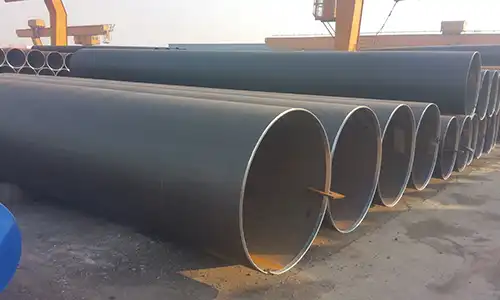
Understanding Welded Steel Pipes: Fundamentals and Types
Welded steel pipes represent a cornerstone of modern infrastructure, combining engineering precision with economic viability. The fundamental principle involves transforming flat steel into a cylindrical structure through controlled welding processes. This approach enables manufacturers to produce pipes with exceptional dimensional accuracy while maintaining material consistency throughout the product.
Defining Welded Steel Pipes and Their Core Characteristics
For welded lines to stay together, the metallurgical bond at the seam must be as strong as or stronger than the base material. Today's welding methods create fusion zones with small grain structures, which reduces the number of possible weak spots. These pipes behave mechanically in a way that can be predicted when pressure, temperature, and external loads are applied. Their even wall thickness spread makes sure they work well in tough situations, like on offshore platforms or in underground utility networks.
Primary Manufacturing Methods: ERW, SSAW, and LSAW
The welded pipe business is based on three main welding methods, each of which is best for different size ranges and performance needs. ERW technology uses high-frequency electrical resistance to heat and join longitudinal gaps in pipes that are usually between 21.3 mm and 610 mm in diameter. This method makes surfaces that are smooth and have tight specs, which are perfect for structural uses and moving fluids at medium pressure. SSAW pipes use spiral welding patterns, which makes it possible to make large-diameter pipes (up to 3,500mm) at a low cost and with a lot of freedom in terms of length customisation. LSAW pipes can handle the toughest situations. They can make heavy-wall pipes up to 7,000 mm in diameter and 230 mm thick, which are needed for high-pressure pipelines and deep base projects.
Comparing Welded and Seamless Alternatives
When looking at pipe options for complicated projects, knowing the difference between welded and seamless products helps you choose the best materials. Because their construction is all the same, seamless pipes work well in places with very high pressure and very high temperatures. But welded pipes have clear benefits for infrastructure projects: they can handle larger diameters than seamless pipes can, they offer better cost-performance ratios when buying in bulk, and they keep quality consistent through automated production controls. When precise measurements and easy availability are most important in foundation engineering and structural uses, welded pipes are the best choice.
The Manufacturing Process of Welded Steel Pipes: Step-by-Step Analysis
Quality in welded pipe production stems from rigorous process control at every manufacturing stage. Understanding these processes enables procurement teams to evaluate supplier capabilities and predict product performance in real-world conditions.
Raw Material Selection and Preparation
The first step in the production process is to buy a steel coil that API 5L GR B Welded Steel Pipe meets the chemical composition standards set by API 5L. The strength, weldability, and corrosion resistance of the end pipe are directly affected by the amount of carbon, manganese, and alloying elements that are used. Before it is formed, incoming material is checked for errors in size and quality by looking at its surface. Precision milling is done on the edges of coils to make sure they have clean, parallel areas that help the quality of the weld. This stage of preparation sets the stage for future activities that require accurate measurements.
Forming and Welding Technologies
The making process is different depending on the method of production, but it always keeps precise geometric control. In the ERW process, steel strips are fed through rolls that gradually shape the flat material into a circular shape. As the sides come together, high-frequency induction currents heat up the area to the fusion temperature. This makes a solid-state weld that doesn't need any filler material. LSAW pipes use U-ing and O-ing presses to make heavy plates before submerged arc welding, which uses an electric arc under granular flux to make deep-penetration welds that can be used for thick-wall purposes. In SSAW production, steel strips are wound around a helical pattern at controlled angles. This lets welding continue along the helical seam. To keep quality high, each way uses real-time monitoring systems that keep an eye on the welding parameters.
Heat Treatment and Finishing Operations
Post-weld heat treatment reduces leftover stresses and improves the microstructure of the weld zone, which makes the metal stronger and more flexible. As part of the normalising process, pipes are heated to specific temperatures based on the grade, which can be anything from basic Gr.B to high-strength X80M. The pipes are then cooled slowly to achieve the desired mechanical qualities. Pipes are tested for structural stability using hydrostatic pressure, which is usually at pressures 50% higher than their operational ratings. Surface treatments on the outside and inside, like shot blasting and coating application, keep surfaces from rusting in harsh settings. Automated measurement systems are used for dimensional inspection to make sure that tolerance standards are met and that the part will work with engineered systems.
Inspection and Quality Assurance Protocols
Every production batch is checked against strict standards using thorough testing methods. Ultrasonic examination and other non-destructive testing methods can find internal discontinuities. In important uses, radiographic inspection can check the quality of the weld. Samples are taken out for mechanical testing to measure tensile strength, yield point, and extension, which confirms grade compliance. By analysing chemicals, we can be sure that the composition limits needed for welding and service performance are met. These multi-level verification methods give B2B clients written proof that the product is reliable, which helps lower project risks.
Technical Standards and Specifications: Ensuring Quality and Compliance
Adherence to recognized industry standards transforms welded pipes from commodities into engineered components with predictable performance characteristics. These frameworks establish common quality benchmarks enabling global procurement and regulatory compliance.
API 5L Grading System and Compliance Requirements
The 5L standard from the American Petroleum Institute sets the requirements for line pipes used in oil and gas gearbox systems. The Product Specification Level 1 (PSL1) lists basic quality requirements for general use. It includes grades from Gr.B to X80 and sets minimum yield strengths. In PSL2, better quality rules are added, API 5L GR B Welded Steel Pipe, such as stricter limits on chemical composition, required impact tests, and more non-destructive examination needs. The "M" prefix in PSL2 grades (X42M through X80M) means that the rolling process was managed and the cooling process was sped up, which improves the strength-to-weight ratio. PSL2 grades are usually used for projects with difficult geological conditions or high-consequence areas to lower the chance of failure.
Dimensional Specifications and Tolerance Standards
Accurate pipe measurements have a direct effect on how well the installation works and how well the system works overall. Most of the time, the outside diameter tolerances for small-diameter ERW pipes are ±0.4mm, and for large-diameter LSAW pipes they are ±1.0%. Tolerances for wall thickness work in a similar way, but for pressure-bearing uses, the controls are stricter. Length capabilities vary a lot depending on the manufacturing process. For example, ERW facilities usually make standard lengths of 12 meters, while LSAW facilities specialise in delivering single-piece pipes up to 100 meters long for foundation and bridge building projects. This dimensional flexibility gets rid of the need for field welding joints, which speeds up the installation process and removes possible leak points in important structures.
Protective Coatings and Corrosion Management
Conditions of environmental contact determine the type of coating that is needed to keep structures working well and extend their service life. For underground pipes, three-layer polyethylene (3LPE) coatings work great to keep water out, and fusion-bonded epoxy (FBE) is better at resisting chemicals in industrial settings. Hot-dip galvanising makes metallurgical zinc layers that protect piles used in marine settings where chloride exposure speeds up corrosion. The choice of coating takes into account the working temperature range, the chemistry of the soil, and how easy it is to do maintenance. When surface protection systems are properly defined, they lower lifecycle costs by delaying replacements and reducing the number of emergency repairs that need to be made.
Choosing the Right Welded Steel Pipe: Comparative Insights for B2B Buyers
Effective material selection balances technical performance requirements against project economics and supply chain considerations. Analyzing these factors systematically leads to optimized procurement decisions.
Material Grade Selection for Specific Applications
Carbon steel types are widely available and have a good strength-to-cost ratio, so they are used for most structural and fluid transport tasks. Grades X52 to X65 are used for standard pipeline projects with mild pressure ratings. Grades X70 and X80 are used for high-pressure gearbox lines that need thinner walls to be just as strong. For foundation engineering tasks, yield strength and weldability are very important. This is why X52M and X60M grades are often used for pipe piles that hold bridges and tall buildings. Rust resistance is another thing to think about when choosing an alloy. Adding molybdenum improves performance in sour gas environments, and adding copper improves the rust resistance of exposed structural elements in the atmosphere.
Manufacturing Process Selection Criteria
Matching the right welding technology to the job makes the most of both efficiency and budget. ERW pipes are good for building projects and moderate-pressure fluid systems where precise sizes and smooth surfaces make installation go more quickly. The high-frequency welding process makes small areas that are changed by heat, which keeps the properties of the base material near the weld. SSAW works best in low-pressure, large-diameter jobs like water supply mains and offshore jacket piles, because spiral welding can work with a range of sizes. LSAW pipes are designed to work in the toughest situations, like thick-walled pipelines working at the highest pressures, deep foundations that have to withstand huge lateral loads, and important infrastructure that needs to last longer in difficult environments.
Cost-Performance Optimization Strategies
There's more to procurement economics than just comparing unit prices. When you order in bulk, you can get discounts from manufacturers and lower the cost of shipping each unit. This is especially helpful for big building projects where long-term demand is expected. Using the same diameters and grades throughout the whole project makes managing inventory easier and speeds up shipping times. Customisation needs, like different widths, bevelled ends, or better testing, come with higher prices but get rid of the need for field modifications and possible quality issues. Accurate budget estimates are made by looking at the total cost of acquisition, welded steel pipes which includes freight, inspection, and handling. When you involve suppliers early on in the planning stages of a project, you can have value engineering talks that weigh requirements against practical alternatives.
Procurement and Supplier Selection: Best Practices for Global B2B Clients
Supplier partnerships significantly influence project outcomes beyond product quality alone. Establishing relationships with capable manufacturers ensures reliable delivery, technical support, and responsive problem-solving.
Evaluating Supplier Qualifications and Capabilities
A comprehensive supplier assessment examines multiple dimensions of operational competence. Manufacturing certifications, including API 5L monograms, ISO 9001 quality systems, and ASME pressure vessel approvals, demonstrate adherence to recognized standards. Production capacity metrics—annual tonnage, diameter ranges, and specialty capabilities—indicate the ability to fulfill project volumes without compromising schedules. Technical resources, such as in-house testing laboratories, engineering support teams, and coating facilities, reflect a commitment to quality and customer service. Site visits provide direct observation of manufacturing practices, equipment condition, and organizational culture that influence long-term partnership success.
Navigating Minimum Order Quantities and Custom Requirements
Standard production runs typically favor economic order quantities that balance setup costs against inventory carrying expenses. Manufacturers establish minimum order thresholds based on production efficiency considerations, often ranging from 20 to 50 metric tons, depending on product complexity. Custom specifications, including non-standard lengths, special coatings, or enhanced testing, increase minimum quantities to justify tooling and process adjustments. Collaborative planning with suppliers identifies opportunities to combine orders, participate in production campaigns with similar specifications, or accept slight dimensional variations that maintain technical performance while reducing costs. Clear communication of project timelines enables suppliers to optimize production scheduling, potentially reducing lead times and priority charges.
Verification and Quality Control in Procurement
Quality management that is proactive does more than just look over mill test papers. Third-party inspection services check the accuracy of the dimensions, the mechanical properties, and the state of the surface before shipping. Witness testing lets client agents see important quality checks, such as coating application, hydrostatic pressure tests, and non-destructive examinations. Setting clear acceptance criteria in buy agreements spells out who is responsible for what and what can be done if material that doesn't meet standards arrives at project sites. Material traceability records, heat treatment charts, and coating thickness reports are all part of documentation packages that help with project quality assurance programs and meeting legal requirements.
Conclusion
To get welded steel pipes for a project, you have to find a balance between technical requirements, manufacturing processes, and the supplier's abilities. Knowing the differences between ERW, SSAW, and LSAW technologies helps match product features to the needs of the application. Also, being familiar with API 5L standards makes sure that products are compliant and work as expected. Details about the manufacturing process, from preparing the raw materials to heat treatment and checking, show quality factors that affect the structure's long-term strength. Total cost of ownership, supplier qualifications, and quality verification procedures are all important parts of good procurement strategies that help infrastructure, industrial, and foundation engineering projects run smoothly and with less risk.
FAQ
1. What advantages do welded steel pipes offer compared to seamless alternatives?
Welded pipes provide superior cost-effectiveness in large-diameter applications while maintaining structural reliability for foundation and infrastructure projects. Manufacturing flexibility enables the production of pipes up to 7,000mm in diameter with a wall thickness reaching 230mm—dimensions unattainable through seamless processes. The controlled welding environment produces consistent quality with documented traceability, essential for project compliance requirements.
2. How can procurement teams verify supplier quality and compliance?
Requesting API 5L certification documentation, ISO quality system approvals, and recent third-party audit reports establishes baseline supplier credibility. Reviewing mill test reports for previous similar orders reveals consistency in mechanical properties and dimensional accuracy. Engaging independent inspection agencies to witness critical production stages, including welding, heat treatment, and hydrostatic testing, provides objective quality validation before shipment.
3. What factors influence pricing in bulk welded steel pipe purchases?
Material grade selection drives base cost, with high-strength grades like X70M commanding premium pricing over standard Gr.B. Dimensional specifications, including diameter, wall thickness, and length, affect material yield and production complexity. Order volume enables economies of scale, while customization requirements, such as special coatings or enhanced testing, increase unit costs. Current steel market conditions and logistics considerations further impact total procurement expenses.
Partner with HYPILE for Reliable Welded Steel Pipe Solutions
HYPILE specializes in manufacturing and supplying high-performance welded steel pipes engineered for the world's most demanding foundation and infrastructure projects. Our comprehensive manufacturing capabilities span ERW, SSAW, and LSAW processes, producing pipes from 21.3mm to 7,000mm in diameter with full API 5L PSL1 and PSL2 grade coverage—from standard Gr.B through ultra-high-strength X80M. With 45+ years of group expertise and our "BUILD TO THE LAST" philosophy, we deliver turnkey solutions including material supply, precision fabrication, protective coatings, and engineering support tailored to your project specifications. Contact our technical team at sales@hypile.com to discuss your requirements with an experienced welded steel pipe supplier committed to quality, reliability, and on-time delivery.
References
1. American Petroleum Institute. (2018). Specification for Line Pipe: API Specification 5L. 46th Edition. Washington, D.C.: API Publishing Services.
2. Thompson, R.L. & Martinez, J.K. (2020). Welding Technologies in Modern Pipeline Construction: Process Selection and Quality Assurance. Houston: Offshore Engineering Press.
3. European Committee for Standardization. (2019). Steel Tubes for Pressure Purposes: Technical Delivery Conditions - Part 7: Stainless Steel Tubes. EN 10217-7:2019. Brussels: CEN Publications.
4. Chen, W. & Nakamura, H. (2021). Foundation Engineering Materials: Selection, Testing, and Performance in Complex Geological Conditions. Singapore: International Geotechnical Publishers.
5. Industrial Fasteners Institute. (2022). Standards and Specifications for Steel Piling Systems in Infrastructure Applications. 12th Edition. Cleveland: IFI Technical Publications.
6. Morrison, P.D., Svensson, L. & Kumar, A. (2019). Corrosion Protection Systems for Buried and Submerged Steel Structures: Materials, Application, and Lifecycle Performance. London: Corrosion Engineering International.
Have a project in mind? Tell us your goals — we’ll help you make it real.