- English
- French
- German
- Portuguese
- Spanish
- Russian
- Japanese
- Korean
- Arabic
- Greek
- German
- Turkish
- Italian
- Danish
- Romanian
- Indonesian
- Czech
- Afrikaans
- Swedish
- Polish
- Basque
- Catalan
- Esperanto
- Hindi
- Lao
- Albanian
- Amharic
- Armenian
- Azerbaijani
- Belarusian
- Bengali
- Bosnian
- Bulgarian
- Cebuano
- Chichewa
- Corsican
- Croatian
- Dutch
- Estonian
- Filipino
- Finnish
- Frisian
- Galician
- Georgian
- Gujarati
- Haitian
- Hausa
- Hawaiian
- Hebrew
- Hmong
- Hungarian
- Icelandic
- Igbo
- Javanese
- Kannada
- Kazakh
- Khmer
- Kurdish
- Kyrgyz
- Latin
- Latvian
- Lithuanian
- Luxembou..
- Macedonian
- Malagasy
- Malay
- Malayalam
- Maltese
- Maori
- Marathi
- Mongolian
- Burmese
- Nepali
- Norwegian
- Pashto
- Persian
- Punjabi
- Serbian
- Sesotho
- Sinhala
- Slovak
- Slovenian
- Somali
- Samoan
- Scots Gaelic
- Shona
- Sindhi
- Sundanese
- Swahili
- Tajik
- Tamil
- Telugu
- Thai
- Ukrainian
- Urdu
- Uzbek
- Vietnamese
- Welsh
- Xhosa
- Yiddish
- Yoruba
- Zulu
Top Uses of Welded Steel Pipes in Industrial Applications
Welded steel pipes have become important building parts in many industries around the world. They are strong, can be made in a variety of sizes, and are cost-effective. They also meet a wide range of engineering needs. These pipes are an important piece of technology that project managers, procurement experts, and engineering directors all over the world trust to do everything from moving high-pressure fluids across continents to building the framework of skyscrapers. This detailed guide looks at the high-quality manufacturing behind welded steel pipe production. It also looks at important industrial applications ranging from oil and gas transmission to municipal water networks. Finally, it gives B2B decision-makers in charge of big infrastructure projects actionable procurement strategies. Understanding the technical details and compliance standards for these pipes will help you choose suppliers who can provide safety, performance, and long-term value, whether you're looking for foundation solutions for difficult geological conditions or reliable materials for energy facilities.
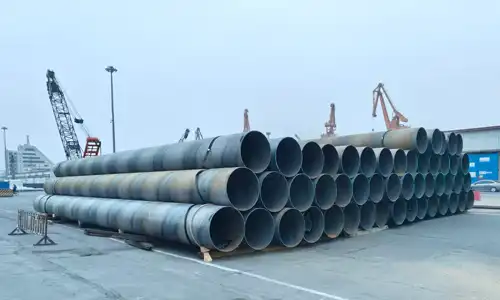
Understanding Welded Steel Pipes and Their Manufacturing Process
Welded steel pipes are engineered by precisely rolling flat steel plates or coiled strips into cylindrical shapes, then permanently joining the longitudinal or spiral seam through advanced welding techniques. The resulting product combines the formability of steel with the structural integrity needed for demanding industrial environments, making it an optimal choice for projects requiring specific diameters, wall thicknesses, and mechanical properties.
Core Manufacturing Techniques: ERW, SSAW, and LSAW
When it comes to making, there are three main types of welding. Each one meets different geometric needs and performance standards. Electric Resistance Welding (ERW) melts and heats the sides of steel pipes using high-frequency electrical currents. This makes pipes with very exact surfaces and walls that are all the same thickness. Because of this, they are perfect for tasks that need tight specs and smooth insides. It is easy and quick to use ERW to make pipes with outside sizes ranging from 21.3 mm to 660 mm and wall thicknesses ranging from 0.8 mm to 25 mm. These pipes can be used to transport fluids at moderate pressure and for building purposes. This method, called Spiral Submerged Arc Welding (SSAW), winds steel strips in a spiral shape and then welds along the spiral seam while the metal is covered in granular flux. In terms of cost, this is the best way to do jobs with large diameters. It can make lines that are up to 3,500 mm across and have walls as thick as 50 mm. The spiral shape spreads stress out widely, making the material more resistant to internal pressure while keeping its efficiency. This is especially helpful when money is tight for building a lot of pipelines. The most difficult jobs can be done with Longitudinal Submerged Arc Welding (LSAW), which makes the thick-walled, large-diameter lines needed for high-pressure gearboxes and structural piling. With LSAW, plates are rolled into cylinders and straight longitudinal lines are welded under submerged arc conditions. Pipes can be up to 100 meters long, 7,000 mm in diameter, and have walls that are up to 230 mm thick. This skill is directly related to tough engineering issues such as building foundations for offshore platforms, pipes that go deep into the ocean, and structural beams that can't fail.
Heat Treatment and Quality Assurance Protocols
To be good at making, you need to know more than just how to weld. Heat treatment methods such as normalising, cooling, and tempering make the structure of metals better. These steps set mechanical properties like impact toughness, yield strength, and tensile strength. High temperatures are used to normalise the pipes, and then controlled air is used to cool them down. This evens out the structure of the grains and lets go of any stresses that are still there. Putting pipes through a quick quench in water or oil will make them stronger. Tempering, on the other hand, reheats quenched material to make it stronger while still being flexible. Strict testing procedures make sure that the material meets all standards for size and strength. There are non-destructive testing methods, such as ultrasound examination and hydrostatic pressure testing, that make sure the weld is strong and the structure is sound. Visual checks find flaws on the surface. Each pipe that leaves the plant has to meet the strict API 5L PSL1 and PSL2 standards. These steps make sure that every pipe does. This gives buying managers written proof that the materials will work well for as long as they are supposed to.
Advantages Over Seamless Alternatives
When it comes to many business situations, welded steel pipes are much better than seamless ones. Welded pipes can have much bigger diameters and longer single-piece lengths, which means they don't need as many field joints and cost less to install. The welding method also makes better use of materials, which leads to lower prices without lowering the strength of the structure. While seamless pipes work best in ultra-high-pressure situations that need complete uniformity, modern welded pipes made to API 5L PSL2 standards are just as reliable for most oil and gas, water transmission, and structural projects. This makes them the smart choice for procurement teams that are watching their budgets and managing large infrastructure portfolios.
Top Industrial Applications of Welded Steel Pipes
Welded steel pipes serve as vital arteries and API 5L X52 Welded Steel Pipe structural elements across industries where reliability directly impacts operational safety, project timelines, and long-term asset performance. Understanding application-specific requirements helps procurement professionals match pipe grades and manufacturing processes to engineering demands.
Oil and Gas Transmission Infrastructure
Onshore and offshore oil and gas transport networks depend on welded steel pipes made to API 5L standards. These standards describe the chemical makeup, mechanical properties, and testing needs for line pipe materials. Engineers can choose materials that are right for the operating pressures, the environment, and the safety margins. Grades range from API 5L Gr.B (basic strength standards) to X80 (high-strength applications). PSL2 grades, which include X42M through X80M, have stricter chemical composition limits and must pass Charpy impact testing. This makes the pipes more durable in low-temperature and sour service environments. LSAW pipes are used for large-diameter trunk lines that move natural gas and crude oil across continents. Wall thicknesses of 15mm to 50mm can withstand internal pressures exceeding 10 MPa while also accommodating ground movement and thermal expansion. When it comes to regional delivery networks, SSAW pipes are a cost-effective way to keep structures strong while still sticking to budgets. ERW pipes are used in secondary distribution systems and gathering lines where modest pressures and smaller diameters are possible because of how they are made.
Construction and Structural Engineering
More and more, welded steel pipes are used as load-bearing columns, bracing members and architectural elements in the frameworks of business buildings, industrial facilities and transportation infrastructure. Pipes made to ASTM A500 or similar standards have consistent mechanical qualities and can be welded, which makes designing and making connections easier. When it comes to buckling resistance, circular hollow sections are better than open profiles. This means that longer unsupported spans can be used with less structural weight. In foundation engineering, welded steel pipes are used as pilings to move building loads through weak surface soils to strong bearing strata. Pipe piles with walls that are 8mm to 25mm thick and widths that range from 300mm to 2,000mm can go through tough geological conditions like soft clays, high groundwater tables, and soils that can be easily liquefied. By driving these piles into bedrock or dense sand layers, friction and end-bearing capacity are created that are strong enough to support multi-story buildings, bridge abutments, and marine terminals. This directly addresses the problems that project managers face when they have to deal with unpredictable subsurface conditions and tight construction schedules.
Municipal Water and Wastewater Systems
Urban water supply networks depend on welded lines that don't rust to get potable water from treatment plants to distribution points all over cities. Pipes made of carbon steel that have protected linings on the inside, like cement mortar or fusion-bonded epoxy, last longer than 50 years while still meeting water quality standards. Large LSAW and SSAW pipes (up to 3,000mm) are used to make gearbox mains that can move thousands of cubic meters of water per hour, which helps cities and industrial complexes. Wastewater collection systems move sewage and stormwater through gravity flow and pumping stations, so they need pipes that can withstand wear and tear, chemical attack and biogenic corrosion. If you properly coat welded steel pipes, they can handle the harsh conditions of sanitary drains, where high levels of hydrogen sulphide and changes in pH make materials less durable. Custom fittings, branches, and connections can be made from welded pipe stock. This speeds up installation and lowers lifecycle costs, which are important factors for city procurement managers who have to balance performance needs with limited capital budgets.
Industrial Manufacturing and Energy Production
For moving process fluids, moving cooling water, and supporting structures, chemical processing plants, power plants, and manufacturing operations use welded steel pipes. Welded manufacturing allows for a wide range of sizes to be used, which is great for special needs like jacketed pipes for temperature-sensitive materials, large-bore low-pressure steam lines, and heavy-wall high-temperature service applications. Welded pipes are used in petrochemical refineries for cracking processes, distillation units, and product distribution networks. The choice of material balances mechanical strength with corrosion resistance and thermal stability. Welded pipes are used in cooling tower systems, condensate return lines, and ash handling circuits in power plants. Their dependability has a direct effect on the power they can produce and the cost of their upkeep. Being able to get pipes that meet ASTM, API, and EN standards from licensed suppliers makes sure that they work with foreign engineering standards and legal frameworks for compliance.
Comparing Welded Steel Pipes with Other Pipe Types for Industrial Use
Procurement decisions require a clear understanding of how welded steel pipes compare against alternative materials and manufacturing methods. This analysis examines key performance parameters influencing the total cost of ownership and project success.
Welded vs. Seamless Steel Pipes
To make seamless pipes, solid billets are pierced and API 5L X52 Welded Steel Pipe and rolled into hollow tubes without any longitudinal seams. This gives the pipes uniform wall thickness and isotropic mechanical properties. This way of making things works great for ultra-high-pressure uses like hydraulic systems, pressure vessels, and important oil and gas service, where hoop stress concentrations at weld seams could cause failure. Welded pipes work just as well in most industrial uses, but they are more cost-effective, come in a wider range of diameters, and are easier to get in longer lengths. Modern LSAW pipes made to API 5L PSL2 standards go through strict weld quality checks, such as ultrasonic inspection and x-ray examination, to make sure that the properties of the weld zone meet or exceed the specs of the base material. The price difference is especially noticeable for projects with diameters above 600 mm, where seamless pipe premiums can be more than 30 to 50 per cent higher without any performance gains. Engineers should choose seamless pipes for situations where there are extreme cyclic pressure changes, harsh corrosive environments that need maximum material homogeneity, or government rules that require seamless construction. Welded pipes are the best choice for gearbox pipelines, building applications, water systems and most industry processes where choosing the right grade and following quality control procedures will give you the reliability you need at a price you can afford.
Welded Steel vs Galvanised Steel Pipes
Galvanised pipes have zinc coats that are put on through hot-dip or electrogalvanizing methods. These coatings protect the pipes from corrosion in the environment. Galvanised pipes are commonly used for light commercial plumbing and outdoor uses, but they don't work well in high-temperature environments, for installations with large diameters, or for uses that need thick walls. Carbon steel pipes with advanced coating systems, such as fusion-bonded epoxy, three-layer polyethene, or coal tar enamel, protect against corrosion better in a wider range of conditions. These coating technologies make things last longer in places like buried pipes, sites that are submerged, and factories that use sulphur compounds or chlorides. Standard galvanised goods don't give engineers as much freedom as coatings that can be changed based on specific corrosive exposures.
ERW Precision Advantages
ERW welding makes lines with a smooth surface and accurate measurements, which are very useful in situations where threaded connections, close-tolerance slip fittings, or low internal flow resistance are needed. The high-frequency welding process makes small areas that are heated up and have metallurgical properties that are very close to the base material. This supports reliable threaded joint performance and makes installation easier in the field. Procurement professionals who are in charge of projects that need to make a lot of connections, are made automatically, or have strict size requirements, should give priority to ERW pipes in the sizes that work for them. The manufacturing precision cuts down on the need for machining, speeds up installation schedules, and reduces problems with field fit-up. This saves labour and cuts down on building times.
Procurement Guide for Welded Steel Pipes in Global B2B Markets
Successful procurement balances technical compliance, cost efficiency, and supplier reliability—factors requiring structured evaluation frameworks and industry knowledge.
Supplier Certification and Accreditation Requirements
Reliable sellers keep up with certifications that show they can make things and that their quality systems are mature. API 5L monogram licensing shows that production sites meet American Petroleum Institute standards for making line pipes. These standards include equipment requirements, testing procedures, and staff qualifications. ISO 9001 certification checks that quality management systems are being used to make sure that products always meet standards and can be tracked. ASTM International membership and the authenticity of a material test report (MTR) are also signs of trustworthiness. MTRs list the chemical make-up, mechanical qualities, heat treatment settings, and inspection outcomes for certain pipe lots. This lets engineers check that the pipes meet the requirements of the project. Purchasing managers should ask for certified MTRs and make sure they are real by using watermarks, unique identification numbers, and direct proof from the seller. Third-party inspection services can check the quality of the manufacturing, the accuracy of the dimensions, and the application of the coating. Witness testing, expediting services, and final inspection processes offered by companies like Bureau Veritas, SGS, and TÜV lower the risk of procurement. This is especially helpful when getting materials for important infrastructure projects, or from suppliers you don't know much about.
Evaluating Technical Capabilities and Project Experience
When evaluating a supplier, more than just certifications are looked at, such as manufacturing capacity, dimensional capabilities, and related project experience. Check to see if possible suppliers have the right tools to make the diameters, wall thicknesses, and lengths you need within the time frame you can afford. When you buy from suppliers that offer more than one manufacturing process (ERW, SSAW, LSAW), you can make the best use of your specifications based on engineering needs and your budget. Ask for case studies that show how they successfully completed projects with a similar scope, complexity, and environmental conditions to your own. Suppliers with experience installing pipelines offshore know what kind of coating is needed for submerged service, while suppliers who work with city infrastructure markets know about AWWA standards and potable water compliance. This subject expertise leads to fewer misunderstandings about specifications, less rework, and a smoother project execution.
Pricing Strategies and Bulk Purchasing Considerations
The price of welded steel pipe depends on the cost of the raw materials (steel coil or plate), how hard it is to make, what kind of finish is needed, and how supply and demand change in the market. Because steel costs are affected by global commodity markets, contract timing and hedging strategies are important for big purchases. Suppliers usually offer volume discounts for orders that are bigger than minimum production runs or container quantities. Price breaks become significant above 100-ton commitments. Ask for detailed quotes that include the price of the base material, the cost of coating it, the cost of testing it, the cost of packaging it, and the freight terms. Make sure that quotes include mill test certificates, third-party inspection, and shipping to the end location. If you look at the total landed cost instead of just the unit price, you can avoid budget overruns and scheduling delays caused by unexpected costs. Long-term supply agreements are helpful for projects that need to be built in stages or have ongoing maintenance needs. Setting up framework contracts with agreed-upon prices, quality standards, and delivery terms makes buying things easier for long-term building projects and gets better business terms.
Logistics and Lead Time Management
Manufacturing lead times vary from four weeks for standard ERW pipes in common sizes to twelve weeks or more for custom LSAW products requiring specific heat treatments or coating systems. Coordinate procurement schedules with construction timelines, allowing buffer periods for potential manufacturing delays, inspection holds, welded steel pipes or shipping contingencies. International shipping adds complexity through customs clearance, documentation requirements, and freight coordination. Experienced suppliers offer delivered pricing that includes inland transportation, export documentation, and destination port handling—simplifying logistics management and clarifying cost structures. Verify whether suppliers maintain strategic inventory for standard sizes, potentially reducing lead times for urgent requirements or phased delivery schedules.
Ensuring Quality and Compliance in Welded Steel Pipe Usage
Quality assurance and regulatory compliance protect project investments by ensuring materials perform as specified throughout their intended service life.
Industry Standards Governing Pipe Manufacturing
API 5L remains the predominant specification for line pipe used in oil and gas transmission, defining requirements for carbon steel pipes including chemical composition limits, tensile properties, toughness criteria, and testing frequencies. PSL1 provides baseline requirements suitable for general applications, while PSL2 imposes stricter controls appropriate for sour service, low-temperature installations, and critical infrastructure where enhanced material properties reduce operational risk.ASTM standards address broader industrial applications: ASTM A53 covers black and hot-dipped galvanised pipes for mechanical and pressure applications; ASTM A500 defines structural tubing requirements; ASTM A252 specifies piling pipe for foundation engineering. European EN standards such as EN 10217 and EN 10219 govern technical delivery conditions for welded tubes, with grade designations and testing protocols differing from North American practices. Understanding which standards apply to your specific application ensures specification accuracy and supplier alignment. Procurement documents should explicitly reference applicable standards, editions, and any supplementary requirements such as enhanced impact testing temperatures or reduced sulfur content for sour service resistance.
Corrosion Protection Through Coatings and Treatments
When carbon steel lines are exposed to water, oxygen, and electrolytes, they corrode. This happens in a series of steps that weaken the walls and make the structure less strong. Protective coating systems make walls around steel surfaces that keep corrosive environments out. This greatly increases the service life of the steel. Fuse-bonded epoxy (FBE) coatings, which are applied using an electrostatic spray and then cured by heat, have great chemical resistance and stick well to buried pipelines, submerged installations, and industrial process piping. Three-layer polyethene (3LPE) systems include FBE primers, adhesive copolymers, and polyethene outer jackets. They protect long-distance transmission pipelines from mechanical damage and provide better resistance to moisture. Internal coatings address concerns about flow media compatibility and product contamination. Linings made of cement mortar keep drinkable water systems from rusting and keep the flow smooth. In sewer and process pipes, liquid epoxy linings keep chemicals from attacking them. Coating choice should take into account specific working temperatures, environmental exposures, and expected service life. Coating experts, corrosion engineers, and procurement teams must work together to make this happen.
Dimensional Accuracy and Customisation Options
The function of a pipe depends on keeping its dimensions within acceptable ranges. Changes in outer diameter and wall thickness have an impact on pressure ratings, the soundness of connections, and the structure's load capacity. API 5L and ASTM standards set the limits for acceptable dimensional errors. Tighter controls can be reached by negotiating extra requirements between buyers and suppliers. Custom fabrication capabilities let suppliers offer bevelled ends to prepare for welding, threaded connections that meet API or proprietary standards, and pre-assembled parts like flanged joints or expansion loops. These value-added services cut down on the need for field labour and speed up installation schedules. This is especially helpful in remote areas or building sites with limited access to specialised equipment.
Conclusion
Welded steel pipes represent proven engineering solutions addressing diverse industrial requirements through reliable performance, dimensional flexibility, and cost-effective manufacturing. The three primary welding processes—ERW, SSAW, and LSAW—offer tailored capabilities matching project specifications from moderate-pressure distribution networks to heavy-wall structural piling applications. Compliance with API 5L and ASTM standards ensures material properties meet engineering demands, while advanced coating systems extend service life across challenging environmental conditions. Successful procurement requires evaluating supplier certifications, technical capabilities, and project experience alongside commercial terms and logistics planning. By applying the insights provided throughout this guide, procurement managers and engineering directors can confidently source materials supporting infrastructure projects demanding safety, longevity, and operational excellence.
FAQ
1. What distinguishes welded pipes from seamless alternatives in industrial applications?
Welded pipes are formed by rolling steel plates and joining edges through ERW, SSAW, or LSAW processes, enabling production of larger diameters and longer lengths at competitive costs. Seamless pipes are manufactured by piercing solid billets, resulting in uniform wall properties ideal for ultra-high-pressure service. Modern welded pipes meeting API 5L PSL2 standards deliver equivalent reliability for most transmission, structural, and industrial applications while offering superior dimensional flexibility and economic advantages.
2. How can buyers verify supplier certifications and manufacturing quality?
Request API 5L monogram licenses, ISO 9001 certifications, and certified material test reports documenting chemical composition and mechanical properties. Engage third-party inspection services such as Bureau Veritas or SGS to conduct witness testing and final inspections. Verify MTR authenticity through watermarks and direct supplier confirmation, ensuring traceability and compliance with project specifications.
3. Which factors influence pricing in bulk welded steel pipe purchases?
Pricing reflects raw material costs, manufacturing process complexity, wall thickness, coating specifications, and order quantities. Volume discounts typically apply above 100-ton commitments, while long-term framework agreements provide favourable terms for multi-phase projects. Clarify whether quotes include mill test certificates, third-party inspection, protective coatings, and delivered pricing to the final destination when comparing supplier proposals.
Partner with HYPILE for Reliable Welded Steel Pipe Solutions
HYPILE delivers comprehensive piling and foundation welded steel pipes engineering expertise backed by 45+ years of manufacturing excellence, offering welded steel pipes manufactured through ERW, SSAW, and LSAW processes conforming to API 5L PSL1 and PSL2 standards. Our dimensional capabilities span 21.3mm to 7,000mm in outer diameter with wall thicknesses reaching 230mm and lengths up to 100 meters—specifications directly addressing demanding infrastructure projects, offshore installations, and complex geological conditions. As a welded steel pipe supplier committed to "BUILD TO THE LAST" principles, we provide complete material certification, protective coating systems, and engineering support, ensuring compliance with international standards. Connect with our technical team at sales@hypile.com to discuss project requirements, receive customised quotations, and access case studies demonstrating successful execution across oil and gas transmission, municipal water systems, and structural foundation applications.
References
1. American Petroleum Institute. (2018). Specification for Line Pipe: API 5L, 46th Edition. Washington, DC: API Publishing Services.
2. ASTM International. (2020). ASTM A500/A500M-20: Standard Specification for Cold-Formed Welded and Seamless Carbon Steel Structural Tubing in Rounds and Shapes. West Conshohocken, PA: ASTM International.
3. Mohitpour, M., Golshan, H., & Murray, A. (2007). Pipeline Design & Construction: A Practical Approach, 3rd Edition. New York: ASME Press.
4. Palmer, A. C., & King, R. A. (2008). Subsea Pipeline Engineering, 2nd Edition. Tulsa, OK: PennWell Corporation.
5. Revie, R. W., & Uhlig, H. H. (2008). Corrosion and Corrosion Control: An Introduction to Corrosion Science and Engineering, 4th Edition. Hoboken, NJ: John Wiley & Sons.
6. Xie, X., & Wang, R. (2016). Manufacturing Processes and Quality Control of Welded Steel Pipes for Energy Infrastructure. Journal of Materials Engineering and Performance, 25(8), 3214-3228.
Have a project in mind? Tell us your goals — we’ll help you make it real.