- English
- French
- German
- Portuguese
- Spanish
- Russian
- Japanese
- Korean
- Arabic
- Greek
- German
- Turkish
- Italian
- Danish
- Romanian
- Indonesian
- Czech
- Afrikaans
- Swedish
- Polish
- Basque
- Catalan
- Esperanto
- Hindi
- Lao
- Albanian
- Amharic
- Armenian
- Azerbaijani
- Belarusian
- Bengali
- Bosnian
- Bulgarian
- Cebuano
- Chichewa
- Corsican
- Croatian
- Dutch
- Estonian
- Filipino
- Finnish
- Frisian
- Galician
- Georgian
- Gujarati
- Haitian
- Hausa
- Hawaiian
- Hebrew
- Hmong
- Hungarian
- Icelandic
- Igbo
- Javanese
- Kannada
- Kazakh
- Khmer
- Kurdish
- Kyrgyz
- Latin
- Latvian
- Lithuanian
- Luxembou..
- Macedonian
- Malagasy
- Malay
- Malayalam
- Maltese
- Maori
- Marathi
- Mongolian
- Burmese
- Nepali
- Norwegian
- Pashto
- Persian
- Punjabi
- Serbian
- Sesotho
- Sinhala
- Slovak
- Slovenian
- Somali
- Samoan
- Scots Gaelic
- Shona
- Sindhi
- Sundanese
- Swahili
- Tajik
- Tamil
- Telugu
- Thai
- Ukrainian
- Urdu
- Uzbek
- Vietnamese
- Welsh
- Xhosa
- Yiddish
- Yoruba
- Zulu
How to calculate the required wall thickness for steel pipe in high-pressure mining applications?
It's not enough to just follow standard tables to find the right wall thickness for steel pipe in high-pressure mining environments. You need to know how operating pressures, environmental conditions, and material performance all work together. When I work with project managers and engineering teams in the infrastructure and industry sectors, they always stress one thing that can't be changed: safety at all costs. If you get the wall thickness wrong, it can cause terrible failures, project delays, and big financial losses. In mining, where pressures often go above 2,000 psi, corrosive slurries speed up wear, and downtime has a direct effect on output, the stakes are especially high. The information in this guide will help you with the technical figures, material choices, and buying strategies that will make sure your pipeline systems work well and stay cost-effective for as long as they're in use.
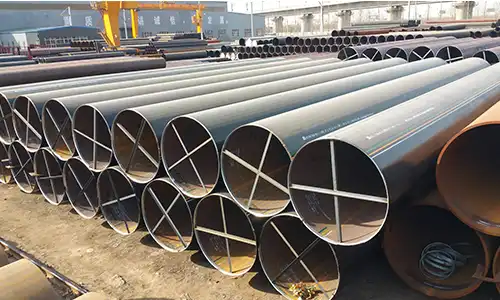
Understanding the Fundamentals of Steel Pipe Wall Thickness
Why Wall Thickness Matters in Mining Operations
The wall thickness of a tubular product is the distance between its inner and outer surfaces. This number directly tells you how much pressure can safely be held inside the pipe. When hydraulic forces move rough materials around in mines or when geological conditions cause external loading, walls that aren't thick enough can become weak spots that can let whole systems down. There isn't a straight line between pressure containment and structural integrity. Even small reductions in thickness can make failure risk much higher in mining settings where loads change often.
Manufacturing Standards That Govern Pipe Specifications
International standards make sure that pipes are made and specified in the same way every time. API 5L is still the most common standard for line pipe used in conveying, and the PSL1 and PSL2 grades offer different levels of testing and quality guarantee. PSL2 standards require Charpy impact testing and tighter limits on chemical composition, which makes them better for important high-pressure uses. ASTM A53 and ASTM A106 set the standards for pipes used in structural and pressure applications, respectively. EN 10219 sets the standards for pipes used in Europe. These standards set minimum wall thickness requirements based on diameter, grade, and planned service. They create a base that engineers often have to go above and beyond when designing for problems that only happen in mining.
Comparing Seamless and Welded Pipe Construction
By piercing solid billets, seamless pipes are made with walls that are all the same thickness, LSAW pipe (Longitudinal Submerged Arc Welded) and no lengthwise joints. This way of building doesn't leave weld seams open to damage, so seamless choices are perfect for high-pressure situations where failure would be very bad. There are three main ways to make welded pipes: ERW (Electric Resistance Welding) is very accurate for smaller diameters, SSAW (Spiral Submerged Arc Welding) is cheap for medium to large diameters, and LSAW (Longitudinal Submerged Arc Welding) is the best for large diameter, thick-walled applications. Modern technology for welding pipes has come a long way. High-frequency ERW and double-submerged arc welding can make joints that are very close to the mechanical qualities of the parent material. Many mines now safely choose welded pipes for high-pressure use as long as the right quality controls and testing procedures are used to make sure the weld is strong.
Material Grade Selection and Performance Characteristics
Carbon steel grades from API 5L Grade B to X80 have better yield strengths, which means that walls can be thinner while still holding the same amount of pressure. Grade B, which has a minimum yield strength of 35,000 psi, is good for moderate-pressure uses. On the other hand, X65 and X70 grades, which have yield strengths above 65,000 psi, allow high-pressure systems to reduce the wall thickness by a large amount. Alloy steels that contain chromium, molybdenum, and nickel are better at resisting rust and working well at high temperatures. Stainless steel grades are much more expensive, but they are much better at resisting corrosion in mining settings that are very acidic or chloride-rich, where carbon steel would break down quickly.
Environmental Factors Affecting Wall Thickness Requirements
Pipes in mines are exposed to harsh elements that speed up the loss of material. There are different types of corrosion, such as uniform surface corrosion from acidic mine water, pitting corrosion in chloride-rich groundwater, and microbiologically influenced corrosion in still circumstances. Material is removed by abrasive wear from moving slurry, not chemical reaction. This happens more quickly than rust in high-velocity situations. Changes in temperature have an effect on the qualities of a material. For example, high temperatures lower the yield strength, and conditions below freezing could cause brittle fracture. Protective coatings, such as fusion-bonded epoxy, polyethene, and polyurethane, keep corrosive media away from the steel base, which extends its useful life. Ceramic, rubber, or polymer linings on the inside of slurry transport equipment protect it from wear and rust. These defensive systems don't get rid of the need for thick walls; instead, they work best when combined with the right materials to give the building the longest possible life.
Core Principles and Calculations for Determining Required Wall Thickness
Barlow's Formula: The Foundation of Pressure Design
Barlow's formula shows how internal pressure, pipe diameter, wall thickness, and allowed stress are all connected. The basic equation is: t = (P × D) / (2 × S × E), where t is the minimum thickness of the wall that needs to be there, P is the design pressure inside the tube, D is the outside diameter, S is the allowed stress (usually a percentage of the yield strength), and E is the efficiency of the weld joint. If the wall thickness is less than one-tenth of the diameter, this method works. This is a reasonable assumption for most industrial pipes. Barlow's formula is very useful for quick calculations because it is very simple. However, for more complicated loading situations, you may need to do a more complex analysis.
ASME Standards and Design Factors
The ASME B31 series of piping codes establishes design methodologies and safety LSAW pipe (Longitudinal Submerged Arc Welded) factors appropriate for different service conditions. ASME B31.4 governs liquid petroleum transportation pipelines, while B31.8 addresses gas transmission systems, and B31.3 covers process piping in industrial facilities. These codes specify design factors ranging from 0.50 to 0.72 for various conditions, representing the inverse of safety factors. A design factor of 0.72 corresponds to a safety factor of approximately 1.39, meaning the pipe can theoretically withstand 39% more pressure than the design condition before reaching yield stress. Mining applications typically employ conservative design factors at the lower end of this range, recognising that operational conditions may exceed nominal design parameters and that failure consequences justify additional safety margins.
Critical Variables Affecting Wall Thickness Calculations
Internal pressure represents the primary loading condition in most pipeline calculations, measured in pounds per square inch (psi) or megapascals (MPa). External loads, including soil overburden, equipment weight, and impact forces, require additional wall thickness beyond that needed for internal pressure alone. Temperature affects both the allowable stress values and the actual internal pressure through thermal expansion of contained fluids. The chemical composition of transported materials determines corrosion rates and appropriate corrosion allowances. Pipe diameter influences the stress distribution, with larger diameters generating proportionally higher hoop stresses for equivalent pressures. Service life expectations dictate corrosion allowances, with longer design lives requiring greater material sacrifices to anticipated degradation.
Step-by-Step Calculation Methodology
The calculation process begins with defining operational parameters: maximum anticipated pressure, temperature range, fluid composition, and required service life. Engineers select appropriate material grades based on strength requirements, corrosion resistance needs, and temperature considerations. The applicable design code and appropriate design factor are determined based on service conditions and regulatory requirements. Allowable stress values are obtained from code tables, adjusted for temperature if the operation exceeds ambient conditions. The nominal wall thickness is calculated using the selected formula, incorporating safety factors and joint efficiency values. Corrosion allowance is added to account for material loss over the design life, typically ranging from 1/16 inch for mildly corrosive service to 1/4 inch or more for severely aggressive environments. Manufacturing tolerances specified in pipe standards, usually 12.5% under-tolerance for welded pipe, are incorporated by dividing the calculated thickness by 0.875. The result is rounded up to the nearest commercially available wall thickness, ensuring constructability and procurement feasibility.
Case Studies: Real-World Examples of Wall Thickness Calculation in Mining
High-Pressure Water Transport Pipeline
A mining operation required a water supply line delivering 3,500 gallons per minute at 1,800 psi over a distance of 8 miles to support hydraulic operations. The engineering team selected API 5L X52 grade pipe with a 16-inch outside diameter as the baseline specification. Applying Barlow's formula with an allowable stress of 31,200 psi (60% of X52's 52,000 psi minimum yield strength) and assuming seamless pipe with joint efficiency of 1.0, the pressure-based calculation yielded 0.46 inches nominal thickness. The relatively neutral water chemistry suggested a modest corrosion allowance of 0.0625 inches, bringing the subtotal to 0.52 inches. After applying the 12.5% manufacturing tolerance factor, the design thickness reached 0.60 inches. The procurement team specified 16-inch diameter X52 pipe with 0.625-inch wall thickness, the nearest commercially available dimension. Installation occurred in 2019, and monitoring over the subsequent three years showed excellent performance with minimal corrosion and no pressure-related issues, validating the calculation methodology.
Abrasive Slurry Transport System
A copper mining facility needed to transport tailings slurry with 35% solids content at velocities approaching 12 feet per second over a 3-mile distance at operating pressures reaching 800 psi. The combination of steel pipe, moderate pressure, severe abrasion, and moderately acidic conditions (pH 4.5) presented unique challenges. Engineers specified LSAW pipe manufactured to API 5L PSL2 standards in X60 grade, providing 60,000 psi minimum yield strength for pressure containment. The 24-inch diameter line was calculated to 0.32 inches for pressure alone using a conservative 0.60 design factor. Abrasion testing indicated anticipated wear rates of 0.04 inches annually at the design velocity, suggesting 0.20 inches of abrasion allowance for a five-year replacement cycle. Corrosion testing in simulated slurry conditions showed 0.015 inches annual loss, adding 0.075 inches for five years. The combined material loss allowance of 0.275 inches brought the nominal thickness to 0.60 inches. Manufacturing tolerances increased this to 0.69 inches, leading to the specification of 0.750-inch wall thickness. An internal polyurethane lining was applied to extend service life, with the substantial wall thickness providing robust backup protection. This installation demonstrated the importance of accounting for multiple degradation mechanisms simultaneously rather than considering pressure requirements in isolation.
Practical Considerations When Procuring Steel Pipes for High-Pressure Mining
Selecting Appropriate Pipe Types and Grades
For most mining pressure uses, carbon steel is the best choice because it is strong, easy to weld, and cheap. Grades X52 through X70 work very well in the 1,000 to 3,000 psi range that is common in mine hydraulics and moving slurry. Stainless steel is a good investment when the rate of rust means that it needs to be replaced less often than every three years, or when the contamination of products by corrosion products is not acceptable. Depending on the width, pressure, and criticality, you can choose between seamless and welded construction. When used in high-pressure situations, seamless pipe with a diameter of up to 24 inches is naturally reliable. Other options are welded, which is cheaper and comes in much bigger sizes. For large-diameter thick-walled applications, LSAW pipe performs similarly to seamless pipe. Our industrial skills at HYPILE cover all of the different ways that welded pipes can be made. Our ERW process makes pipes with outside diameters ranging from 21.3 mm to 660 mm and wall thicknesses ranging from 0.8 mm to 25 mm. This gives smaller high-pressure lines very accurate measurements. With short lead times, the SSAW method can handle medium to large widths up to 3,500 mm at a low cost. Our LSAW facilities make high-quality large-diameter thick-walled pipe with walls up to 230 mm thick and up to 7,000 mm in diameter, which can handle the toughest mining uses. All of the products are made in strict accordance with API 5L PSL1 and PSL2 standards. They come in grades ranging from Gr.B to X80M to meet different strength needs. Being able to make pipes up to 100 meters long in a single length cuts down on field joints, which lowers the cost of installation and the chance of leaks in long-distance mine pipelines.
Quality Verification and Testing Protocols
Hydrostatic pressure testing is still the best way to be sure. Each pipe length is put under 1.5 times the design rating of pressure for a set amount of time to show that it can hold the pressure. Ultrasonic thickness testing checks the dimensions of walls at several places around the perimeter and along their length without damaging them. This makes sure that they meet the minimum thickness requirements. Radiographic or ultrasonic weld testing finds internal weld flaws that could weaken pressure integrity. This is especially important for welded pipes that are in critical service. Charpy impact testing, which is needed by PSL2 standards, makes sure that the material is tough enough at the lowest design temperatures to avoid brittle fracture failures. The material meets the requirements for carbon, manganese, sulphur, phosphorus, and alloying elements that affect its mechanical properties and ability to be welded, according to a chemical composition study.
Supplier Evaluation and Sourcing Strategies
Manufacturers with ISO 9001 certification and the right API 5L licenses should be given priority when it comes to supplier qualification. This shows that they have a method for managing quality. Traceability rules say that each pipe length must have permanent markings that show the heat number, grade, specification, and manufacturer. This lets you trace back to the mill test results that show the chemical makeup and mechanical properties. Lead times and shipping costs are affected by regional availability. For example, domestic suppliers may offer faster delivery than foreign sources, but their prices may be higher. Fabrication skills like cutting, beveling, finishing application, and custom length production make projects go more smoothly by lowering the need for processing further down the line. Order quantity economics favour bigger purchases, but minimum order requirements must be weighed against the cost of keeping goods and the amount of space that can be used for storage. Large-diameter thick-walled pipes need special transportation and handling equipment for delivery, which could reduce the number of suppliers available for very large orders.
Conclusion
To figure out the right wall thickness for high-pressure mining uses, you have to pay close attention to a lot of different factors that affect each other, not just the pressure rating. The right choice of materials, an honest look at how the environment breaks things down, conservative safety factors that are right for the effects of failure, and making sure that the specifications match up with goods that are already on the market are all parts of successful designs. These ways of figuring things out are based on well-known rules and have been proven to work in the real world. They can be used to build safe, low-cost transportation systems. When making procurement choices, it's important to weigh performance requirements against the realities of the economy and give preference to suppliers who consistently show high quality and technical know-how. Mining companies are becoming more and more aware that small investments in engineering research and high-quality materials during the design and procurement stages can pay off big time by extending equipment's useful life, lowering maintenance costs, and removing the risk of catastrophic failure.
FAQ
1. What corrosion allowance should I specify for mining pipelines?
Corrosion allowances vary dramatically based on the specific environment and transported materials. Mildly corrosive conditions with near-neutral pH water typically warrant 1/16 inch (1.6mm) allowance. Moderately acidic mine drainage with a pH between 4 and 6 generally requires 1/8 inch (3.2mm) for a 10-year service life. Severely aggressive environments, including acid mine drainage below pH 4 or high-chloride groundwater, may demand 1/4 inch (6.4mm) or more. The most reliable approach involves laboratory corrosion testing using actual site fluids at anticipated temperatures and velocities, translating measured corrosion rates into allowances matched to the intended replacement cycle.
2. Can welded pipe safely handle high-pressure mining applications?
Modern welded pipe manufactured to API 5L PSL2 standards performs reliably in high-pressure service when properly specified and tested. The key distinction lies in joint efficiency factors—seamless pipe assumes 1.0 efficiency, while welded pipe traditionally used 0.85 to account for potential weld defects. High-quality LSAW pipe with complete radiographic or ultrasonic examination can justify efficiency factors approaching 1.0, essentially matching seamless performance. Many mining operations successfully operate welded pipelines at pressures exceeding 2,000 psi, provided specifications mandate appropriate testing and inspection protocols.
Partner with HYPILE for Reliable High-Pressure Steel Pipe Solutions
Selecting the right steel pipe manufacturer makes the difference between projects where the steel pipe exceeds performance expectations and those plagued by premature failures. HYPILE brings 45+ years of group expertise in integrated piling and foundation engineering to every high-pressure pipeline project. Our "BUILD TO THE LAST" philosophy ensures uncompromising quality through comprehensive manufacturing processes spanning ERW, SSAW, and LSAW welding methods, complete API 5L PSL1 and PSL2 compliance across all grades from Gr.B to X80M, and industry-leading dimensional capabilities up to 7,000mm diameter and 230mm wall thickness. Beyond manufacturing, we provide turnkey solutions including material supply, protective coating application, precision fabrication, and engineering support tailored to your specific operating conditions. Contact our technical team at sales@hypile.com to discuss your high-pressure mining pipeline requirements with experienced professionals who understand the critical balance between performance, durability, and cost-effectiveness. As a trusted steel pipe supplier serving global infrastructure and industrial projects, we're ready to deliver the customised solutions your operation demands.
References
1. American Petroleum Institute. (2018). Specification for Line Pipe: API Specification 5L, 46th Edition. Washington, DC: API Publishing Services.
2. American Society of Mechanical Engineers. (2020). Process Piping: ASME Code for Pressure Piping, B31.3. New York: ASME Press.
3. Mohitpour, M., Golshan, H., & Murray, A. (2007). Pipeline Design and Construction: A Practical Approach, Third Edition. New York: ASME Press.
4. Revie, R.W. (2015). Oil and Gas Pipelines: Integrity and Safety Handbook. Hoboken, NJ: John Wiley & Sons.
5. Xie, M. & Tian, Z. (2018). "A Review on Pipeline Integrity Management for Offshore and Onshore Pipelines." Journal of Pipeline Systems Engineering and Practice, 9(4), 04018021.
6. Zhang, S. & Zhou, W. (2013). "Assessment of Effects of Unknown Corrosion Defects on Burst Capacity of Pipelines." International Journal of Pressure Vessels and Piping, 110, 1-8.
Have a project in mind? Tell us your goals — we’ll help you make it real.