- English
- French
- German
- Portuguese
- Spanish
- Russian
- Japanese
- Korean
- Arabic
- Greek
- German
- Turkish
- Italian
- Danish
- Romanian
- Indonesian
- Czech
- Afrikaans
- Swedish
- Polish
- Basque
- Catalan
- Esperanto
- Hindi
- Lao
- Albanian
- Amharic
- Armenian
- Azerbaijani
- Belarusian
- Bengali
- Bosnian
- Bulgarian
- Cebuano
- Chichewa
- Corsican
- Croatian
- Dutch
- Estonian
- Filipino
- Finnish
- Frisian
- Galician
- Georgian
- Gujarati
- Haitian
- Hausa
- Hawaiian
- Hebrew
- Hmong
- Hungarian
- Icelandic
- Igbo
- Javanese
- Kannada
- Kazakh
- Khmer
- Kurdish
- Kyrgyz
- Latin
- Latvian
- Lithuanian
- Luxembou..
- Macedonian
- Malagasy
- Malay
- Malayalam
- Maltese
- Maori
- Marathi
- Mongolian
- Burmese
- Nepali
- Norwegian
- Pashto
- Persian
- Punjabi
- Serbian
- Sesotho
- Sinhala
- Slovak
- Slovenian
- Somali
- Samoan
- Scots Gaelic
- Shona
- Sindhi
- Sundanese
- Swahili
- Tajik
- Tamil
- Telugu
- Thai
- Ukrainian
- Urdu
- Uzbek
- Vietnamese
- Welsh
- Xhosa
- Yiddish
- Yoruba
- Zulu
Welding Procedures for ASTM A106 Seamless Steel Pipes: A Practical Guide
When working on infrastructure projects that need to be reliable in harsh conditions, we often have to make tough choices about which materials to use and how to place them. For high-temperature and high-pressure uses, ASTM A106 Seamless Steel Pipe is the best option. This is especially true in systems that make steam, process petrochemicals, and move dangerous fluids. There are three grades of these carbon steel pipes: A, B, and C. Each grade has slightly higher strength traits. Project managers and procurement professionals need to understand the technical details of joining these pipes together because the right way to weld affects the structural integrity and operating safety of the whole system. There are benefits to seamless lines that don't have longitudinal seams, but to get the best weld quality, you need to pay close attention to the properties of the material, the preparation steps, and how the heat is managed during the welding process.
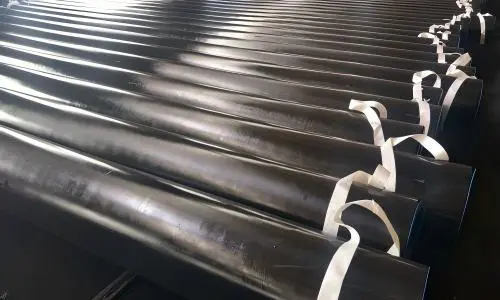
Understanding ASTM A106 Seamless Steel Pipes and Their Welding Requirements
Material Composition and Grade Distinctions
What’s in carbon steel pipe things makes a big difference in how they weld and how well they work in the end. There is less carbon in Grade A pipes; it's generally between 0.25% and 0.30%. Because of this, they work better for welding but not so well for jobs that need more power. A lot of people choose Grade B. About 0.30% of it is carbon, and between 0.29% and 1.06% is manganese. This makes it strong and easy to bond. As much as 0.35% carbon is in Grade C, which is the highest level of performance. Its tensile strength is over 60,000 psi, but it needs tighter control over the preheat and interpass temperatures so it doesn't crack. Engineers can choose the right filler materials and set the right welding parameters when they know about these changes in composition. How hard something is and how likely it is to crack in a heat-affected area depend on how much manganese is in it. A silicon amount of 0.10% to 0.35% helps get rid of oxygen during production. However, in some arc welding processes, it can change how smooth the slag is. As little sulphur and phosphorus as possible is left over so that finished welds don't break when they get hot.
Mechanical Properties Influencing Weld Design
What engineers have to do to figure out how to build welded joints is based on how the yield strength changes between the three grades. Strengths: Most Grade B lines can hold about 35,000 psi of force and 60,000 psi of force. Because of this, they make a good base for most industrial pipe systems. Standard tests usually show that the material can stretch more than 30%. This means that it is flexible enough to handle thermal growth and operational stresses without breaking. These mechanical traits help us choose how to build joints and how much support we need. Greater care needs to be taken with the approach angles and root gap sizes so that higher-grade materials fuse fully without leaving too much stress behind. You can pick the best wall thickness for seamless building because it is very strong for its weight. In turn, this changes how you figure out how much heat to put in and how fast to cool things down during multipass welding processes.
Corrosion Resistance and Protective Strategies
It's mostly carbon steel in ASTM A106 pipes, and not much alloying is added to them to make them more corrosion-resistant. However, the seamless production process gets rid of any weak weld joints that could become corrosion hotspots in the parent material. Extra care needs to be taken in weld zones because temperature cycling changes the microstructure and can make the heat-affected zone and the base metal form a galvanic cell. For security to work, the joints must be well-designed so that there aren't many cracks and the inside is smooth so that fluid can flow. Not only does post-weld heat treatment get rid of any leftover stress, it also evens out the microstructure. This makes the weld area less electrically different. When you weld something together, you can protect it from rust by covering the outside with fusion-bonded epoxy or thermal spray metallisation. This is very important in places like chemical plants and the ocean, where these pipes are used a lot.
Step-by-Step Welding Procedures for ASTM A106 Seamless Steel Pipes
Pre-Weld Preparation and Material Inspection
Beginning with a thorough visual inspection ensures we identify ASTM A106 Seamless Steel Pipe any surface defects, dimensional irregularities, or material certification discrepancies before investing time in joint preparation. Pipe ends require square cutting, typically accomplished through mechanical saws or plasma cutting, followed by grinding to remove heat-affected material and oxidation. The beveling process creates appropriate groove angles—commonly 37.5 degrees per side for a total 75-degree included angle—with a root face dimension around 1.6 mm to support proper root pass penetration. Surface cleaning extends at least 50 mm back from the joint on both internal and external surfaces. We remove mill scale, rust, moisture, oil, and any contaminants that might introduce hydrogen into the weld pool or create porosity. Mechanical methods like wire brushing or grinding work effectively, though solvent cleaning may supplement these efforts when dealing with organic residues. Fit-up quality directly correlates with final weld integrity, so we maintain root gap tolerances typically between 1.6 mm and 3.2 mm, depending on pipe wall thickness and welding process selection.
Welding Process Selection and Parameter Control
When joining pipes in fixed positions, Gas Tungsten Arc Welding (GTAW or TIG) gives you the best root pass quality with the lowest chance of defects. The argon shielding keeps the liquid weld pool clean from airborne contaminants and lets you precisely control the heat input. For root passes on pipes with walls up to 10 mm thick, we usually use 80 to 150 amps, 2.4 mm diameter thoriated or lanthanated tungsten electrodes, and ER70S-2 or ER70S-6 filler rods that match. Shielded Metal Arc Welding, also known as SMAW or stick welding, can be used in a variety of situations and site conditions. This makes it especially useful for field installation, where portability is more important than maximum deposition rate. The E6010 electrodes are great for root passes because they have a strong arc and can penetrate deeply. The E7018 low-hydrogen electrodes are great for filling and capping passes because they have a smooth shape and great mechanical properties. We keep the temperatures between the passes at 150°C and 260°C so that the higher-carbon Grade C materials don't cool too quickly and thicken or crack. Gas Metal Arc Welding (GMAW or MIG) and Flux-Cored Arc Welding (FCAW) make it faster to fill and cap pipes with thicker walls that are popular in factories. When workers follow the right steps, these methods deposit weld metal quickly while keeping good fusion properties. As the wall thickness and carbon content go up, so do the preheating needs. For Grade B pipes with walls thicker than 19 mm, the temperatures often reach 95°C to 150°C, and in cold environments, they could reach 175°C or higher for Grade C applications.
Post-Weld Heat Treatment Protocols
After welding is done, controlled thermal treatment gets rid of any residual stresses that built up during the solidification and cooling processes. We usually heat the area around the weld and the base metal next to it to between 595°C and 650°C, and keep it at that temperature for about an hour for every 25 mm of wall thickness. After that, the rate of cooling must be kept under control, typically no more than 150°C per hour down to 315°C. This is done to keep new thermal stresses from being created, which would defeat the purpose of the treatment. This thermal cycling also softens any martensitic structures that may have formed in the area that was heated up. This makes the material tougher and lowers the hardness peaks that could cause stress corrosion cracks in service. Many installations that are governed by codes need to undergo post-weld heat treatment. This is especially true for installations that work above 370°C or with dangerous fluids. Investing in the right thermal treatment tools and methods pays off by making the product last longer and lowering the chance that it will break.
Comparative Analysis: ASTM A106 Welding vs Other Seamless Pipes
ASTM A106 Versus API 5L Welding Considerations
Procurement professionals often compare these specifications when sourcing pipe for energy infrastructure projects. API 5L pipes serve primarily petroleum transportation applications, primarily with grades designated by yield strength (X42, X52, X60, etc.), while ASTM A106 targets high-temperature service in processing facilities and power generation. The welding approach differs because API 5L materials may include microalloying elements like niobium, vanadium, or titanium that affect heat-affected zone hardness and require adjusted preheat calculations. ASTM A106 pipes generally present more predictable welding characteristics due to simpler chemistry focused on carbon and manganese as primary strengthening elements. The lack of specialized alloying means weld procedures developed for one Grade B heat typically transfer reliably to other conforming materials from different mills. This consistency reduces procedure qualification requirements and simplifies contractor training compared to the broader chemistry ranges sometimes encountered with API 5L specifications.
Grade B Versus Grade C Welding Parameters
The approximately 0.05% carbon content difference between these grades fundamentally alters their welding metallurgy. Grade C materials require elevated preheat temperatures to slow cooling rates and prevent martensite formation in the heat-affected zone. Where Grade B pipes might weld successfully with minimal or no preheat in moderate ambient conditions, Grade C demands temperatures starting around 95°C, even for thinner walls, escalating to 175°C or beyond for ASTM A106 Seamless Steel Pipe sections exceeding 50 mm thickness. Heat input control becomes more critical with Grade C welding because excessive energy input widens the heat-affected zone and may degrade mechanical properties, while insufficient heat creates brittle microstructures prone to cracking. We calculate heat input in kilojoules per millimeter by considering arc voltage, amperage, and travel speed, targeting ranges between 0.8 and 2.0 kJ/mm depending on pipe dimensions and process selection. The narrower acceptable parameter window for Grade C welding demands greater operator skill and more frequent quality monitoring throughout production.
Seamless Versus Welded Pipe Joining Challenges
Since seamless construction doesn't have any longitudinal lines, there are no worries about corrosion or strength breaks along the pipe body. This means that welders can only focus on the quality of the circumferential joints. When you weld pipes, whether they are Electric Resistance Welded (ERW) or Submerged Arc Welded (SAW), the metal changes in a zone that runs the length of the pipe. When making circumferential joints in welded pipe, we have to think about where the new weld will meet the current longitudinal seam. This could mean that we need to do an extra X-ray exam or procedure qualification. Seamless pipes have the same wall thickness and mechanical qualities all the way around. This makes them easier to fit together and lowers the chance of having hard or soft spots that could affect the strength of the weld. The process of making it creates a lattice with small particles and little separation, which makes it perfect for fusion welding. Because of these features, ASTM A106 seamless products have become the best choice for high-stakes service situations where weld reliability can't be sacrificed.
Procurement Considerations for Welding-Ready ASTM A106 Seamless Pipes
Supplier Certification and Quality Verification
To find qualified pipe providers, you need to check that they follow well-known quality management systems and material certification procedures. We look for manufacturers that are registered with ISO 9001 and have other approvals from end-user businesses, such as ASME certification for materials used in pressure vessels. Mill test records that list the chemical make-up, mechanical properties, and hydrostatic test results are very important for quality assurance teams to be able to track down and compare new materials to project requirements. Each length of pipe in the paperwork package should have a heat number marked on it. This will allow for a link between the physical material and the certified test data during fabrication and installation. Reliable sources use consistent manufacturing methods that keep heat differences to a minimum. This means that fabrication shops don't have to re-qualify their processes as often when new lots of materials come in. We give more weight to suppliers who have worked on similar projects before. This way, we can learn from their mistakes when it comes to moving and storing materials before welding.
Dimensional Tolerances and Welding Implications
Pipe dimensional accuracy directly affects fit-up quality and joint preparation efficiency. ASTM A106 allows outside diameter tolerances typically within ±1% of nominal size for pipes up to 12 inches in diameter, tightening for larger sizes to prevent excessive ovality. Wall thickness tolerances normally permit approximately 12.5% variation below nominal for standard wall pipes, though heavier schedules may specify tighter control depending on design requirements. These dimensional variations influence our joint design decisions and gap control strategies during assembly. Pipes at opposite tolerance extremes create challenges in maintaining uniform root gap around the circumference, potentially requiring additional tack welds or internal lineup clamps. We specify preferred tolerance bands tighter than code minimums when procuring pipe for critical automated welding applications where dimensional consistency determines process success. The incremental cost of premium tolerance material often proves justified through reduced fit-up time and improved first-pass weld quality.
Lead Time Planning and Inventory Management
Carbon steel seamless pipe production involves hot piercing and pilgering, ASTM A106 Seamless Steel Pipe, or mandrel rolling processes that require substantial capital equipment, concentrating manufacturing capacity among relatively few global producers. Standard sizes in common grades typically ship within 4 to 8 weeks from order placement, though specialized dimensions, uncommon grades, or large quantities may extend delivery timelines to 12 weeks or beyond. Strategic procurement planning accounts for these lead times within overall project schedules, often securing pipe materials during early engineering phases before detailed fabrication drawings reach completion. We balance inventory carrying costs against schedule risk, sometimes establishing vendor-managed consignment arrangements for large ongoing programs. The relationship between procurement timing and welding readiness extends beyond simple delivery dates—proper storage conditions, preventing moisture accumulation and surface deterioration, protect weldability during the interval between receipt and fabrication commencement.
Troubleshooting and Best Practices for Welding ASTM A106 Pipes
Common Defect Types and Root Cause Analysis
Porosity manifests as spherical or elongated gas pockets within the weld metal, typically resulting from inadequate shielding gas coverage, contaminated base metal surfaces, or excessive moisture in electrode coatings. We eliminate these defects through rigorous pre-weld cleaning, proper storage of consumables in heated cabinets, and verification of shielding gas flow rates before striking each arc. When porosity appears despite these precautions, chemical analysis of the weld deposit can reveal whether hydrogen, nitrogen, or other gases caused the problem, directing remedial action toward the specific contamination source. Incomplete fusion occurs when the weld metal fails to bond completely with the base metal or previous weld passes, creating stress concentration sites that may propagate cracks during service. This defect stems from insufficient heat input, improper joint geometry with inadequate access for the arc, or poor welder technique with incorrect electrode angles. We address fusion issues through procedure refinement, adjusting voltage and amperage parameters, joint redesign, improving accessibility, and enhanced welder training, emphasizing proper electrode manipulation and positioning. Cracking represents the most serious weld defect category because cracks can propagate catastrophically under pressure or thermal cycling. Hot cracks form during solidification when low-melting constituents segregate to grain boundaries, which is prevented through chemistry control, limiting sulfur and phosphorus content plus maintaining proper manganese-to-sulfur ratios. Cold cracks develop after the weld cools below 200°C, driven by hydrogen absorption combined with residual stress in hardened microstructures—mitigation requires low-hydrogen welding processes, adequate preheat slowing cooling rates, and prompt post-weld heat treatment relieving stresses before hydrogen can concentrate at critical locations.
Safety Standards and Environmental Responsibility
Protecting welding personnel from fume exposure, arc radiation, and burn hazards requires comprehensive safety programs encompassing proper ventilation, personal protective equipment, and work area organization. We implement local exhaust ventilation, capturing fumes at their generation point, preventing the accumulation of metal oxide particles that pose respiratory risks during extended exposure. Welding screens and barriers protect nearby workers from ultraviolet radiation while allowing supervision and collaboration within fabrication shops. Environmental considerations extend beyond immediate worker safety to encompass energy efficiency and waste management throughout welding operations. Modern power sources with inverter technology reduce electrical consumption compared to legacy transformer-based equipment while providing superior arc characteristics. We segregate waste streams, routing stub ends and electrode remnants to metal recycling rather than landfills, and properly disposing of grinding dust and slag according to local regulations. These practices align with growing industry emphasis on sustainable construction methods that minimize environmental footprints across project lifecycles.
Conclusion
Successfully welding ASTM A106 seamless steel pipes requires integrating metallurgical knowledge with practical fabrication skills, always maintaining focus on the operational demands these components must satisfy throughout their service lives. The material's widespread adoption across power generation, petrochemical processing, and industrial infrastructure reflects proven performance when proper welding procedures receive consistent application. From initial material selection through final quality verification, each process step contributes to joint integrity that withstands extreme temperatures and pressures. Project teams that invest in comprehensive procedure development, operator training, and quality control systems position themselves to deliver reliable piping systems meeting both regulatory requirements and owner expectations. The technical considerations explored throughout this guide provide a foundation for making informed decisions during procurement, fabrication, and installation phases, ultimately supporting successful project outcomes that stand the test of time.
FAQ
1. What welding process works best for ASTM A106 Seamless Steel Pipe?
GTAW (TIG) provides optimal root pass quality with excellent fusion characteristics and minimal defect risk, making it the preferred choice for critical applications despite lower deposition rates. SMAW (stick welding) offers versatility across field conditions and position welding requirements. GMAW and FCAW accelerate fill and cap operations on thicker walls where productivity matters. The best choice depends on pipe diameter, wall thickness, position, and whether welding occurs in controlled shop environments or field locations with variable conditions.
2. How do welding parameters differ between Grade B and Grade C pipes?
Grade C's higher carbon content requires elevated preheat temperatures—typically 25°C to 50°C above Grade B requirements—to prevent hardening and cracking in the heat-affected zone. Interpass temperature control becomes more critical with narrower acceptable ranges. Post-weld heat treatment is more frequently mandatory for Grade C applications. Heat input calculations must balance adequate fusion with avoiding excessive grain growth that degrades mechanical properties.
3. What certifications should we verify when purchasing pipes for welded construction?
Mill test reports documenting chemical composition and mechanical properties provide essential traceability. ASME material certification indicates compliance with pressure vessel standards. ISO 9001 registration demonstrates quality management systems. Third-party inspection certificates from agencies like Lloyd's Register or Bureau Veritas add independent verification. Heat number stamping on each pipe length enables correlation between physical material and documentation throughout fabrication and service life.
Partner With HYPILE for Superior ASTM A106 Seamless Steel Pipe Solutions
HYPILE brings 45+ years of integrated foundation and piling expertise to your most demanding infrastructure projects, delivering turnkey solutions from material supply through completed installation. As a trusted ASTM A106 Seamless Steel Pipe manufacturer, we understand that welding quality directly determines structural integrity in high-pressure industrial applications. Our comprehensive services include precision steel fabrication, advanced surface treatment with anti-corrosion coatings, and technical support ensuring your welding procedures achieve optimal results. The "BUILD TO THE LAST" philosophy guides our material selection and quality control processes, providing Grade A, B, and C seamless pipes in diameters from 10.3 mm to 1,219 mm with wall thickness up to 200 mm—all backed by strict testing compliance and complete documentation traceability. Connect with our engineering team at sales@hypile.com to discuss your project requirements and discover how our factory-direct ASTM A106 Seamless Steel Pipe supply capabilities support your schedule and budget objectives while maintaining uncompromising standards for weldability and performance.
References
1. American Society for Testing and Materials. "ASTM A106/A106M Standard Specification for Seamless Carbon Steel Pipe for High-Temperature Service." ASTM International, West Conshohocken, PA, 2020.
2. American Welding Society. "Structural Welding Code—Steel (AWS D1.1/D1.1M)." American Welding Society, Miami, FL, 2020.
3. American Society of Mechanical Engineers. "ASME Boiler and Pressure Vessel Code, Section IX: Welding and Brazing Qualifications." ASME, New York, NY, 2021.
4. Linnert, George E. "Welding Metallurgy: Carbon and Alloy Steels, Volume 1—Fundamentals." American Welding Society, Miami, FL, 1994.
5. Cary, Howard B. and Scott C. Helzer. "Modern Welding Technology." Pearson Education, Upper Saddle River, NJ, 2005.
6. American Petroleum Institute. "API Standard 1104: Welding of Pipelines and Related Facilities." American Petroleum Institute, Washington, DC, 2021.
Have a project in mind? Tell us your goals — we’ll help you make it real.