- English
- French
- German
- Portuguese
- Spanish
- Russian
- Japanese
- Korean
- Arabic
- Greek
- German
- Turkish
- Italian
- Danish
- Romanian
- Indonesian
- Czech
- Afrikaans
- Swedish
- Polish
- Basque
- Catalan
- Esperanto
- Hindi
- Lao
- Albanian
- Amharic
- Armenian
- Azerbaijani
- Belarusian
- Bengali
- Bosnian
- Bulgarian
- Cebuano
- Chichewa
- Corsican
- Croatian
- Dutch
- Estonian
- Filipino
- Finnish
- Frisian
- Galician
- Georgian
- Gujarati
- Haitian
- Hausa
- Hawaiian
- Hebrew
- Hmong
- Hungarian
- Icelandic
- Igbo
- Javanese
- Kannada
- Kazakh
- Khmer
- Kurdish
- Kyrgyz
- Latin
- Latvian
- Lithuanian
- Luxembou..
- Macedonian
- Malagasy
- Malay
- Malayalam
- Maltese
- Maori
- Marathi
- Mongolian
- Burmese
- Nepali
- Norwegian
- Pashto
- Persian
- Punjabi
- Serbian
- Sesotho
- Sinhala
- Slovak
- Slovenian
- Somali
- Samoan
- Scots Gaelic
- Shona
- Sindhi
- Sundanese
- Swahili
- Tajik
- Tamil
- Telugu
- Thai
- Ukrainian
- Urdu
- Uzbek
- Vietnamese
- Welsh
- Xhosa
- Yiddish
- Yoruba
- Zulu
Structural Steel Pipe for Construction: Why ASTM A36 Is a Top Choice
The right structural steel pipe is an important part of choosing materials for building projects because it can make the difference between a foundation that lasts for decades and one that needs expensive repairs. When it comes to the construction business, ASTM A36 Steel Pipe stands out because it offers reliable mechanical performance, great weldability, and affordable prices. As per ASTM International standards, this grade meets the main needs of project managers and procurement professionals: reliable strength, easy fabrication, and long-term durability in a wide range of applications, from building bridges to foundations for industrial facilities.
Understanding ASTM A36 Steel Pipe Fundamentals
ASTM A36 is a standard for carbon structural steel set by ASTM International. It specifies exact limits for chemical composition and mechanical properties that are important for construction uses. This specification makes sure that all batches of products are the same, which gives engineering teams peace of mind when they're building structures that hold weight. The carbon content is usually between 0.25 and 0.29%, the manganese content is between 0.80 and 1.20%, and there are small amounts of phosphorus and sulphur. This gives the material a mix of strength and workability that contractors like.
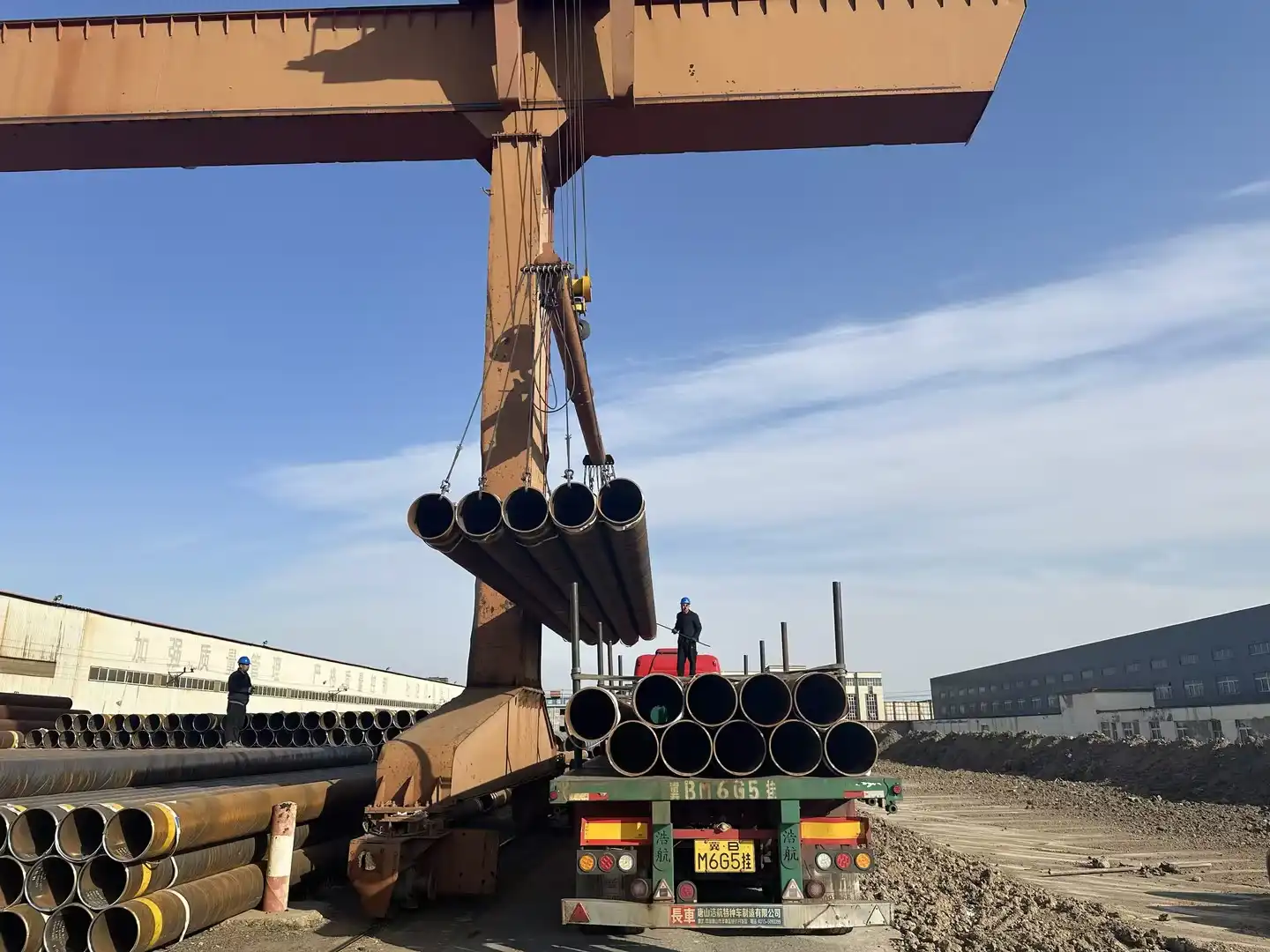
Chemical Composition and Mechanical Properties
The chemicals that make up this solid steel pipe have a direct effect on how well it works. Manganese improves the ability to strengthen and stretch, while carbon gives the material its basic strength. Controlled amounts of phosphorus and sulphur keep the material from breaking easily, which is important for field welding and manufacturing. The material has a minimum yield strength of 36,000 psi (250 MPa) and a tensile strength range of 58,000 to 80,000 psi. Standard test pieces show that the material can stretch by about 20%. These qualities meet the strict needs of foundation building, where materials need to be able to handle both static loads and moving stresses.
Standard Specifications and Dimensional Range
HYPILE uses A36 grade steel to make welded steel pipe that meets ASTM A252 standards and has a lot of dimensional freedom. We can make pipes with outer diameters ranging from 21.3 mm to 7,000 mm and wall thicknesses ranging from 0.8 mm to 230 mm. These sizes can be used for a wide range of projects, from home piling to huge marine infrastructure. Length specs go up to 100 meters, which cuts down on the number of field joints that need to be made and speeds up the installation process. We use three main welding methods: ERW (Electric Resistance Welding), SSAW (Spiral Submerged Arc Welding), and LSAW (Longitudinal Submerged Arc Welding). We choose which one to use based on the diameter, thickness, and needs of the product to ensure the best structural integrity.
Advantages of ASTM A36 Steel Pipe in Construction
Construction professionals consistently select this structural ASTM A36 Steel Pipe steel grade because it solves practical challenges encountered on job sites. The material's properties align perfectly with the needs of project managers facing tight schedules, procurement teams managing budgets, and engineering directors responsible for technical performance.
Superior Weldability and Fabrication Efficiency
One of the most valued characteristics is the excellent weldability that A36 grade steel provides. Unlike higher-strength alloys requiring specialised welding procedures and preheat protocols, this material accepts standard welding techniques with minimal preparation. Contractors appreciate how this translates to faster installation rates and reduced labour costs. Field modifications become straightforward when design adjustments emerge during construction phases. The material's ductility allows for bending, cutting, and forming operations without cracking or material degradation, which proves essential when adapting prefabricated components to actual site conditions that rarely match theoretical plans perfectly.
Strength-to-Weight Optimisation
The mechanical properties deliver adequate load-bearing capacity while maintaining manageable weight, a balance particularly valuable in foundation applications. Engineers can design slender structural elements that meet code requirements without excessive material consumption. This optimisation reduces transportation costs, simplifies handling with standard equipment, and minimises soil disturbance during pile installation. The material performs reliably under both compression and tension loading, making it suitable for driven piles, drilled shafts, and lateral support systems in excavation projects.
Cost-Effectiveness Across Project Lifecycle
Budget-conscious procurement managers recognise that initial material cost represents just one component of total project economics. The competitive pricing of structural carbon steel compared to alloy alternatives provides immediate savings, while the material's durability and low maintenance requirements deliver long-term value. When projects incorporate proper corrosion protection through galvanising or coating systems, service life extends 50 years or more in most environments. This longevity reduces lifecycle costs significantly compared to materials requiring frequent inspection or replacement cycles.
Practical Construction Applications
The versatility of this steel grade appears across diverse construction contexts. In bridge foundations, welded pipe piles transfer superstructure loads through soft soil layers to bearing strata, providing stable support under dynamic traffic loads. Industrial facilities rely on these structural pipes for equipment foundations and platform supports where vibration resistance and dimensional stability matter. Municipal infrastructure projects use the material for sheet piling in flood control systems and excavation support, while transportation projects depend on it for sign structures and noise barrier foundations. Our experience at HYPILE demonstrates that proper material selection and installation techniques enable successful outcomes even in challenging geological conditions involving high groundwater, soft clays, and variable soil profiles.
Comparing ASTM A36 Steel Pipe with Other Steel Pipe Grades
Material selection decisions require understanding how different ASTM A36 Steel Pipe steel grades perform relative to project requirements and budget constraints. While numerous options exist in the structural steel market, each brings specific advantages and limitations that influence procurement choices.
Mechanical Performance Comparisons
The ASTM A53 and A106 standards are mostly used for pressure pipes and not for building structures. They offer different sets of properties that are best for moving fluids. API 5L line pipe is designed to carry oil and gas, and it doesn't need to meet strict toughness standards for most foundation work. Grades with higher yield strengths, like ASTM A572, cost more and need careful welding limits, but they can withstand up to 65,000 psi of force. The A36 specification is a good compromise because it is strong enough for most structural loads while still being easy to work with, which helps keep project plans on track. Corrosion resistance changes a lot between types of steel. Stainless steel metals last longer in harsh environments, but they are much more expensive—often three to five times as much as carbon structural steel. Weather-resistant steels, like A588 and others, form protective oxide layers that slow air corrosion. These steels are good for outdoor uses, but they cost more than A36. Modern coating methods like epoxy, polyethene, or hot-dip galvanising protect carbon steel pipes and give them the same service life at a much lower total cost. This makes economic sense for foundation elements below the ground where looks don't matter.
Economic and Availability Factors
Global production volumes for grades that are similar to A36 make sure that there is a steady supply through well-established distribution networks. Multiple qualified manufacturers drive down prices, which is good for procurement teams that need to get supplies for big projects. Lead times are still shorter than for speciality alloys that need to be processed under controlled circumstances. Regional availability in U.S. and foreign markets helps just-in-time delivery strategies that cut down on the need for on-site storage and capital that is stuck in inventory. When compared to foreign standards like EN 10219 (European Standard) or IS 1239 (Indian Standard), A36 has the same or better properties. It is also recognised in North American markets, which makes it easier to get approvals for specifications and follow the rules. Contractors working on U.S. building codes projects, like how ASTM-specified materials can be used right away without needing any extra testing or technical reviews.
Procurement and Supply Chain Insights for ASTM A36 Steel Pipe
Successful project execution depends on securing quality materials through reliable supply channels at predictable costs. Procurement professionals navigating the structural steel pipe market must evaluate multiple factors beyond simple price quotations.
Supplier Selection Criteria
Finding certified manufacturers is the difference between normal purchases and relationships that help a project succeed. Look for suppliers that have both ISO 9001 quality management certification and ASTM accreditation, which shows that they consistently meet the standards of the specification. Look at the supplier's past work on similar projects, paying attention to how well they delivered, how they documented material quality, and how quickly they responded to technical questions. When a manufacturer offers the whole supply chain, including storage, coating services, and fabrication support, it makes logistics easier and less complicated to coordinate with many suppliers. With more than 45 years of experience as a group in foundation engineering, we at HYPILE know a lot about how the qualities of materials affect how well they work in the field. We help specification teams improve designs before they commit to buying by giving them full mill test results, coordinating third-party inspections, and providing engineering support. This knowledge is useful for projects with tricky natural conditions or short deadlines for building, where delays in materials cause problems that get worse over time.
Pricing Structures and Cost Drivers
Steel pipe prices change based on the cost of raw materials, how full the factory is, and the daily changes in market demand. Buying teams can better plan when to make purchases when they know about these things. Based on how things are done in that area, starting prices are usually given per tonne or per linear foot. They can be changed to meet different order quantities, coating needs, and sizes. When you buy in bulk, you should get better unit prices, but it takes some careful maths to figure out how to balance the money you save on volume with the money you need to spend on storage and starting up. When it comes to pipes with a large diameter or a thick wall, transportation costs a lot. To get the cheapest shipping prices, look for sellers who have warehouses or workshops close to where the work is being done. Think about how shipping can be shared between projects that are close to each other or in different stages. When considering total costs, more than just the unit prices are taken into account. Some of these are payment terms, problems with foreign currencies for suppliers, and promises of lead times.
Quality Verification and Documentation
Reliable suppliers provide comprehensive documentation packages, ASTM A36 Steel Pipe, including mill test certificates, chemical analysis reports, mechanical property test results, and dimensional inspection records. These documents enable traceability from production batch through installation, satisfying quality assurance protocols and regulatory compliance requirements. Reputable manufacturers welcome third-party inspection at their facilities, accommodating witness testing and material sampling that provides additional confidence for critical applications.
How ASTM A36 Steel Pipe Is Manufactured and Quality-Controlled
Understanding production processes illuminates how consistent material properties emerge from manufacturing operations, building confidence in specification decisions.
Production Methods and Process Control
Building steel pipe that meets ASTM A252 standards can be made with A36 grade steel and three main welding methods. ERW, or Electric Resistance Welding, shapes flat steel tubes over and over again, while high-frequency resistance welding joins them together to make pipes. It works best when the walls and sizes are small. When SAW (Spiral Submerged Arc Welding) is used to make big pipes, a steel strip is wound in a spiral pattern, and the edges are joined with submerged arc welding. For pipes up to about 24 inches in diameter, this method can make a lot of them quickly and accurately. This is a quick and easy way to make walls that are 20 inches wide to over 100 inches wide and up to several inches thick. It is sometimes better for stress to be spread out with a spiral seam than a straight weld, and it costs less to make a lot of pipes this way. Continuous Submerged Arc Welding, or LSAW, rolls steel plates into cylinders and welds them together along a straight line to make pipes. Our best welds, strong enough for important jobs, are made with this method. It can handle the thickest walls and largest sizes. There are strict controls on each method that check the welding settings, heat input, and cooling rates to make sure the weld integrity is the same as or better than the base material's qualities.
Quality Assurance Testing and Certification
This is done to make sure that the raw materials meet the standards set by A36 before they are used in production. Visual inspection and non-destructive testing tools, such as ultrasound and X-rays, are used during in-process tests to make sure that the measurements are correct and the quality of the welds is good. It is done with standardised test pieces that show the yield strength, tensile strength, and elongation of finished pipes. Testing the pipe under hydrostatic pressure makes sure that the weld is strong and that it can handle certain pressures without breaking or leaking. High-tech tools are used in modern factories, such as computerised equipment for measuring sizes, automatic welding systems that keep track of parameters in real time, and digital documentation systems that keep full quality records for every batch of production. These technological advances make products more consistent and reduce differences between batches. They also give engineering teams the exact performance data they need to figure out structures and predict how they will work in the long term.
Conclusion
The ASTM A36 Steel Pipe keeps building its name as the best material for construction projects thanks to its strong mechanical properties, easy fabrication, and cost-effective benefits. With this material, project teams don't have to worry about real problems: making sure the structure is strong enough, letting normal welding and shaping work go smoothly, and staying within project budgets while still meeting quality standards. If you look at the total lifecycle value of a product instead of just its original cost, properly specified and protected carbon structural steel pipe shows why it is still the most popular building material for infrastructure, industry, and cities around the world.
FAQ
1. What makes ASTM A36 ideal for construction applications?
The material combines adequate yield strength (36,000 psi minimum) with exceptional weldability and ductility, allowing straightforward fabrication using standard techniques. This balance reduces labour costs and installation time while meeting structural requirements for most foundation and framework applications. The specification's widespread recognition simplifies code compliance and material approval processes.
2. How does A36's corrosion resistance compare to stainless steel?
Carbon structural steel corrodes faster than stainless alloys in exposed environments. Protection through hot-dip galvanising, epoxy coating, or cathodic protection systems extends service life to 50+ years in most conditions. This approach costs substantially less than stainless steel, making economic sense for subsurface foundations where aesthetics don't matter and proper protection systems are applied.
3. What factors influence bulk pricing for structural steel pipe?
Raw material costs, production volumes, dimensional specifications, coating requirements, order quantities, delivery locations, and market conditions all affect pricing. Larger orders typically receive better unit pricing. Transportation represents a high cost for heavy or large-diameter materials, making supplier location important. Current steel market conditions create pricing fluctuations requiring regular quote updates.
Partner with HYPILE for Your Structural Steel Pipe Requirements
HYPILE delivers integrated piling and foundation solutions built on our "BUILD TO THE LAST" philosophy, ensuring uncompromising quality for infrastructure projects demanding reliable performance. As an experienced ASTM A36 Steel Pipe manufacturer, we combine advanced welding technologies—ERW, SSAW, and LSAW—with comprehensive ASTM A36 Steel Pipe engineering support covering material supply, protective coatings, precision fabrication, and on-site coordination. Our dimensional capabilities spanning 21.3 mm to 7,000 mm outer diameter with wall thicknesses up to 230 mm accommodate projects from standard building foundations to complex marine and bridge construction. Contact our technical team at sales@hypile.com to discuss your specific project requirements and discover how our 45+ years of foundation engineering expertise translates to solutions that withstand extreme conditions and the test of time.
References
1. American Society for Testing and Materials. (2019). Standard Specification for Structural Steel (ASTM A36/A36M). ASTM International, West Conshohocken, PA.
2. American Society for Testing and Materials. (2021). Standard Specification for Welded and Seamless Steel Pipe Piles (ASTM A252/A252M). ASTM International, West Conshohocken, PA.
3. Brockenbrough, R.L. (2006). Structural Steel Designer's Handbook: AISC, AASHTO, AISI, ASTM, and ASCE Design Standards. McGraw-Hill Professional, New York.
4. Chakrabarti, S.K. (2005). Handbook of Offshore Engineering. Elsevier Science, Oxford, UK.
5. Tomlinson, M.J. and Woodward, J. (2014). Pile Design and Construction Practice. CRC Press, Boca Raton, FL.
6. Teng, W.C. (1962). Foundation Design. Prentice-Hall Civil Engineering and Engineering Mechanics Series, Englewood Cliffs, NJ.
Have a project in mind? Tell us your goals — we’ll help you make it real.