- English
- French
- German
- Portuguese
- Spanish
- Russian
- Japanese
- Korean
- Arabic
- Greek
- German
- Turkish
- Italian
- Danish
- Romanian
- Indonesian
- Czech
- Afrikaans
- Swedish
- Polish
- Basque
- Catalan
- Esperanto
- Hindi
- Lao
- Albanian
- Amharic
- Armenian
- Azerbaijani
- Belarusian
- Bengali
- Bosnian
- Bulgarian
- Cebuano
- Chichewa
- Corsican
- Croatian
- Dutch
- Estonian
- Filipino
- Finnish
- Frisian
- Galician
- Georgian
- Gujarati
- Haitian
- Hausa
- Hawaiian
- Hebrew
- Hmong
- Hungarian
- Icelandic
- Igbo
- Javanese
- Kannada
- Kazakh
- Khmer
- Kurdish
- Kyrgyz
- Latin
- Latvian
- Lithuanian
- Luxembou..
- Macedonian
- Malagasy
- Malay
- Malayalam
- Maltese
- Maori
- Marathi
- Mongolian
- Burmese
- Nepali
- Norwegian
- Pashto
- Persian
- Punjabi
- Serbian
- Sesotho
- Sinhala
- Slovak
- Slovenian
- Somali
- Samoan
- Scots Gaelic
- Shona
- Sindhi
- Sundanese
- Swahili
- Tajik
- Tamil
- Telugu
- Thai
- Ukrainian
- Urdu
- Uzbek
- Vietnamese
- Welsh
- Xhosa
- Yiddish
- Yoruba
- Zulu
Understanding Load Capacity of H and I-Beam Shoring Systems for Heavy-Duty Support
Figuring out how much weight can be supported by H- and I-beam shoring systems is an important technical task that has a direct effect on the safety of the project and the performance of the structure. When working with big loads in buildings, these steel support systems are essential. Accurate load estimates are what make the difference between a project's success or disaster. H- and I-beam shoring systems are made of high-strength structural steel that can handle strong vertical and lateral forces. They provide stable support for excavations and temporary structural strengthening in a wide range of building sites.
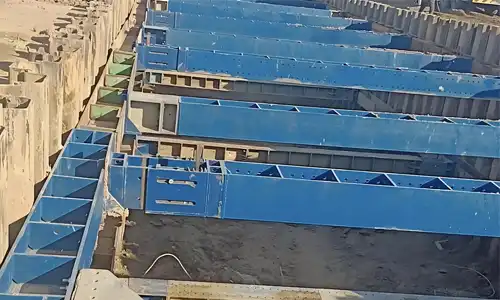
What is H- and I-beam shoring?
Structural Composition and Design Fundamentals
Engineered steel support systems like H- and I-beam shoring systems are made from high-strength structural steel in standard beam lengths. Different cross-sectional shapes in these systems make the best use of load distribution and twisting resistance. H-beams have bigger ends that are all the same diameter, which makes them better at supporting weight in heavy-duty situations. It is the curved ends on I-beams that make good use of material while still providing strong structural support.
The main difference is in the shape of the flanges and how they can distribute stress. Because they are balanced, H-beam designs are more stable against horizontal bowing. This makes them perfect for uses that need to fight loads acting in more than one way. I-beam shapes are the best when you need a high moment capacity and the best weight-to-strength ratios.
Industrial Applications and Use Cases
People who work in infrastructure development, building projects, and industrial engineering all use these shoring devices all the time. For deep dig jobs, structures need to be able to withstand earth pressure and keep their shape under changing loads. When building a bridge, these systems are used for temporary pier support and deck formwork. When figuring out the load capacity, the loads from placing the concrete and the construction tools must be taken into account.
For utility tube building and subway digs, where strong support systems are needed because of the way the ground is, municipal transportation projects use H- and I-beam shoring. In factories, these beams are used to support equipment foundations and make structural changes. To make sure they are safe to use, their load capacities must be carefully measured.
Understanding Load Capacity for H- and I-Beam Shoring
Material Strength and Design Parameters
If you want to know how much weight something like H and I-Beam Shoring can hold, you need to look at its features, cross-sectional shape, and how it is held up. This kind of high-strength steel can hold more than 65,000 psi of force when it is stretched. Most of the time, its yield strength is between 36,000 and 50,000 psi. The beam depth, the flange width, and the web thickness are what change the shear resistance and the bending moment resistance.
Baseline capacity values are set by cross-sectional qualities like section modulus, moment of inertia, and radius of gyration. These factors change based on estimates of effective length, which take into account support conditions and possible bending modes. When gaps are longer or structures aren't supported properly, lateral and rotational bending become the most important things to think about.
Industry Standards and Measurement Methodologies
ASTM A992 standards set minimum requirements for structural steel used in building construction. These standards include minimum mechanical qualities and chemical composition. Based on limit states design concepts, the AISC Steel Construction Manual gives design methods for figuring out allowed loads. These guidelines include safety factors that take into account differences in materials, building errors, and unknown loads.
Both elastic and plastic studies are used to check the load capacity. With the right safety limits, an elastic design keeps pressures below the yield strength, and a plastic design lets you control yielding to get better capacity usage. Computer modeling software lets you do accurate calculations of capacity that take into account a wide range of loading scenarios and support conditions.
Bending Resistance and Shear Strength Analysis
For most shoring uses, the main thing to think about when designing is the bending moment capacity. The link between the applied moment and the beam's capacity depends on the allowed stress levels and the section modulus. Parts that are compact have full plastic moment capacity, while parts that are not compact have local bending limits that lower their useful capacity.
Shear strength estimates figure out how much weight a web can hold when it is loaded across its width. When there are concentrated loads or bearing situations, web weakening and local bending need to be looked at in a specific way. For mixed stress situations, interaction models are needed that take into account the effects of bending and shear on the total beam capacity at the same time.
Benefits and Advantages of Using H and I-Beam Shoring in Heavy-Duty Support
Superior Structural Performance Characteristics
Modern H- and I-beam shoring systems are very good at supporting weight because they are designed to be as strong as possible and are made from high-quality steel. Engineered bending moment capacities in these systems are higher than those of traditional shoring options. This means that they can support heavy building loads while still meeting safety standards.
These methods are great for heavy-duty jobs because of the following main benefits:
- Better Load Distribution: Wide flange designs spread heavy loads over bigger bearing areas, which lowers stress levels and makes the structure more stable overall.
- Better resistance to buckling: section qualities that have been optimized stop horizontal and rotational bowing when loads are uneven, which is common in building sites.
- Consistent Material Properties: High-strength structural steel has consistent performance traits that allow engineers to make accurate calculations and estimates of its capacity.
These improvements in performance directly lead to better project results by lowering the number of structure breakdowns and reducing the safety gaps for construction.
Installation Efficiency and Site Adaptability
When compared to standard support methods, H- and I-beam shoring systems give you a lot more installation options. When walls and link systems work together, they can make full shoring units that can be used in a variety of site situations and project needs. Quick setup cuts down on building delays, and design features that make it easy to remove and use again save money on multiple projects.
Because these systems are flexible, they can be quickly changed into different configurations as the dig goes on or as the needs of the structure change. Standardized link details make installation easier and keep the structure's stability during the whole building process.
Cost-Effectiveness and Long-Term Value
When you buy good beam shoring systems, you save a lot of money in the long run because they last longer and can be used again and again. High-strength steel construction doesn't wear down easily, even after many installation rounds, and it keeps its structural strength over a long service life. This longevity lowers the cost of replacement and limits the number of times that a project has to be put on hold because of broken equipment.
Maintenance is kept to a minimum thanks to strong H- and I-beam shoring, building, and protected coats that stop rust and damage from the environment. Because these systems are flexible, they can be used on a wide range of projects, making the best use of tools and increasing the return on investment.
Installation Guide and Safety Tips for Maximizing Load Capacity
Proper Installation Procedures for Optimal Performance
Achieving maximum load capacity requires adherence to established installation procedures that ensure proper load transfer and structural continuity. Foundation preparation must provide adequate bearing capacity and level surfaces to prevent differential settlement under load. Beam alignment verification ensures proper load distribution, while connection tightening sequences prevent joint slippage during loading.
Survey control maintains precise vertical and horizontal positioning throughout installation, preventing geometric irregularities that could compromise capacity. Temporary bracing installation provides lateral stability during construction, while permanent bracing systems establish final load paths.
Common Installation Pitfalls and Prevention Strategies
Installation errors can significantly reduce actual load capacity below design values, creating safety hazards and structural vulnerabilities. Inadequate foundation preparation leads to uneven bearing conditions that induce secondary stresses and potential failure modes. Improper connection installation results in reduced joint capacity and potential progressive failure scenarios.
Insufficient lateral bracing permits buckling failures at loads well below theoretical capacity values. Temperature effects during installation can create fit-up problems that compromise joint integrity and overall system performance.
Safety Protocols and Monitoring Requirements
Continuous load monitoring throughout construction phases ensures applied loads remain within design limits while identifying potential overload conditions before structural damage occurs. Regular inspection routines verify connection integrity and identify developing problems such as bolt loosening or bearing deformation.
Safety-focused features, including locking devices and monitoring sensors, provide real-time feedback on system performance and structural condition. Emergency response procedures establish protocols for load reduction and personnel evacuation in the event of structural distress or capacity exceedance.
Comparing H-Beam and I-Beam Shoring with Other Support Systems
Material and System Comparisons
H- and I-beam steel shoring systems demonstrate superior performance characteristics compared to alternative support methods across multiple evaluation criteria. Aluminum shoring systems offer reduced weight but sacrifice the load capacity and stiffness required for heavy-duty applications. Timber shoring provides initial cost advantages but lacks durability and predictable capacity values essential for engineered applications.
Steel tubular systems deliver good capacity but require more complex connections and exhibit reduced versatility compared to standard beam sections. Composite materials show promise but lack established design standards and long-term performance data necessary for critical applications.
Load Capacity and Performance Analysis
Direct capacity comparisons reveal significant advantages for engineered beam shoring systems. Standard H-beam sections provide moment capacities exceeding 500 kip-ft while maintaining manageable weights for field installation. Equivalent aluminum sections require larger cross-sections to achieve similar capacity, increasing wind loads and connection complexity.
Timber systems exhibit substantial capacity variability due to natural material inconsistencies and moisture content effects. Steel beam systems provide predictable capacity values, enabling precise engineering calculations and optimized designs.
Cost-Benefit Analysis for Project Selection
Total project cost analysis must consider initial procurement costs, installation labor requirements, maintenance expenses, and equipment life cycle costs. While steel beam systems require higher initial investment, their durability and reusability often provide superior long-term value compared to disposable alternatives.
Rental versus purchase decisions depend on project duration and equipment utilization rates. Short-term projects may benefit from rental arrangements, while long-term construction programs justify equipment purchase and ownership.
Procurement Guidance for Global B2B Clients
Supplier Selection and Qualification Criteria
Successful procurement of H and I-beam shoring systems requires careful evaluation of supplier capabilities, quality certifications, and technical support services. Leading manufacturers maintain ISO 9001 quality management systems, ensuring consistent product quality and reliable delivery performance. AISC certification for structural steel fabrication demonstrates adherence to industry standards for dimensional tolerances and welding quality.
Engineering support capabilities enable suppliers to provide technical assistance during design development and installation planning phases. After-sales support services, including maintenance training and replacement part availability, ensure long-term system performance and minimize operational disruptions.
Custom Solutions versus Standard Products
Project-specific requirements often necessitate evaluation of custom-engineered solutions against standardized product offerings. Standard beam sections provide cost advantages through volume manufacturing, while custom solutions optimize performance for unique applications. Lead time considerations favor standard products, while complex projects may require custom engineering to achieve optimal performance.
Scalability requirements influence product selection decisions, particularly for multi-phase projects requiring system expansion or modification capabilities. Standardized connection systems enable future modifications, while custom designs may limit expansion possibilities.
Pricing Strategies and Cost Optimization
Effective procurement strategies balance initial cost considerations with long-term value creation through system performance and durability. Volume purchasing arrangements provide cost savings for large projects while maintaining quality standards. Flexible delivery schedules accommodate construction timelines while minimizing storage requirements and associated costs.
Maintenance service agreements ensure ongoing system performance while providing predictable operating costs throughout equipment life cycles. Training programs enable construction crews to maximize system performance while minimizing installation errors that could compromise safety or capacity.
Conclusion
H- and I-beam shoring systems represent the gold standard for heavy-duty construction support applications requiring reliable load capacity and structural performance. Understanding load capacity fundamentals enables informed procurement decisions that balance technical requirements with cost considerations. Proper installation procedures and ongoing maintenance ensure these systems deliver maximum value while maintaining safety standards throughout their service life. The superior performance characteristics, installation flexibility, and long-term durability of these systems justify their widespread adoption across demanding construction environments where structural reliability cannot be compromised.
FAQ
1. How do you calculate the accurate load capacity for H- and I-beam shoring systems?
Load capacity calculation involves analyzing section properties, material strength, and support conditions according to established engineering standards. The process requires determining moment capacity based on section modulus and allowable stress values while considering lateral buckling limitations. Professional engineers utilize AISC design specifications and computer analysis software to ensure accurate calculations that account for all relevant load conditions and safety factors.
2. What safety regulations govern the use of beam shoring systems in construction?
OSHA regulations establish minimum safety requirements for temporary support systems, including structural adequacy, installation procedures, and inspection protocols. State and local building codes may impose additional requirements specific to regional conditions. Professional engineering oversight ensures compliance with applicable standards while maintaining appropriate safety margins throughout construction phases.
3. Can H- and I-beam shoring systems be customized for specific project requirements?
Modern manufacturing capabilities enable extensive customization, including non-standard lengths, specialized connection details, and modified cross-sections. Custom configurations accommodate unique geological conditions, space constraints, and load requirements that exceed standard product capabilities. Engineering analysis verifies custom design adequacy while maintaining compatibility with standard components where possible.
Partner with HYPILE for Premium H and I-Beam Shoring Solutions
HYPILE stands as your trusted H and I-beam shoring manufacturer, delivering engineered solutions that exceed industry standards for load capacity and structural reliability. Our 45+ years of foundation engineering expertise ensure your heavy-duty support requirements receive the technical excellence and manufacturing quality your projects demand. Contact our engineering team at sales@hypile.com to discuss your specific application requirements and discover how our customizable shoring systems can optimize your construction performance while maintaining the safety margins your projects require.
References
1. American Institute of Steel Construction. Steel Construction Manual, 15th Edition. Chicago: AISC, 2017.
2. McCormac, Jack C. and Stephen F. Csernak. Structural Steel Design, 5th Edition. Upper Saddle River: Pearson Education, 2012.
3. Galambos, Theodore V. Guide to Stability Design Criteria for Metal Structures, 6th Edition. New York: John Wiley & Sons, 2010.
4. Salmon, Charles G. and John E. Johnson. Steel Structures: Design and Behavior, 5th Edition. Upper Saddle River: Pearson Education, 2008.
5. American Society for Testing and Materials. ASTM A992/A992M Standard Specification for Structural Steel Shapes. West Conshohocken: ASTM International, 2018.
6. Occupational Safety and Health Administration. Construction Industry Standards for Excavations, 29 CFR 1926 Subpart P. Washington: U.S. Department of Labor, 2019.
Have a project in mind? Tell us your goals — we’ll help you make it real.