- English
- French
- German
- Portuguese
- Spanish
- Russian
- Japanese
- Korean
- Arabic
- Greek
- German
- Turkish
- Italian
- Danish
- Romanian
- Indonesian
- Czech
- Afrikaans
- Swedish
- Polish
- Basque
- Catalan
- Esperanto
- Hindi
- Lao
- Albanian
- Amharic
- Armenian
- Azerbaijani
- Belarusian
- Bengali
- Bosnian
- Bulgarian
- Cebuano
- Chichewa
- Corsican
- Croatian
- Dutch
- Estonian
- Filipino
- Finnish
- Frisian
- Galician
- Georgian
- Gujarati
- Haitian
- Hausa
- Hawaiian
- Hebrew
- Hmong
- Hungarian
- Icelandic
- Igbo
- Javanese
- Kannada
- Kazakh
- Khmer
- Kurdish
- Kyrgyz
- Latin
- Latvian
- Lithuanian
- Luxembou..
- Macedonian
- Malagasy
- Malay
- Malayalam
- Maltese
- Maori
- Marathi
- Mongolian
- Burmese
- Nepali
- Norwegian
- Pashto
- Persian
- Punjabi
- Serbian
- Sesotho
- Sinhala
- Slovak
- Slovenian
- Somali
- Samoan
- Scots Gaelic
- Shona
- Sindhi
- Sundanese
- Swahili
- Tajik
- Tamil
- Telugu
- Thai
- Ukrainian
- Urdu
- Uzbek
- Vietnamese
- Welsh
- Xhosa
- Yiddish
- Yoruba
- Zulu
How to verify the quality control processes of Chinese spiral steel pipe factories?
When buying spiral-welded steel pipe from Chinese manufacturers, you need to check that the quality control methods are up to par by looking at the manufacturing standards, testing protocols, and certification compliance. Checking things properly means comparing workplace records to API 5L PSL1/PSL2 standards, checking production lines and testing labs in person, and hiring third-party inspection services to make sure welds are solid, measurements are correct, and materials can be tracked. This organised method lowers the risks of buying things and ensures that the pipes supplied meet the needs of the project for uses in energy, foundation engineering, and infrastructure.
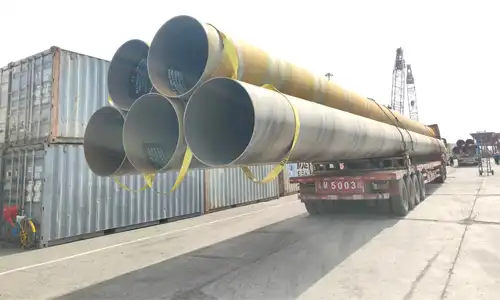
Understanding Quality Control in Chinese Spiral Steel Pipe Manufacturing
China's dominance in global welded pipe production stems from advanced manufacturing capabilities spanning three primary methods: ERW (Electric Resistance Welding), SSAW (Spiral Submerged Arc Welding), and LSAW (Longitudinal Submerged Arc Welding). Each process serves distinct applications, with SSAW particularly valued for large-diameter applications in oil and gas transmission, water infrastructure, and piling systems.
Manufacturing Landscape and Production Methods
To make pipes, the spiral welding method continuously bends steel coils into cylinder shapes while submerged arcs join along helical seams. This method works well for widths from 219 mm to 7000 mm and wall thicknesses up to 230 mm without breaking the bank. Reliable companies use automated systems that keep an eye on the welding temperature, travel speed, and flux distribution to make sure that the quality of the seams stays the same throughout production runs. The grades of materials used depend on the needs of the project. Some types of carbon steel, like API 5L Gr.B, are used for general structural purposes. For pressurised pipeline systems, grades X42 to X80 have better yield strengths. The stricter PSL2 standard adds stricter controls over chemical composition and requires impact testing, which is very important for projects that will be used in cold places or places that are hard on materials.
Key Industry Standards and Compliance Frameworks
API 5L guidelines, which were made by the American Petroleum Institute and govern chemical composition, mechanical properties, and testing requirements, are often used by international buyers. Chinese producers follow both GB/T 9711 and international standards at the same time, which can help with alignment when standards overlap. ISO 9001 certification means that a basic quality management system has been put in place, but buyers should make sure that the certification covers the manufacturing of pipes and not just trading. In addition to manufacturing standards, dimensional tolerances must meet API 5L Annex F requirements for diameter, wall thickness, and straightness. For most grades, out-of-roundness can't be more than 1% of the standard diameter, and changes in wall thickness can't be more than ±12.5%. These precise factors have a direct effect on how well structures work in foundation piling and pressure containment situations.
Common Quality Control Challenges
The most common quality issue in making circular pipes is problems with the welding. Incomplete fusion, porosity, and slag particles make the structure less strong and less resistant to corrosion. Most of the time, these flaws are caused by bad flux management, unstable welding settings, or contaminated base materials that are contaminated. Dimensional errors happen when the strip edge preparation isn't consistent or when the forming rollers wear unevenly, leading to spiral pitch variations that build up along the length of the pipe. Material traceability breakdowns are another problem. Without strict batch tracking systems, factories might mix steel coils from different heat batches by accident, which would make it hard to find out which raw material suppliers caused problems. This is very important when destructive testing shows that the mechanical qualities aren't up to par after production is done.
Core Components of Quality Control Processes in Spiral Steel Pipe Factories
Comprehensive quality assurance in modern factories operates across multiple checkpoints, beginning before raw materials enter production and continuing through final dispatch. Understanding these control points helps procurement teams identify which verification activities deliver the highest risk mitigation value.
Raw Material Inspection and Traceability
Quality control begins at steel coil receipt, where inspectors verify metal pipe mill certificates against purchase orders, confirming chemical composition and mechanical properties match specifications. Advanced factories employ spectrometers for random chemical analysis, cross-checking supplier certificates to detect potential misrepresentation. Mechanical testing on sample coupons validates yield strength, tensile strength, and elongation values before coils advance to production. Traceability systems assign unique identifiers linking each coil to its steel mill heat number, production date, and test results. This numbering carries through the manufacturing process, stamped or marked on finished pipes alongside production batch codes. When buyers encounter performance issues months after installation, robust traceability enables rapid root cause analysis and targeted corrective actions.
In-Process Monitoring During Production
During spiral forming and welding, quality personnel monitor critical parameters using automated sensors and periodic manual checks. Welding current, voltage, and travel speed data log continuously, with deviations triggering automatic alarms. Operators verify weld bead appearance hourly, looking for surface irregularities indicating parameter drift. Dimensional measurements occur at set intervals, with diameter, wall thickness, and spiral pitch compared against tolerance bands. Real-time monitoring extends to visual weld inspection immediately post-welding, where trained technicians identify surface defects like undercut, excessive reinforcement, or spatter accumulation. Grinding and finishing operations follow, preparing weld seams for subsequent non-destructive testing. The continuous nature of spiral pipe production demands vigilant process control since defects can propagate across significant pipe lengths before detection.
Non-Destructive Testing Methods
NDT protocols form the cornerstone of weld quality verification. Ultrasonic testing (UT) systems scan 100% of weld seams using probes positioned on both sides of the helical joint, detecting internal flaws like lack of fusion, porosity, or crack indications. Automated UT equipment provides digital records with defect locations, sizes, and severity classifications per acceptance criteria. Radiographic testing (RT) using X-ray or gamma ray sources offers complementary detection capabilities, particularly for planar defects that might escape ultrasonic detection. Though slower and more costly than UT, radiography generates permanent film records valuable for quality documentation. Magnetic particle testing (MT) reveals surface and near-surface discontinuities on ferromagnetic materials, applied selectively based on project specifications or when UT indicates potential issues requiring confirmation.
Final Inspection and Sampling Criteria
Completed pipes undergo dimensional verification using calibrated measuring instruments, documenting diameter, wall thickness, length, and straightness against specification tolerances. Hydrostatic testing applies internal pressure exceeding working pressure ratings, typically 1.5 times design pressure, maintained for specified durations to verify structural integrity and leak tightness. Witnessing hydrostatic tests provides buyers with direct evidence of pressure containment capability. Mechanical testing follows sampling plans defined in API 5L, with frequency based on production lot sizes and PSL levels. Tensile test specimens machined from pipe bodies or weld seams demonstrate yield and tensile strength, while Charpy V-notch impact specimens evaluate toughness at specified temperatures. Flattening tests and bend tests assess ductility and weld quality through controlled deformation. Documentation packages compile all test results, certifications, and traceability records for customer review.
How to Verify and Audit Quality Control at Chinese Spiral Steel Pipe Suppliers
Moving from understanding quality systems to actively verifying their implementation requires structured audit approaches. Procurement teams benefit from developing standardized evaluation frameworks applied consistently across potential suppliers.
Documentation Review and Preparation Checklist
Pre-audit preparation begins with requesting comprehensive documentation, including business licenses, manufacturing permits, quality system certifications (ISO 9001, API Q1), and recent third-party audit reports. Review past inspection records from other customers when available, noting defect trends and corrective action responses. Analyze test certificates from recently produced orders, checking whether data distributions appear normal or suspiciously uniform, which might indicate fabricated results. Prepare specific technical questions targeting your project requirements: What grades and sizes does the factory regularly produce? How do they handle dimensional tolerances tighter than API 5L standard allowances? What coating or end-finishing capabilities exist in-house versus subcontracted? Understanding production capabilities prevents mismatches between factory strengths and project demands.
On-Site Factory Audit Focus Areas
During facility visits, prioritize production floor observation of metal pipe over conference room presentations. Watch active welding operations, noting whether operators follow documented procedures and whether monitoring equipment functions properly. Inspect calibration stickers on measuring instruments and testing equipment, verifying current calibration status through external accredited laboratories. The quality control laboratory deserves detailed examination. Confirm testing equipment matches claimed capabilities—spectrometers, tensile testing machines, impact testing apparatus, and hardness testers should carry capacity ratings suitable for your specifications. Request demonstration tests on sample materials, observing technician competence and equipment functionality. Check environmental controls since temperature and humidity affect certain test accuracy. Storage and handling areas reveal organizational discipline. Properly managed facilities segregate materials by grade and heat number, protect coil edges from damage, and store finished pipes off the ground with adequate support, preventing deformation. Poor housekeeping often correlates with lax quality practices throughout operations.
Critical Questions for Supplier Evaluation
During discussions with factory management and quality personnel, probe beyond surface-level responses. Ask how they handle non-conforming materials—request examples of recent rejection decisions and corrective actions taken. Inquire about their supplier qualification process for raw materials and whether they audit their steel coil sources. Understanding their upstream quality management reveals commitment depth. Question their experience with your specific requirements. Have they produced pipes meeting PSL2 impact testing at -20°C? Can they demonstrate successful coating adhesion test results for three-layer polyethylene systems? Specific experience matters more than general capability claims. Request contact information for reference customers with similar applications, then follow up independently. Discuss their approach to continuous improvement. Do they track quality metrics like defect rates per production volume? How do they incorporate lessons learned from field failures or customer feedback? Mature quality systems evolve through data-driven refinement rather than static compliance with minimum standards.
Third-Party Inspection Services and Benefits
There are independent inspection companies like SGS, Bureau Veritas, and TÜV that offer professional verification services. These services range from reviewing documents to inspecting the production site full-time. These services are especially helpful for buyers who don't have a local footprint or the internal knowledge to do thorough audits. Third-party inspectors follow standard procedures, which makes it less likely that different providers will give different quality ratings. Pre-shipment inspection (PSI) services check finished goods against the specifications in the buy order before they leave the factory. They look for mistakes in measurements, markings, or packaging. Seeing important tests, like hydraulic pressure testing or NDT, done by someone else confirms that the right steps were taken. Inspection reports contain objective proof that can be used to decide when to release a payment and to evaluate a supplier's performance in the future. Even though testing services cost more, they protect you against bigger losses caused by bad materials. An infrastructure project manager from a 2021 port development case talked about how a third-party inspection found differences in wall thickness in 15% of a large pipe order. This stopped installation delays and safety issues with the structure. The cost of the check was less than 2% of the value of the order, but it saved more than 30% of the project's costs in rework costs.
Comparing Quality Control Standards Across Manufacturing Processes
Understanding quality differences between production methods helps buyers match pipe selection to application requirements. SSAW spiral pipes serve distinct niches compared to ERW and LSAW alternatives, each carrying inherent quality characteristics.
ERW vs. SSAW vs. LSAW Quality Characteristics
ERW pipes manufactured through high-frequency resistance welding excel in dimensional precision for smaller diameters up to 660mm, with minimal weld reinforcement creating smooth internal surfaces beneficial for flow applications. The solid-state welding process produces narrow heat-affected zones, though historical concerns about longitudinal seam integrity in older ERW pipes have largely been addressed through modern manufacturing controls.SSAW pipes balance cost efficiency with large diameter capability, ideal for diameters from 219mm through 3500mm in common production, with specialized facilities reaching 7000mm. The helical weld seam distributes stress more uniformly than longitudinal seams under certain loading conditions, particularly relevant for piling applications experiencing lateral forces. Production flexibility allows rapid size changeovers using the same equipment, though spiral weld length exceeds pipe circumference, creating more total weld area requiring inspection compared to LSAW.LSAW pipes targeting premium applications deliver superior weld quality through submerged arc welding of longitudinal seams on individual plate sections. This method suits thick-wall, large-diameter pipes for high-pressure service, with weld seams perpendicular to principal hoop stress directions. Manufacturing costs exceed SSAW alternatives due to slower production speeds and higher material utilization requirements.
Material Grade Selection and Performance Trade-offs
Grade selection balances strength requirements against weldability, toughness, and cost considerations. Standard Gr.B carbon steel provides adequate performance for non-pressurized structural applications and water transmission systems, offering excellent weldability and the lowest material cost. Projects requiring API 5L PSL1 compliance for moderate pressure service typically specify X42 through X60 grades, balancing strength increases against modest cost premiums. High-strength X65, X70, and X80 grades enable wall thickness reduction for equivalent pressure ratings, delivering weight savings valuable in offshore installations or long-distance pipeline economics. These grades require careful welding procedure qualification and stricter heat input controls during fabrication to maintain toughness properties. The PSL2 specification adds mandatory Charpy impact testing, ensuring ductility at specified service temperatures—critical for pipelines traversing cold regions or experiencing rapid decompression scenarios. Stainless steel variants address corrosion environments beyond carbon steel capabilities, though cost multiples and specialized welding requirements limit applications to specific chemical process or marine environments. Coating systems often provide more economical corrosion protection for carbon steel in moderately aggressive conditions.
Identifying Reliable Manufacturing Partners
Supplier reliability extends beyond product quality steel pipe to encompass communication responsiveness, delivery performance, and problem-solving collaboration. Established manufacturers demonstrate stability through multi-year operational history, repeat customer relationships, and investment in modern equipment. Visiting factories reveals whether equipment appears well-maintained or neglected, indicating management priorities. Communication quality matters throughout the procurement cycle. Do suppliers respond promptly to technical inquiries with substantive answers rather than vague assurances? Can they produce detailed manufacturing procedures and quality control plans addressing your specific requirements? Transparent communication about capability limitations builds more trust than overpromising followed by delivery shortfalls. After-sales support distinguishes committed partners from transactional vendors. Reputable suppliers stand behind their products, investigating field issues seriously and implementing corrective actions to prevent recurrence. They maintain production records enabling traceability years after shipment, facilitating root cause analysis when questions arise. Building relationships with suppliers who view quality as reputation protection rather than a cost burden creates long-term value beyond individual transactions.
Best Practices for Maintaining Quality After Purchase
Quality assurance responsibilities extend beyond factory gates through proper logistics, storage, and maintenance practices that preserve material integrity until installation and throughout service life.
Handling and Storage Protocols
Proper handling begins during loading operations, using nylon slings or padded lifting devices, preventing surface damage to protective coatings. Pipe bundles should be secured, preventing shifting during transport, with wooden dunnage separating layers and protecting pipe ends. Transportation routes require evaluation for clearance restrictions and road conditions, since impacts against bridges or rough road vibration can damage pipes or coatings. Storage site preparation involves creating level, well-drained surfaces, preventing ground contact, and preventing the accumulation of standing water. Pipe stacking height follows manufacturer recommendations based on wall thickness and diameter, preventing deformation from excessive weight. Storage duration affects corrosion protection requirements—short-term storage under cover may suffice for some applications, while extended outdoor storage demands enhanced coating systems or temporary wrapping. Different materials require specific considerations. Carbon steel pipes with mill varnish or temporary coatings need protection from extended UV exposure and precipitation. Threaded or beveled ends require protective caps to prevent damage and contamination. Stainless steel grades resist corrosion better than carbon steel, but still benefit from covered storage, preventing surface staining from environmental contaminants.
Routine Maintenance and Inspection Recommendations
After installation, periodic inspection programs detect early deterioration signs before failures occur. Visual surveys identify coating damage, corrosion staining, or mechanical impacts requiring remediation. Inspection frequency depends on environmental severity—marine installations or industrial chemical exposures warrant more frequent assessment than benign indoor conditions. Coating system maintenance extends service life dramatically. A 2020 study of coated piling systems demonstrated that proactive coating repair addressing minor damage within the first five years prevented extensive corrosion requiring replacement after ten years. Touch-up coating costs represented less than 5% of replacement expenses, delivering substantial economic returns from preventive maintenance investments. Cathodic protection systems on buried or submerged pipes require regular monitoring, verifying that protective current levels remain within design parameters. Annual testing of sacrificial anode conditions or impressed current system functionality prevents protection gaps that accelerate corrosion. Documentation of inspection findings and maintenance actions creates historical records valuable for long-term asset management decisions.
Supplier Support and Warranty Considerations
Check the warranty terms before you buy to make sure you know what defects are covered, how to file a claim, and what choices you have for fixing the problem. Most guarantees cover flaws in the material or the way it was made, but not damage caused by bad handling, mistakes in installation, or service conditions that are too high. Warranty periods that are reasonable are between 12 and 24 months from delivery or 6 to 12 months from installation, whichever comes first. Keep lines of contact open with suppliers throughout projects. Let them know when installations are happening so that technical help is available during important operations. Write down any strange things that happen during installation, even if they don't seem important at the time. Installation records are useful if there are problems with speed later on. Suppliers like hearing about both good and bad field performance because it helps them keep making things better. When problems arise, talk to suppliers in a way that is collaborative rather than competitive. Give a lot of information, like pictures, measurements, and the events that led to the problems. Most trustworthy makers look into complaints carefully, figuring out what the problem is and suggesting ways to fix it. A lot of the time, their cooperation rests on getting all the information they need to make an accurate assessment.
Conclusion
Verifying quality control processes when sourcing spiral-welded pipes from Chinese manufacturers requires systematic evaluation of certifications, manufacturing capabilities, testing protocols, and supplier reliability. Effective procurement combines documentation review, on-site audits, and third-party inspection services to validate compliance with API 5L standards and project-specific requirements. By understanding manufacturing processes across ERW, SSAW, and LSAW methods, buyers can match pipe selection to application demands while managing cost-quality trade-offs. Post-purchase quality maintenance through proper handling, storage, and preventive maintenance maximizes asset longevity and returns on infrastructure investments. Building collaborative relationships with transparent, technically competent suppliers creates long-term value beyond individual transactions.
FAQ
1. How can I assess whether a Chinese factory employs genuine quality control methods?
Request detailed quality control plans and witness actual testing during factory visits. Genuine QC involves documented procedures, calibrated equipment with current certifications, trained personnel conducting tests according to standards, and comprehensive record-keeping. Compare claimed capabilities against observed practices—check if NDT equipment operates during production, whether laboratories maintain environmental controls, and if inspection records show realistic variation rather than suspiciously perfect results. Third-party audit reports from recognized agencies provide independent verification of quality system implementation.
2. What certifications are essential when evaluating spiral pipe suppliers?
ISO 9001 certification demonstrates basic quality management system implementation, though it verifies the scope covers manufacturing rather than just trading. API 5L product certification or API Q1 quality system registration indicates commitment to petroleum industry standards. Pressure Equipment Directive (PED) certification matters for European markets, while specific project specifications may require additional approvals. Beyond certificates, evaluate their validity through issuing body websites and assess whether factories demonstrate understanding of certified system requirements during discussions.
3. Are third-party inspections worth the additional cost?
Third-party inspection services typically cost 1-3% of order value but provide independent verification, reducing risks of specification deviations, dimensional errors, or testing irregularities. The value increases for large orders, first-time suppliers, or critical applications where failures carry severe consequences. Buyers lacking local presence or internal expertise particularly benefit from professional inspection services. Consider inspection investment as insurance—the cost appears minor compared to potential expenses from installing defective materials requiring replacement or causing project delays.
Partner with HYPILE for Verified Quality Steel Pipe Solutions
Quality concerns and supplier verification challenges need not complicate your foundation engineering projects. HYPILE delivers integrated solutions combining manufacturing expertise, rigorous quality control, and engineering support for demanding infrastructure applications. Our production capabilities span ERW, SSAW, and LSAW manufacturing processes, covering API 5L PSL1 and PSL2 grades from Gr.B through X80M, with dimensional ranges from 21.3mm to 7000mm diameter and wall thickness to 230mm.
With 45+ years of group expertise, steel pipe backing our "BUILD TO THE LAST" philosophy, we ensure structural integrity through comprehensive testing protocols and material traceability systems. Whether you need steel pipe piles for marine foundations, pipe piles for bridge construction, or customized fabrication for complex projects, our team provides technical consultation matching solutions to your geological and loading requirements. Contact our procurement specialists at sales@hypile.com to discuss your project specifications and receive detailed quality documentation demonstrating our manufacturing standards. Let us become your trusted steel pipe supplier, eliminating verification concerns through transparent processes and proven performance.
References
1. American Petroleum Institute. (2018). "Specification for Line Pipe - API 5L, 46th Edition." API Publishing Services, Washington, DC.
2. Zhang, L., & Wang, H. (2020). "Quality Control Methods in Spiral Submerged Arc Welded Pipe Manufacturing." Journal of Materials Processing Technology, 287, 116-128.
3. International Organization for Standardization. (2019). "ISO 9001:2015 Quality Management Systems - Requirements for Manufacturing Industries." ISO Central Secretariat, Geneva.
4. Chen, M., Liu, Y., & Thompson, R. (2021). "Non-Destructive Testing Protocols for Welded Steel Pipe: Comparative Analysis of UT and RT Methods." NDT & E International, 119, 102-115.
5. European Steel Pipe Association. (2022). "Technical Guidelines for Quality Verification in Steel Pipe Procurement." ESPA Technical Committee, Brussels.
6. Kumar, S., & Anderson, P. (2019). "Supply Chain Risk Management in International Steel Procurement: Best Practices for B2B Buyers." International Journal of Production Economics, 215, 89-103.
Have a project in mind? Tell us your goals — we’ll help you make it real.