- English
- French
- German
- Portuguese
- Spanish
- Russian
- Japanese
- Korean
- Arabic
- Greek
- German
- Turkish
- Italian
- Danish
- Romanian
- Indonesian
- Czech
- Afrikaans
- Swedish
- Polish
- Basque
- Catalan
- Esperanto
- Hindi
- Lao
- Albanian
- Amharic
- Armenian
- Azerbaijani
- Belarusian
- Bengali
- Bosnian
- Bulgarian
- Cebuano
- Chichewa
- Corsican
- Croatian
- Dutch
- Estonian
- Filipino
- Finnish
- Frisian
- Galician
- Georgian
- Gujarati
- Haitian
- Hausa
- Hawaiian
- Hebrew
- Hmong
- Hungarian
- Icelandic
- Igbo
- Javanese
- Kannada
- Kazakh
- Khmer
- Kurdish
- Kyrgyz
- Latin
- Latvian
- Lithuanian
- Luxembou..
- Macedonian
- Malagasy
- Malay
- Malayalam
- Maltese
- Maori
- Marathi
- Mongolian
- Burmese
- Nepali
- Norwegian
- Pashto
- Persian
- Punjabi
- Serbian
- Sesotho
- Sinhala
- Slovak
- Slovenian
- Somali
- Samoan
- Scots Gaelic
- Shona
- Sindhi
- Sundanese
- Swahili
- Tajik
- Tamil
- Telugu
- Thai
- Ukrainian
- Urdu
- Uzbek
- Vietnamese
- Welsh
- Xhosa
- Yiddish
- Yoruba
- Zulu
How does the yield strength of Chinese ASTM A572 Gr.50 pipe compare to ASTM A36?
Yield strength is the most important thing to look at when choosing steel pipes for base engineering and building projects. The minimum bending strength of ASTM A572 Gr.50 steel pipe is 50 ksi (345 MPa), which is a lot higher than ASTM A36's 36 ksi (250 MPa). Chinese-made ASTM A572 Gr.50 pipe has an extra 39% of strength, which means it can hold more weight with less material cross-section. This saves money on projects and makes structures safer. Chinese steel mills that make A572 Gr.50 pipe use advanced ERW, LSAW, and SSAW welding methods to make sure they strictly follow ASTM specs. This makes sure that the pipes' mechanical properties are always the same and meet international standards for use in infrastructure and industry.
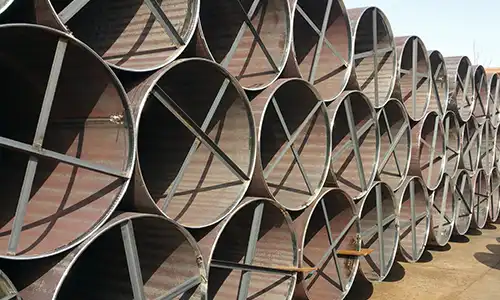
Understanding Steel Pipe Grades: ASTM A572 Gr.50 vs ASTM A36
Selecting the right structural steel grade involves more than comparing price tags. The mechanical properties of ASTM A572 Gr.50 and ASTM A36 reveal fundamental differences that directly impact construction efficiency, safety margins, and long-term performance. Understanding these distinctions helps project managers and procurement teams make specification decisions aligned with engineering requirements and budget realities.
Chemical Composition and Mechanical Properties
ASTM A572 Gr.50 is a type of high-strength low-alloy (HSLA) steel. It was made with carefully measured amounts of vanadium, niobium, or columbium to make it stronger without making it harder to weld. This alloy's make-up lets the material hit its normal 50 ksi yield strength while still having great properties for fabrication. The tensile strength is usually between 65 and 100 ksi, which means it has a lot of spare capacity beyond the yield point. ASTM A36, on the other hand, is a carbon steel that doesn't need to be alloyed as much. Because its parts are easier, it has a minimum yield strength of 36 ksi and a tensile strength of 58 to 80 ksi. Even though this grade works well enough for many common uses, it is not as good at carrying weight as higher-strength options. The elongation values are also different. For example, A36 usually shows 20–23% elongation in 8 inches, while A572 Gr.50 shows 18–21%. Both of these values mean that the steel is good for building use because it is flexible.
Comparative Analysis Table
| Property | ASTM A572 Gr.50 | ASTM A36 |
|---|---|---|
| Yield Strength | 50 ksi (345 MPa) | 36 ksi (250 MPa) |
| Tensile Strength | 65-100 ksi | 58-80 ksi |
| Elongation (8") | 18-21% | 20-23% |
| Carbon Content | ≤0.23% | ≤0.26% |
| Weldability | Excellent | Excellent |
This comparison illustrates why A572 Gr.50 has become the preferred choice for demanding structural applications. The higher yield strength enables engineers to design lighter, more economical structures without compromising load capacity—a critical advantage in bridge construction, high-rise foundations, and industrial facility development.
Industrial Applications and Project Suitability
ASTM A572 Gr.50 is widely used in building projects that need to find the best balance between strength and weight. This grade is used in deep foundation piling systems, especially when the ground is soft and pushing resistance and load transfer efficiency are important. For city bridge projects, A572 Gr.50 pipe piles are often used because the better yield strength of the material allows for longer unsupported spans and smaller foundation footprints. ASTM A36 is still useful for general building tasks where the design loads are within its range of capabilities. A36 is often used successfully for residential foundation work, light business buildings, and temporary shoring systems. The lower price of the grade makes it appealing when the extra strength of A572 Gr.50 is not needed for the design. For projects that want to save money, it's better to match the material requirements accurately to the real load needs than to over-specify.
Factors Affecting the Yield Strength of Chinese ASTM A572 Gr.50 Pipe
Chinese steel manufacturers have invested heavily in production technologies that ensure consistent mechanical properties across large production runs. The yield strength of ASTM A572 Gr.50 pipe produced in China depends on several interconnected factors, from raw material selection through final heat treatment protocols.
Manufacturing Processes and Their Impact
The way the pipe is welded has a big effect on how consistent the bending strength is. High-frequency resistance welding is used to make longitudinal joints in ERW (Electric Resistance Welding) pipe production, which can handle diameters from 21.3 mm to about 660 mm. This method keeps the heat-affected zone under tight control, which keeps the qualities of the base metal next to the weld seam. In Chinese ERW mills, automated systems keep an eye on the welding parameters in real time to make sure the quality of the fusion is consistent. LSAW (Longitudinal Submerged Arc Welding) pipes can be made with larger diameters and thicker walls, which are ideal for foundation piling applications. Plate-forming and multi-pass submerged arc welding are two processes that are used to make pipes that are very straight and have consistent mechanical features. Chinese companies that make LSAW pipes use ultrasonic testing and x-ray inspection as standard quality control measures to find any flaws that could weaken the yield strength. SSAW (Spiral Submerged Arc Welding) technology makes helical seam pipes that are very good at holding pressure. This way of making things works well for making pipes with diameters up to 7000 mm, Construction steel tubes, which are important for marine building and the foundations of big infrastructure projects. Because forming and welding are done all the time, the mechanical features of long pipes are always the same.
Quality Control and Certification Standards
Reputable Chinese manufacturers use multi-stage testing methods to make sure that the material meets the requirements for yield strength before it leaves the factory. Tensile testing machines pull samples until they break, and the yield point, ultimate tensile strength, and elongation numbers are written down. Impact testing at certain temperatures confirms that the material is tough, and chemical analysis confirms that the alloy's composition meets ASTM standards. For foreign buyers who are worried about quality assurance, third-party inspection services offer extra confirmation. Independent tests and certificates from groups like SGS, Bureau Veritas, and TÜV are trusted by B2B clients. Not only do these inspection reports list the properties of the finished product, but they also list the controls that were used during the manufacturing process, records of the heat treatment, and proof that the finished pipe can be traced back to the steel mill that certified it. In China, the production of high-strength low-alloy structural steel is governed by GB/T 1591, and Grade Q345 is roughly equivalent to ASTM A572 Gr.50. There are a lot of Chinese mills that meet both ASTM and GB standards and keep their dual approval. This parallel compliance shows how advanced the manufacturing process is and gives buyers more options for big projects that need to meet different regional standards.
Heat Treatment and Alloy Control
Controlled rolling and faster cooling methods are now commonplace among the biggest steel makers in China. These thermomechanical processes smooth out the structure of the grains, which increases the yield strength while keeping the toughness and ability to weld. During hot rolling, precise temperature control makes fine-grained microstructures that have better mechanical properties than steels that are processed normally. Adding vanadium and niobium micro-alloys is a key part of reaching the goal of 50 ksi yield strength. Chinese steel plants get these alloying elements from all over the world and keep strict composition tolerances throughout the whole process. The final product has the same qualities, no matter the thickness of the plate or the diameter of the pipe. This is an important factor to consider for projects that need more than one pipe size in the foundation system.
Performance Implications: Choosing Between ASTM A572 Gr.50 and ASTM A36
The yield strength differential between these grades creates tangible performance advantages that extend well beyond initial material selection. Understanding how this strength difference manifests in real-world construction scenarios helps justify specification decisions and optimize project economics.
Load-Bearing Capacity and Structural Efficiency
When compared to A36 material, a footing system built with A572 Gr.50 pipe piles can hold the same amount of weight with fewer piles or smaller pile cross-sections. Because the structure is more efficient, less material is needed, installation takes less time, and foundation plans are easier. This directly saves money. It's possible for a bridge pier foundation that needs twelve A36 pipe piles to only need nine A572 Gr.50 piles, depending on the soil and safety design factors. This is because A572 Gr.50 allows higher allowable stress values, which let engineers optimise pile spacing and minimise foundation footprints. This is especially helpful for urban construction projects, where tighter site limits and closeness to existing buildings require smart use of space. In crowded cities, the ability to get the required bearing capacity in a smaller footprint can decide whether or not a project is possible. Driving resistance during pile installation is also related to material yield strength. Driving stresses are better handled by A572 Gr.50 pipe piles than A36 alternatives. This lowers the chance of damage to the piles while they are being installed through thick or obstructed soil layers. This durability is especially useful in geological settings with cobblestones, boulders, or building waste that cause heavy impact loads during pile driving operations.
Corrosion Resistance and Long-Term Durability
Because their carbon steel chemistry reacts to the atmosphere in similar ways, both grades have about the same level of corrosion resistance. The real difference comes from the fact that A572 Gr.50's higher strength lets wall thickness be optimised. Thinner walls that meet strength standards lose less material over the structure's service life, but the rate of corrosion per surface area stays the same. Protective coating systems on pipe piles greatly increase service life, no matter what grade of base material is used. Coal tar enamel coatings, hot-dip galvanising, and fusion-bonded epoxy all make walls that greatly slow the rate of corrosion. Chinese makers offer these coating services as part of their production process. This makes sure that the surface is properly prepared and that the coating sticks well. When you combine a strong base material with good corrosion protection, you get foundation systems that can last 75 to 100 years, even in harsh soil or marine settings.
Economic Considerations and Value Analysis
The cost of materials is only one part of the overall economics of a job. Because it needs to be alloyed and made in a more controlled way, A572 Gr.50 pipe usually costs 10-15% more than A36 pipe. This difference in upfront cost usually goes away when you look at the total installed costs, since fewer sheets are needed to achieve the same level of structural strength. Fabrication costs are about the same for both grades, since the A572 product line has great weldability. Normal welding methods can be used for structural connections, pile joining, and cap attachment; no special filler metals or pre-heating are needed. This efficiency in manufacturing keeps labour costs stable and avoids schedule delays caused by complicated joining processes. Lifecycle value analysis shows the real economic picture. A foundation system that was well-designed and made of stronger materials needs less upkeep over its lifetime. Fewer piles mean fewer places where corrosion could happen and easier checking procedures. The initial investment in A572 Gr.50 material pays for itself many times over through lower upkeep costs and longer service intervals, which are huge financial benefits that far outweigh the small premium paid up front.
Procurement Insights: Sourcing Chinese ASTM A572 Gr.50 and ASTM A36 Pipes
Global procurement of structural steel pipe requires navigating complex supply chains while ensuring material quality, delivery reliability, and commercial transparency. Chinese manufacturers have emerged as major suppliers of construction steel tubes to international markets, offering competitive pricing alongside improved quality standards. Successful sourcing demands thorough supplier evaluation and clear specification documentation.
Identifying Qualified Manufacturers
There are thousands of steel makers in China, and their skills and quality standards are very different. To find manufacturers that can meet foreign standards, you need to look into a number of key indicators that go beyond what is advertised. The first filter is production capability. Facilities that make less than 50,000 tonnes a year might not have the process controls and testing tools needed to consistently meet ASTM standards. Certification portfolios show how sophisticated the manufacturing is. As a minimum, you should look for ISO 9001 quality management certification. For pipe production, you should also look for API 5L certification and for structural welding, AWS D1.1 certification. Manufacturers who have more than one foreign certification show that they are committed to quality systems that go beyond what is required by law. These certifications are audited on a regular basis, which ensures that process controls are still working. Customer references from finished foreign projects are a great way to find out how reliable a supplier is. Ask for proof of past shipments to clients in North America or Europe, such as inspection records and feedback on performance. Established makers are happy to give this information because they know that being open and honest with new buyers builds trust. Site visits to production facilities, which cost money for travel, get rid of doubts about the facilities for manufacturing and quality control.
Customization Capabilities and Order Parameters
Chinese pipe manufacturers give customers a lot of ways to customise their goods so that they fit the exact needs of the project. In addition to normal grades A572 Gr.50 and A36, mills can also make intermediate strength grades (Gr.42, Gr.55, Gr.60, and Gr.65) when non-standard specifications are needed for better design optimisation. Because of this, engineers can specify exactly the strong properties they need without over-specifying or settling for properties that aren't good enough. Chinese manufacturers offer a wide range of dimensions that can be used for almost any project. Pipe sizes ranging from 21.3 mm to 7000 mm can be used for a wide range of tasks, from micropile systems to large-diameter marine foundations. From 0.8 mm to 230 mm, the wall thickness can be adjusted to meet the needs of different uses in terms of pressure, driving stresses, and corrosion. Specifications for lengths up to 100 meters allow for deep foundations to be built with a single piece, without the need for field splicing. Order minimums vary by manufacturer and product standard. Due to the cost of plate cutting and forming, large-diameter LSAW pipe may need a minimum order of 50 to 100 tonnes per size standard. Because the minimum order quantity for smaller ERW pipes is usually lower, this way of production is good for projects that need pipes of different sizes but don't need a lot of them. You can meet the mill's minimum standards and meet project needs at the same time by negotiating combined orders for different sizes.
Pricing Strategies and Commercial Terms
Chinese steel pipe pricing follows commodity market trends while reflecting manufacturing complexity and quality requirements. Base prices correlate with hot-rolled coil costs plus processing margins determined by production method and testing requirements. ASTM-certified material commands premiums over domestic Chinese standard production due to additional testing and documentation requirements. Volume discounts become available on orders exceeding 500-1000 tons, with negotiable pricing reflecting reduced administrative overhead and production efficiency from longer manufacturing runs. Project-specific pricing proposals should request itemized quotations separating base material cost, testing and certification fees, protective coating charges, packaging expenses, and logistics coordination. This transparency enables accurate cost comparisons across suppliers. Payment terms typically require 30% deposit at order placement, with the balance due against a copy of shipping documents or upon delivery confirmation. Letters of credit through established international banks provide security for both parties, particularly on initial transactions before business relationships mature. Clarify which party bears responsibility for obtaining export licenses, arranging international shipping, and managing customs clearance—these logistics coordination points significantly impact total landed costs.
Practical Guide: Measuring and Specifying Steel Pipe Size and Strength for Your Projects
Accurate specification writing prevents costly ordering errors and ensures delivered material meets engineering requirements. Understanding dimensional standards and clearly communicating strength requirements eliminates ambiguity that causes procurement delays and project disruptions.
Dimensional Specification Standards
Pipe sizes follow standardized conventions, though multiple measurement systems for steel pipes create confusion if not explicitly defined. Outside diameter represents the controlling dimension, measured in either inches (U.S. practice) or millimeters (international practice). Wall thickness specifications use schedule numbers (Schedule 40, Schedule 80) for smaller sizes, while larger structural pipe employs nominal thickness stated in inches or millimeters. Specification clarity requires stating both outside diameter and wall thickness explicitly: "24-inch outside diameter pipe with 0.500-inch wall thickness" eliminates interpretation errors. Including equivalent metric dimensions prevents mistakes when manufacturers work in different measurement systems: "24-inch (610mm) outside diameter with 0.500-inch (12.7mm) wall thickness" ensures universal understanding. Length requirements need equal precision. Stating "12-meter standard lengths with 10% allowable at 6-meter lengths" communicates acceptable variation while preventing delivery of predominantly short pieces. Random length orders accept whatever lengths result from production cutting, usually offering modest cost savings suitable for projects with flexible field splicing capabilities.
Defining Mechanical Property Requirements
Purchase orders should explicitly reference applicable ASTM standards rather than assuming manufacturers understand implied requirements. Stating "ASTM A572 Grade 50 steel pipe per ASTM A252 piling specification" clarifies both material grade and intended use. This specificity ensures correct testing protocols and mechanical property verification. Supplementary requirements within ASTM standards address specialized testing or documentation needs. ASTM A572 includes several supplementary requirement options covering impact testing, through-thickness properties, and enhanced atmospheric corrosion resistance. Projects requiring specific supplementary requirements must call out these designations explicitly: "ASTM A572 Gr.50 with Supplement S1 Charpy V-notch impact testing at 40°F. Inspection and testing level specifications determine the extent of quality verification. Standard mill testing provides basic certification based on heat analysis and periodic mechanical testing. Purchaser inspection adds third-party verification of properties through witness testing or independent laboratory analysis. Premium inspection programs include ultrasonic testing of 100% of the pipe surface area, detecting manufacturing flaws invisible to visual inspection.
Avoiding Common Specification Errors
Confusing nominal dimensions with actual measurements causes frequent ordering mistakes. Schedule 40 pipe does not have a 0.40-inch wall thickness—the schedule number references a standardized wall thickness that varies with pipe diameter. Always specify actual wall dimensions rather than schedule numbers for structural applications to prevent misunderstandings. Mixing standards from different national systems creates compatibility problems. Specifying "ASTM A572 Gr.50 material fabricated to EN 10219 pipe dimensional tolerances" may seem reasonable, but it introduces conflicting requirements that manufacturers struggle to reconcile. Maintain consistency by specifying material properties, dimensions, and testing protocols all from the same standards system. Overlooking end preparation requirements causes field installation delays. Pipe ends may be furnished plain (as-cut from manufacturing), beveled for welding, or threaded for mechanical connections. Clearly specify end preparation: "square-cut ends suitable for butt welding with 30-degree bevel prepared in shop" communicates requirements that prevent field rework.
Conclusion
Understanding yield strength differences between ASTM A572 Gr.50 and ASTM A36 steel pipe empowers engineering teams to optimize foundation designs while controlling project costs. The 39% strength advantage of Gr.50 material directly translates into reduced pile quantities, smaller cross-sections, and enhanced structural efficiency without sacrificing safety margins. Chinese manufacturers have demonstrated consistent capability to produce ASTM-compliant pipe through advanced ERW, LSAW, and SSAW processes backed by rigorous quality control systems. Successful procurement requires thorough supplier vetting, precise specification documentation, and clear communication of mechanical property requirements. The modest price premium for higher-strength material disappears when analyzing total installed costs and lifecycle value, making A572 Gr.50 the economically rational choice for demanding infrastructure applications where performance and reliability determine long-term project success.
FAQ
1. Can ASTM A572 Gr.50 pipe be welded to ASTM A36 material in the same structure?
Welding dissimilar strength grades is technically feasible and commonly practiced in structural fabrication. The weld filler metal should match or exceed the higher-strength base metal—using E70XX electrodes ensures the weld joint develops full strength. Weld procedure qualification testing verifies that joint integrity meets code requirements. Design calculations must account for the lower-strength material when determining allowable stresses at the connection zone.
2. How does wall thickness affect yield strength in structural pipe?
Yield strength remains a material property independent of wall thickness—both thin-wall and heavy-wall A572 Gr.50 pipe exhibit the same 50 ksi minimum yield strength. Thicker walls provide greater cross-sectional area and section modulus, increasing load capacity and bending resistance without changing the fundamental material strength. Heat treatment and cooling rates may vary slightly across thickness ranges, but controlled manufacturing processes maintain consistent mechanical properties.
3. What documentation should I request from Chinese pipe suppliers?
Comprehensive material certification includes mill test reports documenting chemical analysis and mechanical properties for each production heat, dimensional inspection reports confirming diameter and wall thickness tolerances, third-party inspection certificates from recognized agencies, and material traceability documentation linking finished pipe to raw material certifications. Request copies of relevant ISO certifications and ASTM compliance letters demonstrating the manufacturer's authorized production scope.
Partner with HYPILE for Premium ASTM A572 Gr.50 Steel Pipe Solutions
HYPILE delivers engineer-specified ASTM A572 and A36 pipe manufactured through advanced ERW, LSAW, steel pipes, and SSAW processes, with dimensions ranging from 21.3mm to 7000mm diameter and wall thicknesses up to 230mm. Our integrated manufacturing capabilities include precision fabrication, protective coating application, and complete material traceability documentation that meets the most stringent procurement requirements. As a specialized steel pipe supplier backed by 45+ years of foundation engineering expertise, we understand the critical relationship between material properties and structural performance. Our technical team collaborates directly with project engineers to optimize pipe specifications, ensuring you receive exactly the grade, dimensions, and certification documentation your project demands. Contact our procurement specialists at sales@hypile.com for detailed product specifications, competitive pricing, and delivery timelines tailored to your infrastructure project requirements. We transform complex foundation challenges into reliable, cost-effective solutions built to last.
References
1. American Society for Testing and Materials. (2021). ASTM A572/A572M-21: Standard Specification for High-Strength Low-Alloy Columbium-Vanadium Structural Steel. West Conshohocken, PA: ASTM International.
2. American Society for Testing and Materials. (2019). ASTM A36/A36M-19: Standard Specification for Carbon Structural Steel. West Conshohocken, PA: ASTM International.
3. Chen, W., & Duan, L. (2014). Bridge Engineering Handbook: Construction and Maintenance (2nd ed.). Boca Raton, FL: CRC Press.
4. Barsom, J.M., & Rolfe, S.T. (2018). Fracture and Fatigue Control in Structures: Applications of Fracture Mechanics (4th ed.). West Conshohocken, PA: ASTM International.
5. Tomlinson, M.J., & Woodward, J. (2015). Pile Design and Construction Practice (6th ed.). Boca Raton, FL: CRC Press.
6. Brockenbrough, R.L., & Merritt, F.S. (2016). Structural Steel Designer's Handbook (5th ed.). New York, NY: McGraw-Hill Education.
Have a project in mind? Tell us your goals — we’ll help you make it real.