- English
- French
- German
- Portuguese
- Spanish
- Russian
- Japanese
- Korean
- Arabic
- Greek
- German
- Turkish
- Italian
- Danish
- Romanian
- Indonesian
- Czech
- Afrikaans
- Swedish
- Polish
- Basque
- Catalan
- Esperanto
- Hindi
- Lao
- Albanian
- Amharic
- Armenian
- Azerbaijani
- Belarusian
- Bengali
- Bosnian
- Bulgarian
- Cebuano
- Chichewa
- Corsican
- Croatian
- Dutch
- Estonian
- Filipino
- Finnish
- Frisian
- Galician
- Georgian
- Gujarati
- Haitian
- Hausa
- Hawaiian
- Hebrew
- Hmong
- Hungarian
- Icelandic
- Igbo
- Javanese
- Kannada
- Kazakh
- Khmer
- Kurdish
- Kyrgyz
- Latin
- Latvian
- Lithuanian
- Luxembou..
- Macedonian
- Malagasy
- Malay
- Malayalam
- Maltese
- Maori
- Marathi
- Mongolian
- Burmese
- Nepali
- Norwegian
- Pashto
- Persian
- Punjabi
- Serbian
- Sesotho
- Sinhala
- Slovak
- Slovenian
- Somali
- Samoan
- Scots Gaelic
- Shona
- Sindhi
- Sundanese
- Swahili
- Tajik
- Tamil
- Telugu
- Thai
- Ukrainian
- Urdu
- Uzbek
- Vietnamese
- Welsh
- Xhosa
- Yiddish
- Yoruba
- Zulu
Corrosion Resistant Welded Steel Pipes: Benefits and Applications
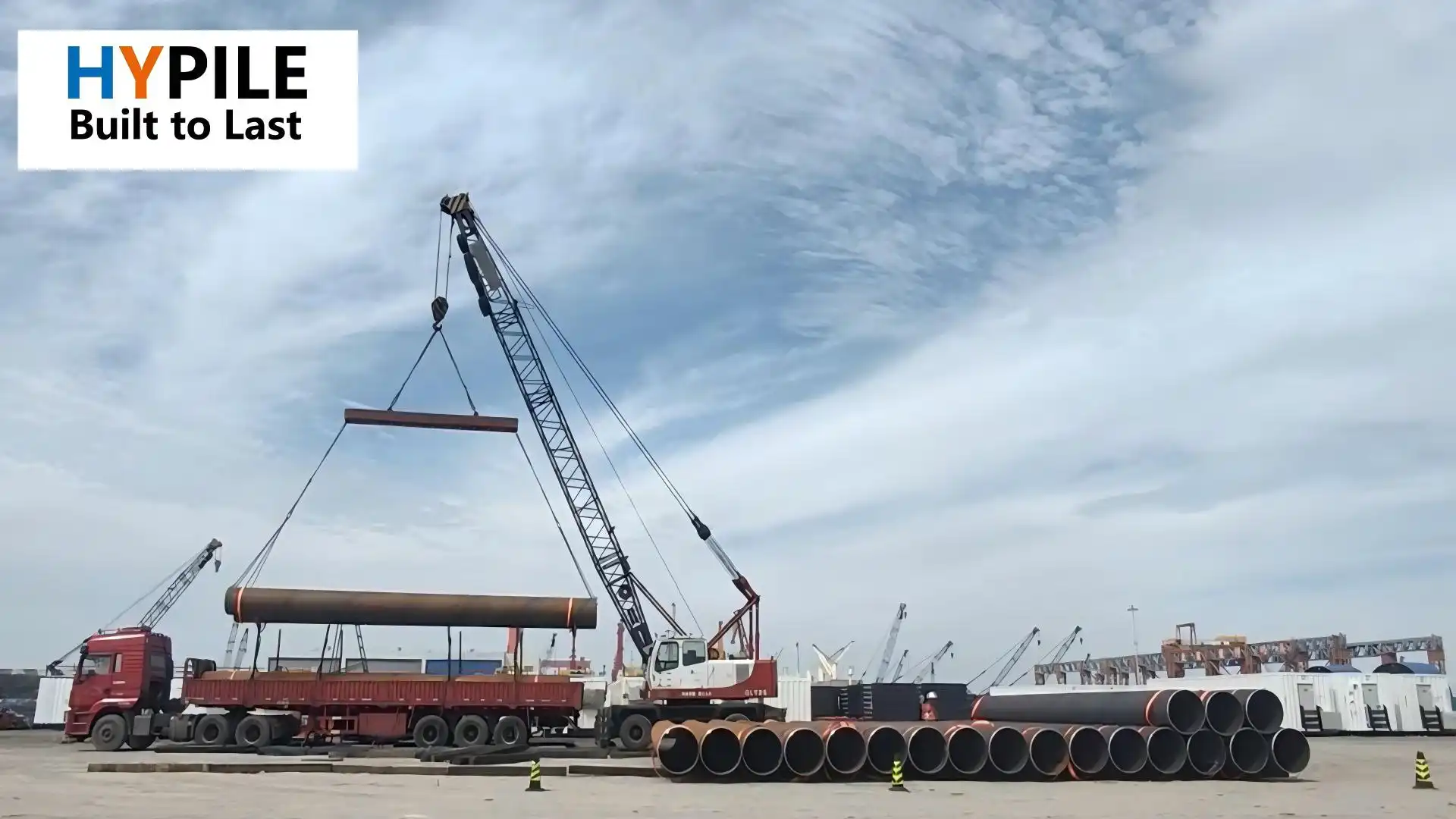
When evaluating corrosion-resistant welded steel pipes for demanding infrastructure projects, understanding material specifications becomes paramount. EN 10219 S275 welded steel pipe represents a versatile solution manufactured through SSAW, LSAW, or ERW cold-forming processes, delivering exceptional structural performance across construction, industrial, and energy sectors. These pipes combine superior corrosion resistance with cost-effective manufacturing, making them ideal for EPC contractors and engineering directors managing complex foundation systems. With dimensional precision ranging from 21.3 mm to 7000 mm outer diameter and thicknesses up to 230 mm, this steel grade addresses critical project requirements, including geological adaptability, schedule reliability, and long-term asset integrity.
Understanding EN 10219 S275 Welded Steel Pipe Specifications
What Defines the EN 10219 Standard?
EN 10219 regulates the cold-formed welding of structural hollow parts manufactured in Europe and elsewhere. Two pieces make up this standard. EN 10219-1 covers fine-grain and non-alloy steel technical delivery conditions, whereas EN 10219-2 covers tolerances, measurements, and sectional characteristics.
EN 10219 S275 Welded Steel Pipe offers purchasing managers explicit requirements for chemical makeup, mechanical strength, and size stability in structural steel choices. S275 has a minimum yield strength of 275 MPa, between S235 and S355. This equilibrium delivers the building medium-duty strength without increasing material costs.
Chemical Composition and Mechanical Properties
The carbon percentage of S275 steel is controlled around 0.20–0.25%. Maintaining manganese, silicon, and phosphorus levels makes the steel stronger and simpler to weld. The material can withstand standing and moving loads due to its 410–560 MPa tensile strength.
Impact resistance varies by phrase. Standard S275JR is tough enough for most situations. However, S275J0H has Charpy V-notch values of 27 joules at 0°C, making it ideal for cold-weather settings in northern infrastructure projects. Transportation framework and local water system procurement teams should choose environmentally friendly impact grades.
Manufacturing Processes and Quality Assurance
Modern welded pipes are constructed in three ways. Electric Resistance Welding (ERW) is suitable for small sizes and fast manufacturing. Pressure-bearing applications benefit from longitudinal submerged arc welding (LSAW), which can handle medium to large diameters and generate more robust welds. Fast and easy spiral submerged arc welding (SSAW) can make pipes up to 7000 mm in diameter. Pile and naval foundation constructions employ these pipes.
Quality control follows strict guidelines. Measurements according to EN ISO 1127 validate tolerances. Hydrostatic testing shows that pressure is uniform throughout. Weld seam stability is 100% guaranteed by ultrasound or X-ray nondestructive testing. Chemical analysis, mechanical testing, and heat treatment are recorded for each batch of items certified under EN 10204 3.1. This thorough material tracking satisfies contractors' project documentation and legal compliance demands.
Advantages of Corrosion-Resistant EN 10219 S275 Welded Steel Pipes
Superior Corrosion Performance
In infrastructure, EN 10219 S275 welded steel pipes defend against corrosion. Cold-forming creates a regulated microstructure with consistent grain boundaries. This slows oxidation compared to hot-rolled choices. In acidic soil, these pipes can endure over 50 years with galvanising, epoxy, or polythene coatings.
A coastal construction project found that S275 with zinc-rich coatings lasts 15 to 20 years longer than carbon steel in chloride-rich settings. This extended lifespan means fewer replacements and cheaper maintenance expenses for local governments and engineering directors who manage lifecycle costs. The material's cathodic protection technology extends asset life in high-risk environments.
Structural Efficiency and Load-Bearing Capacity
The minimum yield strength of 275 MPa makes it ideal for scaffolding, base piles, and construction frames. S275 grades allow engineers to decrease wall thickness by 15% while maintaining load capacity, unlike grades S235, which yield 235 MPa. Large-scale building projects require cheaper shipping and simpler installation, which this lesser weight provides.
Testing protocols verify real-world speed. Flattening tests ensure the weld zone is flexible, allowing pipes to withstand pile installation pushing stresses. The dimensions remain stable following mechanical stress, according to drift expansion tests. These quality criteria reassure project managers in soft soils, high groundwater tables, and seismic zones.
Cost-Performance Optimisation
Welded pipes are cheaper than seamless ones. Most suppliers charge 20–35% less per linear meter than seamless pipes with the same standards (e.g., EN 10219 S275 welded steel pipe) when manufacturing is more efficient. Due to global production capacity, sizes are wider and lead times are shorter.
Customisation lets you satisfy job demands without extra charges. To meet varied foundation levels, lengths may be altered up to 100 metres without field patching. Changing the wall width optimises materials depending on load estimations. Surface treatment choices are embedded into manufacturing, preventing extra handling delays. When procurement managers merge sources, they coordinate with fewer vendors and handle contracts more simply.
Typical Applications of EN 10219 S275 Corrosion-Resistant Welded Steel Pipes
Construction and Infrastructure Projects
Most EN 10219 S275 welded steel pipes are utilised in structural frames. Hollow sections serve as columns, beams, and braces in multi-storey buildings. The strength-to-weight ratio reduces base loads while meeting codes. Modular construction systems with standardised pipe sections are faster to assemble, which is significant for corporate and residential developers with tight delivery schedules.
Scaffolding and temporary support structures employ S275 pipes for safety-critical jobs. The material's elasticity allows you to spot displacement signals before they break, improving workplace safety. Due to their extensive exposure to the weather, these pipes are utilised as falsework supports in municipal bridges and must resist corrosion. Real-world transportation building projects illustrate that choosing the correct materials may save costs and meet deadlines.
Industrial and Mechanical Environments
Structure parts are subjected to harsh production conditions. S275 welded pipe conveyor systems, material handling frames, and equipment supports can withstand numerous loads and processing plant chemicals. Welding makes unique manufacturing simpler. Mounting braces, reinforcing plates, and connecting tools can be installed without specific processes.
Petrochemical and energy plants require safe materials. Although stainless steel is utilised in harsh environments, carbon steel S275 pipes with the correct coatings can be used in secondary structures and cost less. Its mechanical properties make it suitable for equipment platforms, pipe racks, and wire trays. The grade is protected from the environment. Technical managers like balanced performance standards and purchasing money.
Foundation Engineering and Piling Systems
Foundation builders are increasingly using welded pipe piles to transfer huge weights deep down. HYPILE's 45+ years of expertise indicate that S275-grade pipes function well in many geological conditions. The 219 mm to 3500 mm diameter can manage loads from house developments to major industrial complexes. Driving stresses and corrosion limitations derived from soil chemistry affect wall thickness.
Marine construction has rust resistance issues since it impacts structural longevity. Strong and rust-resistant coated S275 pipes are utilised in coastal defence, pier foundations, and wharf constructions. Since the material is longer, it needs fewer underwater splices. Installation is faster and more reliable. Expert vendors that understand local complexity provide comprehensive technical support to engineering teams.
Comparative Analysis: EN 10219 S275 vs Alternative Steel Pipes
Standards Comparison: EN 10219 vs ASTM A500
European EN 10219 and North American ASTM A500 are commonly considered by global buyers. Both apply to cold-formed welded structural tubes, although variances affect material choice. ASTM A500 Grade B's minimum yield strength is 290 MPa, slightly higher than S275's 275. Different grades' chemical composition impacts how effectively EN 10219 S275 welded steel pipes unite and cling to coatings.
Standards set varied measuring boundaries. EN 10219 requires narrower outer width and wall thickness specifications, making products easier to produce and assemble. Both standards require flattening and weld strength tests. Similar certification documentation practices help overseas projects stay on track. Regional purchasing saves money. EN materials are simpler to procure in Europe, although ASTM grades may be cheaper in North America.
Welded vs Seamless Pipe Selection
Buying materials typically requires choosing between welded and seamless pipe technologies. Seamless lines don't have weld seam issues since their characteristics are consistent across the cross-section. This is crucial in high-pressure pipe systems because seam stability determines safety. However, seamless manufacture restricts sizes, especially for widths over 600mm.
Welded pipes offer greater sizes at a lower cost. New welding processes create seams with the same strength as the source material. This is shown via destructive testing. For structural applications that prioritise mechanical loads over pressure, welded pipes function effectively. Welded pipes are 25–40% cheaper than smooth pipes, making them the best choice for budget-conscious projects that fulfil performance specifications.
Market Trends and Procurement Strategy
An industry survey found that buyers prefer qualified suppliers with comprehensive technical support. Contractors prefer collaborating with partners that can aid with engineering throughout design development and ensure project-specific materials. Documentation bundles, including mill test results, dimensional inspection records, and tracking certifications, simplify regulatory clearances and quality inspections.
Bulk purchases lower project expenses. Volume agreements provide better costs, and material supply meets project schedules. Supplier collaboration reduces on-site storage and weather exposure before installation. Remote projects require delivery coordination since shipping issues might impact prices and planning.
How to Procure High-Quality EN 10219 S275 Welded Steel Pipes?
Supplier Selection and Certification Verification
First, check manufacturing certifications to find approved sources. ISO 9001 quality management approval means that process rules ensure product quality is consistent. CE marking proves a product meets EU building product standards, which is required for EU projects. ISO 14001-certified suppliers use sustainable production methods, which public sector clients increasingly value.
The technical capability review examines test and production tool storage. Modern welding lines with automatic quality tracking offer better consistency than manual processes. In-house chemical, tensile, and non-destructive testing labs provide faster results and better quality control than outside labs. Site visits teach a quality mindset and operational skills for producing EN 10219 S275 Welded Steel Pipe.
Customisation and Order Management
Engineering jobs often require more material details than a list. Respondent providers can meet custom length needs, eliminating field splicing issues. Based on structural estimates, changing wall width maximises material use. This reduces costs without affecting performance. Bevelling, threading, and plain cutting assist production and reduce post-fabrication processing.
Order quantity planning optimises inventory costs, price breaks, and delivery reliability. Different suppliers have different product minimum order quantities. Buying teams can better plan purchases with these levels. Lead time promises require clear production schedule communication, especially for large-diameter or speciality-grade materials that require specific manufacturing runs. To protect project cash flow and fulfil supplier promises, payment and delivery terms should be carefully negotiated.
Quality Assurance and Inspection Protocols
Full quality checks prevent low-quality materials from ruining the job. Incoming checking processes should verify dimensions with calibrated tools. Multiple wall thickness measurements show it meets tolerances and corrosion allowances. External diameter verification ensures the link gear and fitting tools work with the product.
Mechanical properties are validated using mill test papers showing tensile, yield, and elongation numbers for EN 10219 S275 welded steel pipe. Heat number tracking links materials to production records. This aids warranty claims and forensic investigations. Visual inspection reveals surface flaws, finish damage, and handling marks that must be repaired before installation. Third-party inspection services check important projects for quality issues that could delay and cost more.
Conclusion
Building, industry, and foundation engineering have successfully used EN 10219 S275 welded steel pipes. Project managers, procurement professionals, and technical directors building complex infrastructure benefit from the material's balanced mechanical properties, shapeability, and low cost. Knowing how things are made, how to ensure quality, and how to choose a seller helps you make smart purchases that improve your project. Working with experienced suppliers who can provide expert help and reliable material quality becomes increasingly important for keeping to plan and ensuring asset longevity as infrastructure needs change.
FAQ
1. What distinguishes S275 from other EN 10219 steel grades?
S275 has a minimum yield strength of 275 MPa, between S235 (235 MPa) and S355 (355 MPa). This middle strength provides enough power for medium-duty structural uses while being cheaper than higher-strength options. JR for normal uses, J0/J2 for impact protection, and weathering steel (S275J0W) for uncoated areas are all available grades for EN 10219 S275 Welded Steel Pipe.
2. How do coating systems enhance corrosion resistance?
Protective layers block oxygen and wetness from reaching the base steel. Hot-dip galvanising protects with zinc layers. Zinc protects steel because it corrodes slower. Epoxy and polyurethane coats protect against chemicals in harsh conditions. Exposure conditions determine the choice. Multiple-layer systems with zinc-rich bases and 40-year polymer topcoats are typical for marine uses.
3. What documentation should procurement teams request?
Full sets of materials include EN 10204 3.1 inspection certificates for chemical and mechanical properties and physical inspection reports for coating thickness limits and measurements. With heat number tracking, materials can be linked to output batches. CE badges verify that European projects follow European building codes. Request test records from past projects with consistent quality.
Partner with HYPILE for Reliable EN 10219 S275 Welded Steel Pipe Supply
With over 45 years of foundation building and structural steel solutions experience, HYPILE can provide EN 10219 S275 Welded Steel Pipes. We can make parts with widths from 21.3 mm to 7000 mm and wall thicknesses up to 230 mm using SSAW, LSAW, and ERW. We stock a lot of non-alloy, fine-grain, and weathering steel to finish jobs on time. Our "BUILD TO THE LAST" philosophy ensures that we never sacrifice quality during production or delivery to meet European market standards. Technical teams assist engineers with specification writing and installation. They help workers navigate difficult terrain and choose the best materials. Contact our experts at sales@hypile.com to discuss your project needs and receive full technical proposals with all the paperwork and reasonable bulk EN 10219 S275 welded steel pipe prices.
References
1. European Committee for Standardization. (2019). "EN 10219-1: Cold Formed Welded Structural Hollow Sections of Non-Alloy and Fine Grain Steels - Technical Delivery Conditions." Brussels: CEN.
2. British Standards Institution. (2021). "Structural Use of Steelwork in Building: Material, Fabrication and Erection Specifications for Cold-Formed Welded Steel Tubes." London: BSI Standards Publication.
3. American Institute of Steel Construction. (2020). "Steel Construction Manual: Design Considerations for Hollow Structural Sections in Building Frameworks." Chicago: AISC Publications.
4. International Association for Bridge and Structural Engineering. (2018). "Corrosion Protection Systems for Steel Structures in Infrastructure Applications." Zurich: IABSE Technical Reports.
5. Welding Institute. (2022). "Quality Assurance in Welded Structural Hollow Section Manufacturing: Process Controls and Testing Protocols." Cambridge: TWI Knowledge Centre.
6. European Steel Tube Association. (2020). "Technical Guidelines for Cold-Formed Structural Steel Tubes: Applications, Standards, and Performance Specifications." Düsseldorf: ESTA Industry Publications.
Have a project in mind? Tell us your goals — we’ll help you make it real.