- English
- French
- German
- Portuguese
- Spanish
- Russian
- Japanese
- Korean
- Arabic
- Greek
- German
- Turkish
- Italian
- Danish
- Romanian
- Indonesian
- Czech
- Afrikaans
- Swedish
- Polish
- Basque
- Catalan
- Esperanto
- Hindi
- Lao
- Albanian
- Amharic
- Armenian
- Azerbaijani
- Belarusian
- Bengali
- Bosnian
- Bulgarian
- Cebuano
- Chichewa
- Corsican
- Croatian
- Dutch
- Estonian
- Filipino
- Finnish
- Frisian
- Galician
- Georgian
- Gujarati
- Haitian
- Hausa
- Hawaiian
- Hebrew
- Hmong
- Hungarian
- Icelandic
- Igbo
- Javanese
- Kannada
- Kazakh
- Khmer
- Kurdish
- Kyrgyz
- Latin
- Latvian
- Lithuanian
- Luxembou..
- Macedonian
- Malagasy
- Malay
- Malayalam
- Maltese
- Maori
- Marathi
- Mongolian
- Burmese
- Nepali
- Norwegian
- Pashto
- Persian
- Punjabi
- Serbian
- Sesotho
- Sinhala
- Slovak
- Slovenian
- Somali
- Samoan
- Scots Gaelic
- Shona
- Sindhi
- Sundanese
- Swahili
- Tajik
- Tamil
- Telugu
- Thai
- Ukrainian
- Urdu
- Uzbek
- Vietnamese
- Welsh
- Xhosa
- Yiddish
- Yoruba
- Zulu
ASTM A106 Seamless Steel Pipe Technical Specifications Explained
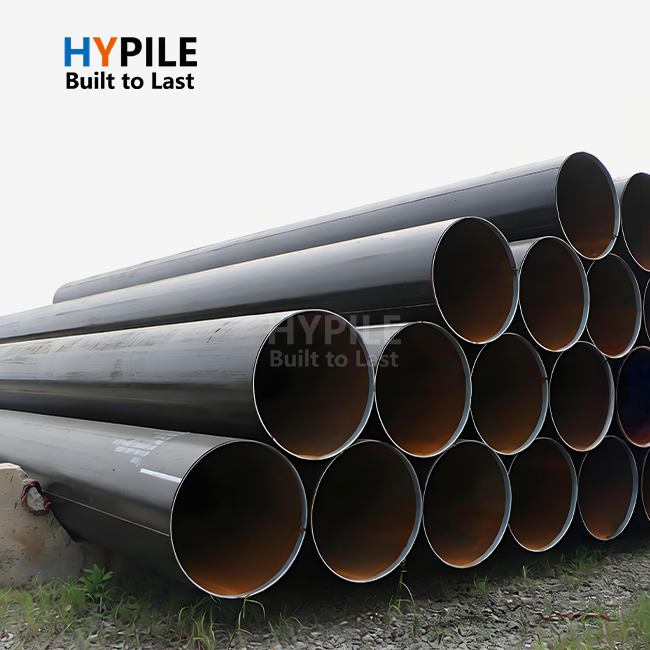
It is best to use ASTM A106 Seamless Steel Pipe for carbon steel pipes that will be used at high temperatures. Because it's used in a tough business, it's very reliable. ASTM International has strict rules for making them, so they are called seamless pipes. The energy, infrastructure, and industry sectors all use them to move steam, fuels, and dangerous fluids, and they work great. People who buy ASTM A106 pipes can make choices that keep things safe, save money, and ensure the job will be successful in the long run if they know about their technical specs.
Understanding ASTM A106 Seamless Steel Pipe Specifications
ASTMA106 sets the rules for seamless carbon steel pipes that can only be used for work that needs to be done at high temperatures. Simply put, these pipes are needed for steam lines, boiler tubes, and process pumping systems because they can handle being hot.
Grade Classifications and Chemical Composition
There are three marks given: A, B, and C. Every grade works better than the last one. It's good in cold weather because Grade A does its main job well. A lot of people use Grade B, though, because it is strong and easy to work with. In tough places with a lot of heat and high air pressure, Grade C has the best tensile strength.
There are big differences between the chemicals that make up each grade. On the other hand, Grade C has 0.35% carbon, and Grade A has 0.25% carbon. The stuff gets stronger and harder as the manganese level rises. The silicon level is kept at or below 0.10% to help with deoxidation. We also keep the amounts of sulfur and phosphorus low so that the material is strong and won't break.
Dimensional Standards and Mechanical Properties
The outside diameters of our ASTM A106 seamless pipes run from 10.3 mm (1/8" to 48"). Because of this, they can be used for many things, from tracking lines with small bores to processing pipes with large diameters. Because the wall width can be changed from 1.73 mm to 200 mm, it can be used with a range of building types and pressure levels.
It works in a very different way for each grade. When pulled apart, it's at least 415 MPa (60,000 psi) strong. When stretched, it's at least 240 MPa (35,000 psi) strong. At least 275 MPa (40,000 psi) must be the yield strength, and at least 485 MPa (70,000 psi) must be the tensile strength of Grade C. In this way, the stuff will always work, even when things get tough. Not only that, but it can also be used to build and put things together on the job site.
Manufacturing Process and Quality Assurance of ASTM A106 Seamless Pipes
Seamless pipes, such as ASTM A106 Seamless Steel Pipe, are better than connected pipes because they are more structurally stable and can handle higher pressures thanks to modern ways of making them. Because the lines are smooth, they don't have any weak spots like soldered parts do. This makes them perfect for important uses.
Production Methods and Heat Treatment
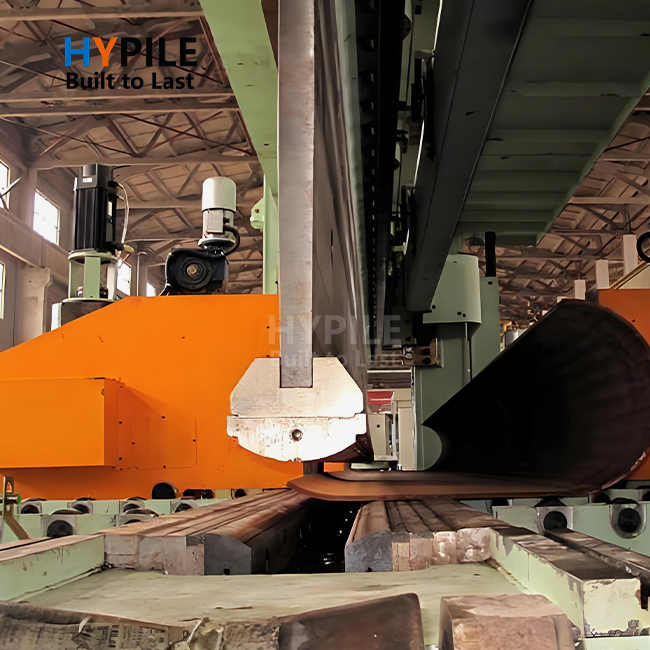
The main ways that seamless carbon steel pipes are made are through hot extrusion and rotating cutting. Before rotating piercing, solid steel billets are heated to forging temperature. The billets are then punched and stretched over a frame to make the hollow pipe structure. With this method, the wall width is always the same, and there is no need for lengthwise bonding.
Heat treatment is a key part of getting certain mechanical qualities. To normalize a pipe, it is heated above its critical temperature and then cooled by air to smooth out the grain structure and make it stronger. Reducing leftover stresses from manufacturing, stress relief makes the dimensions more stable and stops warping during service.
Testing Protocols and Quality Control
While the product is being made, strict testing methods make sure that the material's qualities and measurements are correct. During hydrostatic testing, the internal pressure of each pipe is tested at amounts higher than what is required by design. This makes sure that the pressure stability is maintained. Ultrasonic testing finds problems inside that might affect performance, and measurement checking makes sure that the product fits within the allowed ranges.
Eddy current screening and magnetic particle testing are two nondestructive testing methods that can be used to find flaws on the surface. These thorough quality control steps make sure that every pipe meets or beats the standards of ASTM A106. This gives you peace of mind for important uses where failure would have serious effects.
Comparing ASTM A106 Seamless Pipes with Other Pipe Types for Informed Procurement
Before you buy something, it's helpful to do a full study of ASTM A106 lines and other plumbing options. People can pick the best material for their wants and budget if they know these differences.
| STEEL GRADE | Composition Max, % | |||||||||
| C | Mn | P | S | Si | Cr | Cu | Mo | Ni | V | |
| ASTM A106 GR A | 0.25 | 0.27-0.93 | 0.035 | 0.035 | min. 0.10 | 0.40 | 0.40 | 0.15 | 0.40 | 0.08 |
| ASTM A106 GR B | 0.30 | 0.29-1.35 | 0.035 | 0.035 | min. 0.10 | 0.40 | 0.40 | 0.15 | 0.40 | 0.08 |
| ASTM A106 GR C | 0.35 | 0.29-1.35 | 0.035 | 0.035 | min. 0.10 | 0.40 | 0.40 | 0.15 | 0.40 | 0.08 |
| STEEL GRADE | Yield Strength , min,MPA | Tensile Strength , min,MPA | Elongation in 2in min % |
|||||||
| ASTM A106 GR A | 205 | 300 | 25 | |||||||
| ASTM A106 GR B | 240 | 415 | 16.5 | |||||||
| ASTM A106 GR C | 275 | 485 | 16.5 | |||||||
Performance Comparison with Alternative Standards
It is clear that ASTM A106 pipes are better than ASTM A53 connected pipes when it comes to pressure levels and temperature ranges. Higher temperatures and pressures can be used because there are no gaps where the pieces come together. The API 5L pipes are great for moving oil and gas, but the ASTM A106 pipes are better for high-temperature process uses.
While not as resistant to rust as stainless steel pipes, carbon steel pipes are much cheaper and can be used in a wide range of situations. But stainless steel is needed when its better resistance to rust makes up for the higher cost of the material, like in chemical working settings.
Grade Selection Criteria
You should pick between Grade B and Grade C based on safety and working conditions. Grade B is best for everyday jobs that don't need a lot of power. If you need better tensile qualities at higher temperatures or pressures, on the other hand, you need Grade C.
Price-wise, Grade B seamless steel pipe is often the best choice because it strikes a good mix between skill and worth. When the job needs more than what Grade B Seamless steel pipe can handle, you should pay more for Grade C Seamless steel pipe. This is because it stops mistakes or design choices that could cost a lot of money and hurt the project's total budget.
Procurement Guide for ASTM A106 Seamless Steel Pipes
To do good buying, you need to know how the market works, what your suppliers can do, and what your quality assurance needs are. Procurement strategies that work well combine cost concerns with quality needs and the ability to reliably supply goods.
Supplier Evaluation and Certification Requirements
Reliable sellers show a wide range of certifications, such as ISO 9001 quality management systems and accreditations specific to the business. Mill test papers are important proof of the chemical makeup and mechanical features of each heat of material. Third-party inspection services make sure that standards are met and give an extra quality guarantee.
Lead times and transportation costs are greatly affected by where things are located. Local suppliers may be able to send items faster and charge less for shipping, while foreign suppliers may be able to offer low prices for big orders. Building ties with several qualified providers protects the supply chain and gives you access to a range of reasonable price choices.
Pricing Factors and Contract Considerations
Pricing systems usually take into account the cost of materials, the difficulty of making the product, and the state of the market. There are often minimum order amounts, especially for sizes or specs that aren't common. Large projects can get volume savings, which makes buying in bulk a good idea when store space and cash flow allow it.
The terms of the contract should include standards for quality, dates for release, and promises of performance for seamless steel pipe. Warranty clauses protect against major flaws, and clear acceptance criteria stop disagreements during testing and inspection. Payment terms and price increase rules for seamless steel pipe need to be carefully thought through, especially for tasks that take a long time to finish.
Conclusion
ASTM A106 seamless steel pipe specifications provide the technical foundation for successful high-temperature piping applications across diverse industrial sectors. Understanding grade differences, manufacturing processes, and procurement considerations enables informed decision-making that balances performance requirements with economic objectives. The seamless construction, rigorous quality standards, and proven performance record make these pipes essential components for critical infrastructure projects where reliability cannot be compromised.
FAQ
1. What distinguishes ASTM A106 Grade B from Grade C?
Grade C offers enhanced mechanical properties with higher tensile strength (485 MPa vs 415 MPa) and yield strength (275 MPa vs 240 MPa) compared to Grade B. The increased carbon content in Grade C provides superior strength for high-pressure applications, while Grade B offers better weldability and remains suitable for most general-purpose applications.
2. How does seamless construction benefit high-temperature applications?
Seamless construction eliminates longitudinal welds that can become failure points under thermal cycling and high-pressure conditions. The uniform wall thickness and absence of heat-affected zones provide consistent material properties throughout the pipe cross-section, enhancing reliability and pressure-handling capabilities in demanding service environments.
3. What testing procedures validate ASTM A106 pipe quality?
Standard testing includes hydrostatic pressure testing, ultrasonic inspection for internal defects, dimensional verification, and chemical analysis. Additional nondestructive testing methods, such as eddy current and magnetic particle inspectio,n detect surface imperfections. Mill test certificates document all test results and material properties for quality assurance purposes.
Partner with HYPILE for Premium ASTM A106 Seamless Steel Pipe Solutions
HYPILE delivers comprehensive ASTM A106 seamless steel pipe solutions backed by 45+ years of engineering expertise and our unwavering "BUILD TO THE LAST" philosophy. As a trusted manufacturer and supplier, we provide complete material traceability, rigorous quality control, and customized fabrication services that meet the most demanding project specifications. Our integrated approach combines premium pipe manufacturing with advanced surface treatments, precision fabrication, and expert engineering support to ensure your foundation and infrastructure projects achieve exceptional performance and longevity. Contact our technical team at sales@hypile.com to discuss your ASTM A106 seamless steel pipe requirements and discover how our proven expertise can optimize your next critical project.
References
1. American Society for Testing and Materials. "Standard Specification for Seamless Carbon Steel Pipe for High-Temperature Service." ASTM International, 2019.
2. Harvey, John F. "Theory and Design of Pressure Vessels." Van Nostrand Reinhold Engineering Library, 2nd Edition, 1991.
3. Bhadeshia, H.K.D.H. and Honeycombe, Robert. "Steels: Microstructure and Properties." Butterworth-Heinemann, 4th Edition, 2017.
4. Mohitpour, M., Golshan, H., and Murray, A. "Pipeline Design and Construction: A Practical Approach." ASME Press, 3rd Edition, 2007.
5. Boyer, Howard E. "Atlas of Stress-Strain Curves." ASM International Materials Park, 2nd Edition, 2002.
6. Singh, Rajinder. "Applied Welding Engineering: Processes, Codes, and Standards." Butterworth-Heinemann, 2nd Edition, 2016.
Have a project in mind? Tell us your goals — we’ll help you make it real.