- English
- French
- German
- Portuguese
- Spanish
- Russian
- Japanese
- Korean
- Arabic
- Greek
- German
- Turkish
- Italian
- Danish
- Romanian
- Indonesian
- Czech
- Afrikaans
- Swedish
- Polish
- Basque
- Catalan
- Esperanto
- Hindi
- Lao
- Albanian
- Amharic
- Armenian
- Azerbaijani
- Belarusian
- Bengali
- Bosnian
- Bulgarian
- Cebuano
- Chichewa
- Corsican
- Croatian
- Dutch
- Estonian
- Filipino
- Finnish
- Frisian
- Galician
- Georgian
- Gujarati
- Haitian
- Hausa
- Hawaiian
- Hebrew
- Hmong
- Hungarian
- Icelandic
- Igbo
- Javanese
- Kannada
- Kazakh
- Khmer
- Kurdish
- Kyrgyz
- Latin
- Latvian
- Lithuanian
- Luxembou..
- Macedonian
- Malagasy
- Malay
- Malayalam
- Maltese
- Maori
- Marathi
- Mongolian
- Burmese
- Nepali
- Norwegian
- Pashto
- Persian
- Punjabi
- Serbian
- Sesotho
- Sinhala
- Slovak
- Slovenian
- Somali
- Samoan
- Scots Gaelic
- Shona
- Sindhi
- Sundanese
- Swahili
- Tajik
- Tamil
- Telugu
- Thai
- Ukrainian
- Urdu
- Uzbek
- Vietnamese
- Welsh
- Xhosa
- Yiddish
- Yoruba
- Zulu
What are some uses for welded pipe?
Modern infrastructure is built on welded steel pipe, which connects towns, powers industries, and supports a huge number of building projects around the world. Welding steel sheets or tubes together makes these flexible lines. They are strong and reliable ways to move fluids, gases, and structural support systems. Welded pipes are a cost-effective way to solve a wide range of industrial problems that need long-lasting and effective solutions, from moving oil and gas to distributing water.
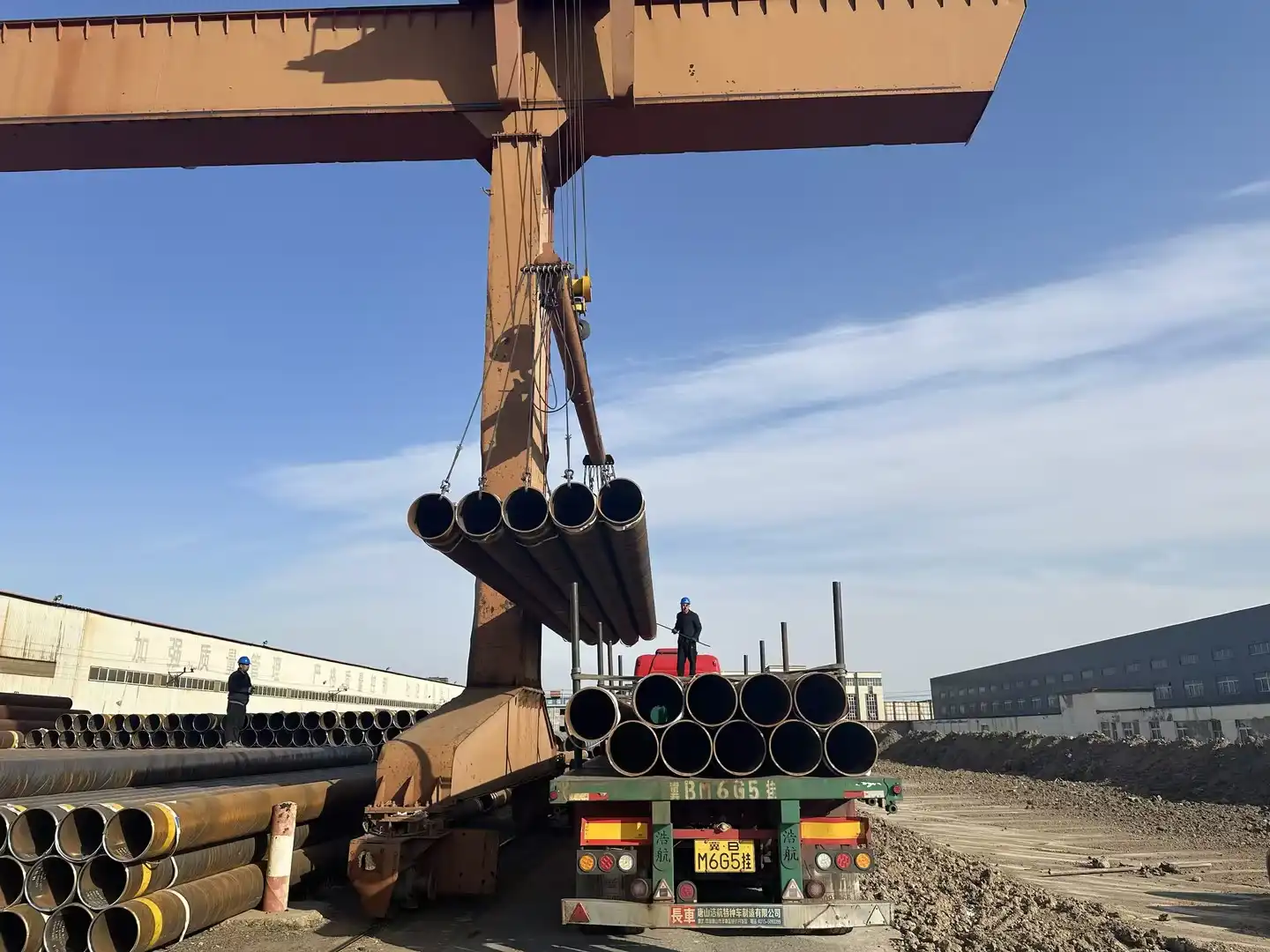
Understanding Welded Steel Pipes: Basics and Advantages
Welded steel pipes are manufactured through sophisticated welding methods that join steel sheets or coils together to make smooth cylinder shapes. Electric Resistance Welding (ERW), Longitudinal Submerged Arc Welding (LSAW), and Spiral Submerged Arc Welding (SSAW) are the three main ways that things are made. Each has its own benefits for different uses.
Manufacturing Excellence and Quality Standards
Today, strict international standards, especially API 5L specs, are used to make sure that the quality and performance of welded pipes are always the same. The making process starts with coils of high-quality steel that are carefully shaped and joined together. LSAW uses submerged arc welding for thick-wall, large-diameter purposes, while ERW pipes use high-frequency electrical current to make strong lengthwise welds. SSAW technology makes helical-welded pipes that are perfect for devices that send high-pressure electricity.
The production of welded steel pipe is governed by API 5L PSL1 and PSL2, with grades running from GR B to X80 for PSL1 and GRBM to X80M for PSL2. These groups make sure that pipes have certain chemical makeups, mechanical qualities, and testing needs so they can be used safely in tough conditions.
Size Capabilities and Customization Options
These days, soldered pipes can be made in a huge range of sizes, with outer widths that go from 21.3 mm to an amazing 7000 mm. The wall thickness can be anywhere from 0.8mm to 230mm, so it can be used for anything from light distribution lines to heavy-duty structure projects. Single pipe lengths can go up to 100 meters, which cuts down on the need for welding in the field and speeds up the job.
This wide range of API 5L X42 Welded Steel Pipe sizes lets engineers choose the best pipe standards for their projects, whether they are planning for public water systems, industry processing plants, or large pipeline infrastructure. Being able to make extra-long single lengths is especially helpful for big jobs because it cuts down on joints and possible weak spots.
Exploring Various Types and Their Applications
It is clear how useful welded steel pipes are when you look at all the different ways they are used in different businesses. Each welding process and grade standard is used for a different reason, so making the right choice is essential for the project to succeed.
Infrastructure and Transportation Systems
The most common use for welded steel pipe systems is in oil and gas transportation networks. For these projects to work, the lines need to be able to survive high pressures and harsh environments while still staying structurally sound for decades. X52, X60, and X65 grade pipes are often used in transmission uses because they have great strength-to-weight ratios and are easier to weld in the field.
A lot of the infrastructure that moves water depends on welded steel pipes because they last a long time and can handle loads from the outside. It is more cost-effective for municipal systems to use lower-grade pipes like API 5L GR B, which works well for distribution loads and is still affordable for big projects.
Industrial and Energy Applications
Power plants use welded pipes a lot for everything from fuel handling to cooling systems and steam distribution. Being able to change the wall's thickness and width means that it works well in a range of pressure and temperature circumstances. Petrochemical plants need specialty-grade soldered pipes that don't rust when exposed to harsh chemicals and keep the structure stable.
Compressed air systems, hydraulic networks, and material handling all use welded steel pipes in manufacturing processes. API 5L certified pipes work reliably in automatic production settings where downtime costs can be very high because they are of uniform quality and the right size.
Construction and Structural Applications
For building construction projects, welded pipes are used as structural parts more and more, because they are strong and work reliably. When used correctly, welded steel pipes can hold a lot of weight and won't rust. This makes them useful for deep base systems, bridge building, and marine structures.
Welded Steel Pipes vs. Alternatives: Making the Right Choice
To choose the best piping option, you need to carefully think about how well it works, how much it costs, and how much upkeep it will need in the long run. Knowing the pros and cons of welded pipes and other options helps buying workers make smart choices that support project goals.
Performance and Cost Comparisons
Most of the time, welded steel pipe systems are more cost-effective than seamless ones, especially for uses with big diameters. It's possible for seamless pipes to have slightly higher pressure ratings in some designs, but for most commercial uses, welded pipes work just as well and are much cheaper. Welded methods make it possible to offer affordable prices without lowering quality or dependability.
When it comes to high pressure, weather resistance, and mechanical power, steel welded pipes are better than other materials like PVC, concrete, or composite pipes. Steel's ability to be recycled is also good for the earth and could help recover materials at the end of their useful life.
Engineering Considerations and Standards
Often, the choice between soldered and seamless pipes is based on the needs of the engineering and the rules that apply. Welded pipes that meet API 5L standards have documented performance traits that make design estimates and following the rules easier. Because API grades are so easy to weld, they make it easier to make changes and fixes in the field, which lowers project risks and maintenance costs.
If you use the right coating methods to prevent welded steel pipes from corrosion, they will last as long as or longer than other materials in most situations. Today's coating technologies guard for decades while keeping the natural strength benefits of steel buildings.
Procurement Considerations for Welded Steel Pipes
To buy welded steel pipes successfully, you need to know how the market works, what your suppliers can do, and how to make sure the quality of the pipes. Strategic methods of buying can have a big effect on project prices and delivery times while still making sure that technical requirements are met.
Supplier Evaluation and Quality Assurance
Manufacturers with a good reputation keep thorough quality management systems that make sure their products always work properly and meet international standards. Testing and approval by a third party gives you extra confidence that pipes meet certain mechanical features and size tolerances. Audits of suppliers and inspections of facilities help make sure that output skills and quality control methods are working.
Lead times for welded steel pipes depend on the order quantity, the grade, and the size needed. Standard sizes and grades usually have faster shipping times, while custom specs may need more time to plan the production. Setting up a framework that deals with qualified suppliers can help current projects get better prices and more flexible scheduling.
Cost Optimization Strategies
For big projects or ongoing procurement plans, volume purchasing deals can save you a lot of money. When you know how pipe specs affect the cost of making them, you can use value engineering to find ways to keep performance high while cutting costs. Getting sources involved early on in the planning stages of a project lets the design be improved, and the supply chain be coordinated.
Transportation costs can make up a big part of the total cost of a pipe, especially if it has a large diameter or a thick wall. Regional buying strategies and combined shipping plans help keep logistics costs low while still getting supplies to job sites on time.
Future Trends and Innovations in Welded Steel Pipe Usage
The welded steel pipe business is always changing to keep up with new technologies and changing market needs. Knowing about these trends helps people who work in buying predict what they will need in the future and make smart decisions about where to buy things.
Technological Advancements and Industry Evolution
New soldering techniques are improving the quality of pipes while lowering the costs of making them. Customers gain from better supply and lower prices when automated welding systems improve consistency and increase output rates. Non-destructive testing methods keep getting better, which lets quality be checked more thoroughly without delaying production.
Innovations in making steel and pipes are driven by concerns about the environment. Reducing the carbon impact of industrial processes and making it easier to recycle steel pipes are both good for the environment and keep the performance qualities that make them the best choice for tough jobs.
Emerging Applications and Market Opportunities
Infrastructure for renewable energy makes new uses possible for API 5L X42 Welded Steel Pipe. Offshore wind farms, geothermal systems, and hydrogen transport networks you need special pipe solutions that make use of the power and dependability of welded steel construction. Carbon capture and storage projects are another growing market that needs large pipeline networks.
Smart infrastructure projects connect tracking systems to pipeline networks. This lets repair be planned ahead of time and performance be improved. Welded steel pipe is a good choice for next-generation infrastructure projects because it is compatible with sensor technologies and transmission systems.
Conclusion
In many industrial settings, from delivering energy to building infrastructure, welded steel pipes play important roles. Due to their strength, dependability, and low cost, they are essential for modern industry and building projects. Knowing the different ways things are made, the specs for each grade, and the needs of each application helps you make smart purchasing decisions that improve the results of your project. As industries change and new technologies come out, welded steel pipes keep adapting to meet new needs while keeping their main benefits of being strong and long-lasting.
FAQ
Q1: What distinguishes welded pipes from seamless alternatives?
Welded pipes are manufactured by joining steel sheets or coils through welding processes, while seamless pipes are formed from solid steel billets without joints. Welded pipes typically offer better cost-effectiveness for large-diameter applications, while seamless pipes may provide slightly higher pressure ratings in some configurations.
Q:2 How do I select the appropriate API grade for my project?
Grade selection depends on operating pressure, temperature, and environmental conditions. Lower grades, like GR B suit distribution applications, while higher grades like X60 or X70, are appropriate for high-pressure transmission systems. Consulting with qualified engineers ensures optimal grade selection for specific requirements.
Q3: What size limitations exist for welded steel pipes?
Today, welded pipes can have wall thicknesses ranging from 0.8 mm to 230 mm and widths ranging from 21.3 mm to 7000 mm. Single pipe lengths can go up to 100 meters, which makes them useful for a wide range of projects.
Partner with HYPILE for Your Welded Steel Pipe Requirements
HYPILE delivers comprehensive piling and foundation engineering solutions, including high-quality welded steel pipe manufacturing tailored to demanding infrastructure projects. Our "BUILD TO THE LAST" philosophy ensures uncompromising quality and lifetime structural integrity for the world's most challenging applications. As a trusted welded steel pipe manufacturer, we provide API 5L certified products with diameter capabilities up to 7 meters and wall thicknesses up to 230mm. Contact our expert team at sales@hypile.com to discuss your project requirements and discover how our 45+ years of engineering expertise can support your success.
References
1. American Petroleum Institute. "Specification for Line Pipe - API 5L." 46th Edition, 2018.
2. Steel Tube Institute. "Welded Steel Pipe Manufacturing Processes and Applications." Technical Bulletin STI-2019.
3. International Association of Oil & Gas Producers. "Pipeline Transportation Systems Guidelines." Report 482, 2020.
4. American Society for Testing and Materials. "Standard Specification for Pipe, Steel, Black and Hot-Dipped, Zinc-Coated, Welded and Seamless." ASTM A53/A53M-20.
5. National Association of Corrosion Engineers. "External Corrosion Control for Infrastructure Applications." Publication 35100, 2021.
6. World Steel Association. "Steel Statistical Yearbook 2023: Pipe and Tube Production Analysis." Brussels, Belgium, 2023.
Have a project in mind? Tell us your goals — we’ll help you make it real.