- English
- French
- German
- Portuguese
- Spanish
- Russian
- Japanese
- Korean
- Arabic
- Greek
- German
- Turkish
- Italian
- Danish
- Romanian
- Indonesian
- Czech
- Afrikaans
- Swedish
- Polish
- Basque
- Catalan
- Esperanto
- Hindi
- Lao
- Albanian
- Amharic
- Armenian
- Azerbaijani
- Belarusian
- Bengali
- Bosnian
- Bulgarian
- Cebuano
- Chichewa
- Corsican
- Croatian
- Dutch
- Estonian
- Filipino
- Finnish
- Frisian
- Galician
- Georgian
- Gujarati
- Haitian
- Hausa
- Hawaiian
- Hebrew
- Hmong
- Hungarian
- Icelandic
- Igbo
- Javanese
- Kannada
- Kazakh
- Khmer
- Kurdish
- Kyrgyz
- Latin
- Latvian
- Lithuanian
- Luxembou..
- Macedonian
- Malagasy
- Malay
- Malayalam
- Maltese
- Maori
- Marathi
- Mongolian
- Burmese
- Nepali
- Norwegian
- Pashto
- Persian
- Punjabi
- Serbian
- Sesotho
- Sinhala
- Slovak
- Slovenian
- Somali
- Samoan
- Scots Gaelic
- Shona
- Sindhi
- Sundanese
- Swahili
- Tajik
- Tamil
- Telugu
- Thai
- Ukrainian
- Urdu
- Uzbek
- Vietnamese
- Welsh
- Xhosa
- Yiddish
- Yoruba
- Zulu
Weldability of ASTM A36 Pipes: Tips for Seamless Welding
ASTM A36 steel pipe is a popular welded structural component in construction and industry. Its low carbon (0.26%) and manganese (0.85%–1.35%) percentages make it suitable for fusion welding without preheating. The material's low carbon equivalent makes it less likely to break in heat-affected zones, and its predictable mechanical properties allow engineers to boldly design joints that strengthen infrastructure, energy, and civic projects.
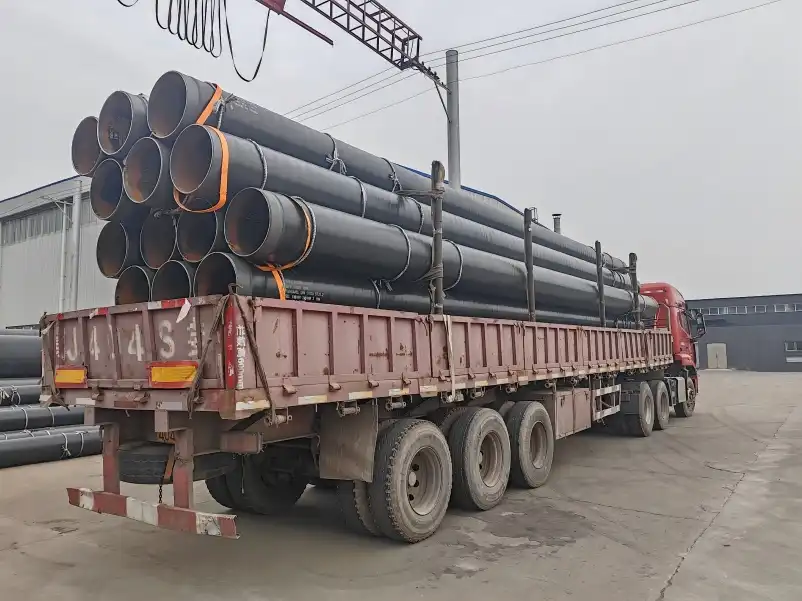
Understanding the Weldability of ASTM A36 Steel Pipes
Carbon steel pipe welding depends on the chemical makeup and temperature response. ASTM A36 Steel Pipe has good fusion characteristics since phosphorus and sulfur are below 0.04% and 0.05%, respectively. This reduces hot cracking in high-impurity steels.
Chemical Composition Impact on Welding Performance
Carbon content affects metal hardness and weld pool smoothness. At standard ASTM A36 steel pipe levels, the material won't form brittle martensite in the heat-affected zone during most arc welding processes. Manganese removes oxygen during solidification, reducing holes that weaken joints under pressure. Silicon, usually less than 0.40%, improves wetting and penetration. Knowing the base metal qualities lets welders modify amperage and trip speed to fuse ERW, SSAW, and LSAW pipes without reinforcement building.
Mechanical Properties and Thermal Stress Management
Weld shrinkage is possible with tensile strength between 400 and 550 MPa and yield strength of about 250 MPa. The required 20% elongation helps structural steel pipe joints withstand heat loads and cool without breaking. These features make ASTM A36 Steel Pipe ideal for foundation piling systems' welded constructions, where load transmission through welds is still crucial. The material's uniform through-thickness makes it appropriate for projects requiring pipes from 21.3 mm to 7000 mm and wall thicknesses up to 230 mm. Material microstructure responds regularly to heat input, allowing huge bridge and marine piling sections to be welded successfully.
Key Factors for Achieving Seamless Welding on ASTM A36 Pipes
To weld well, you must plan and monitor the operation, taking into consideration the metal and its application for ASTM A36 steel pipe.
Material Preparation and Surface Condition
In structural pipe manufacture, contamination causes weld defects. Mill scale, rust, moisture, and biological waste contribute to hydrogen and oxides, which manifest as porosity or undercut. Grinding or abrasively blasting steel within 25 mm of the joint line prevents these defects. Entry and fusion quality depend on edge preparation form; root pass fusion and simple entrance for later passes need thick-walled pipes beveled to 30–37.5 degrees with a 1.6–2.4 mm root face. Fit-up gaps should be between 1.6 and 3.2 mm to prevent root passes from burning through and ensure gas coverage.
Welding Process Selection and Parameter Control
Manufacturing conditions need varied welding procedures based on pipe width, wall thickness, and location. Knowing these distinctions helps buying teams discover welded pipe suppliers with the proper fabrication expertise.
- Shielded Metal Arc Welding (SMAW) is still used to connect piles and footing pieces in the field because it's portable and wind-resistant. Weld metal strength will match or exceed ASTM A36 steel pipe base material strength if you utilize electrodes E7018 with 70,000 psi tensile strength. For 1/8-inch wires on 6–12 mm walls, 90–150 amps is typical, and stringer beads prevent heat from entering.
- Gas Metal Arc Welding (GMAW) can lay more metal faster while producing large pipes in a shop. This process is utilized for sheet piles and structures using ER70S-6 filler wire with 75% argon/25% CO₂ shielding gas for mechanical and spark stability. On 8–16 mm wall sections, wire feed rates of 300–400 inches per minute and voltages of 24–28V provide the optimum penetration.
- Flux-Cored Arc Welding (FCAW) combines SMAW's deep penetration with GMAW's efficiency to connect massive structures. Self-shielded wires don't need gas in windy conditions, while gas-shielded variants generate radiographic-quality welds that fulfill industrial and energy infrastructure inspection standards.
Monitoring temperature during multi-pass welding prevents warping and stress accumulation. Keeping the temperature between passes below 250°C allows enough cooling to prevent grain growth in the heat-affected area, which might weaken the material in service. Preheating is required when welding parts thicker than 25 mm or when the temperature dips below 5°C. The typical preheat temperature is 50–95°C, depending on restraints.
Post-Weld Treatment Considerations
Stress-relief heat treatment at 595–650°C might be requested for thick-walled pressure containment or strongly constrained systems where residual stresses could shatter them. Without post-weld heat treatment, ASTM A36 steel pipes function well for foundation piling and dig support systems, saving work time and money.
ASTM A36 Pipes vs. Other Steel Pipes: Weldability Comparison
Material choice impacts joining difficulty and structural durability. Comparing ASTM A36 steel pipe to different standards shows when it offers optimal value.
Comparison with Standard Carbon Steel Grades
A53 and A500, used for structural hollow pieces, may be welded similarly to ASTM A36 steel pipe. This grade guarantees a minimum yield strength of 36 ksi (250 MPa) regardless of thickness, while A500 characteristics vary with wall size. This stability simplifies engineering calculations for welded frame structures and foundation systems that demand joint load distribution. Most API 5L pipelines feature additional carbon and metals for strength, requiring tighter welding processes, including preheating and controlled cooling. ASTM A36 steel pipe is robust enough for non-pressure structural usage yet cheaper to weld due to its lower alloy level.
Contrast with Alloy and Stainless Steel Options
To maintain their corrosion resistance, 316L stainless steel pipes require particular welding supplies, back-purging processes, and heat limitations. Stainless steel is 3–4 times more costly and less productive than ASTM A36 steel pipe; hence, it shouldn't sustain broad structures. Protective coatings boost the atmospheric rust resistance of carbon steel, which is adequate for most environments. High-strength low-alloy (HSLA) steels offer greater yield strengths but must be hydrogen-controlled and heated after welding. Simple weldability reduces production risk and helps more suppliers compete if job requirements allow standard structural grades.
Practical Tips for B2B Procurement: Ensuring Quality in ASTM A36 Pipes
Where to source materials affects weld quality and project success. To qualify a supplier, engineering and buying teams should consider more than unit pricing for ASTM A36 steel pipe.
Supplier Certification and Quality Documentation
Reputable manufacturers utilize ISO 9001 quality management systems and provide mill test records with chemical and mechanical testing results for each heat. When defining ASTM A36 steel pipe grade piling material, these documents check ASTM A252 compliance. Certification tracking helps determine the root cause if weld faults occur during production, avoiding specification disputes. ERW, SSAW, and LSAW processes can handle various diameters from 21.3 mm to 7000 mm, with variances affecting weld seam quality and size restrictions. Suppliers with several production methods are more adaptable for micropiles and large-diameter foundation caissons.
Logistics and Delivery Considerations
With unique lengths up to 100 meters, long foundation piles don't need field joining, reducing welding requirements and improving structural uniformity. Checking warehouse stock levels and non-standard size wait periods prevents sheet pile system and excavation shoring component delays. Full export documentation, including company invoices, packing lists, and country-specific certificates, helps international infrastructure projects clear customs. Suppliers knowledgeable with ASTM requirements for the U.S. market realize that tolerances and surface finishes differ from other locations.
Case Study: Successful Welding Projects Using ASTM A36 Pipes
A mid-Atlantic bridge base project illustrates how material supply and welding expertise solve geological difficulties using ASTM A36 steel pipe. The work required driving 450 tons of welding pipe piles with walls 12 to 25 mm thick and diameters 610 to 1220 mm through soft alluvial soils into bedrock 35 meters below grade. Initial source bids sought higher-strength qualities that required stringent welding and heat treatment, delaying manufacture by three weeks and raising costs by $127,000.
ASTM A36 Steel Pipe LSAW variants were used as an alternative technical solution to strengthen the structure and allow the contractor's welding crews to use FCAW welding without additional training. Working with a source that integrated manufacturing and protective coatings reduced weld failure rates from 8% to 2%. The timeline was lowered by 19 days since welding was easier and heat treatment was eliminated. All building design criteria were satisfied while saving over $185,000. Clients underlined that supplier engineering support helped fit specs more closely to manufacturing reality than over-conservative theoretical requirements.
Conclusion
In conclusion, there are several ways to weld ASTM A36 steel pipes since their chemistry may be adjusted and their mechanical behavior anticipated. You must understand how materials function, how to prepare them, and how to identify competent suppliers who can provide authorized items and professional help to properly accomplish project goals. Welding ease and quality documentation affect total costs when procurement teams compare fabrication skills and material prices. When engineering requirements enable conventional structural steel standards, this grade is an excellent choice since it has been effective in building, foundation, and structural projects.
FAQ
1. What makes ASTM A36 suitable for welding applications?
Low carbon equivalent (0.38–0.42) and regulated impurity levels in ASTM A36 steel pipe prevent cracking and allow welding without heating in most cases. It is easier to deal with than higher-alloy choices since it can be welded using standard arc welding and filler metals, reducing fabrication complexity.
2. How can I prevent common welding defects when working with A36 pipes?
Mechanically clean heat-affected zones to remove mill scale and other pollutants. Bevels and gaps should be between 1.6 and 3.2 mm for optimum joint fit. Maintain temperatures below 250°C between passes and utilize electrodes with low hydrogen or the proper protective gas. Check the welder's credentials against the project's welding process, joint design, and position criteria.
3. What certifications should I request when purchasing ASTM A36 steel pipe for welding projects?
Mill test sheets must demonstrate chemical composition and mechanical properties per ASTM A252. Check the production site's ISO 9001 accreditation. Get third-party inspection reports that show dimensions, straightness, and surface condition fulfill project standards for critical purposes. Heat-traceable markers track quality throughout manufacturing.
Partner with HYPILE for Certified ASTM A36 Steel Pipe Solutions
HYPILE offers complete piling and foundation systems built from ASTM A36 Steel Pipes in diameters from 21.3 mm to 7000 mm with over 45 years of technical expertise. These pipes use ERW, SSAW, and LSAW processes. We certify materials, create exact parts, apply protective coatings, and give on-site professional assistance. This ensures that your welding tasks are finished on schedule and to the highest standard. Our "BUILD TO THE LAST" products come with mill test certifications, unique lengths up to 100 meters, and professional welding assistance. Contact our engineering team at sales@hypile.com to discuss your foundation project and obtain competitive prices for your next infrastructure, bridge, or industry development.
References
1. American Welding Society. Structural Welding Code - Steel, AWS D1.1/D1.1M. Miami: AWS, 2020.
2. ASTM International. Standard Specification for Piling Pipe, ASTM A252/A252M. West Conshohocken: ASTM, 2021.
3. Lincoln Electric Company. The Procedure Handbook of Arc Welding, 14th Edition. Cleveland: Lincoln Electric, 2019.
4. American Institute of Steel Construction. Steel Construction Manual, 15th Edition. Chicago: AISC, 2017.
5. Concrete Reinforcing Steel Institute. Welding of Reinforcing Steel: A Primer for Structural Engineers. Schaumburg: CRSI, 2018.
6. Canadian Welding Bureau. Guide to Welding Carbon and Low-Alloy Structural Steel. Toronto: CWB Group, 2020.
Have a project in mind? Tell us your goals — we’ll help you make it real.