- English
- French
- German
- Portuguese
- Spanish
- Russian
- Japanese
- Korean
- Arabic
- Greek
- German
- Turkish
- Italian
- Danish
- Romanian
- Indonesian
- Czech
- Afrikaans
- Swedish
- Polish
- Basque
- Catalan
- Esperanto
- Hindi
- Lao
- Albanian
- Amharic
- Armenian
- Azerbaijani
- Belarusian
- Bengali
- Bosnian
- Bulgarian
- Cebuano
- Chichewa
- Corsican
- Croatian
- Dutch
- Estonian
- Filipino
- Finnish
- Frisian
- Galician
- Georgian
- Gujarati
- Haitian
- Hausa
- Hawaiian
- Hebrew
- Hmong
- Hungarian
- Icelandic
- Igbo
- Javanese
- Kannada
- Kazakh
- Khmer
- Kurdish
- Kyrgyz
- Latin
- Latvian
- Lithuanian
- Luxembou..
- Macedonian
- Malagasy
- Malay
- Malayalam
- Maltese
- Maori
- Marathi
- Mongolian
- Burmese
- Nepali
- Norwegian
- Pashto
- Persian
- Punjabi
- Serbian
- Sesotho
- Sinhala
- Slovak
- Slovenian
- Somali
- Samoan
- Scots Gaelic
- Shona
- Sindhi
- Sundanese
- Swahili
- Tajik
- Tamil
- Telugu
- Thai
- Ukrainian
- Urdu
- Uzbek
- Vietnamese
- Welsh
- Xhosa
- Yiddish
- Yoruba
- Zulu
Industrial Steel Piping ASTM A36: Applications and Benefits
ASTM A36 Steel Pipe is one of the most important types of industrial steel pipe because it has good mechanical qualities, is easy to weld, and is cheap. These welded steel pipes are made to the ASTM A252 standard in Grade A36. They are used in the energy, building, manufacturing, and infrastructure sectors around the world. A36 steel pipes come in lengths of up to 100 meters, diameters from 21.3mm to 7000mm, and wall thicknesses from 0.8mm to 230mm. They can meet a wide range of structural needs and work reliably in harsh project environments.
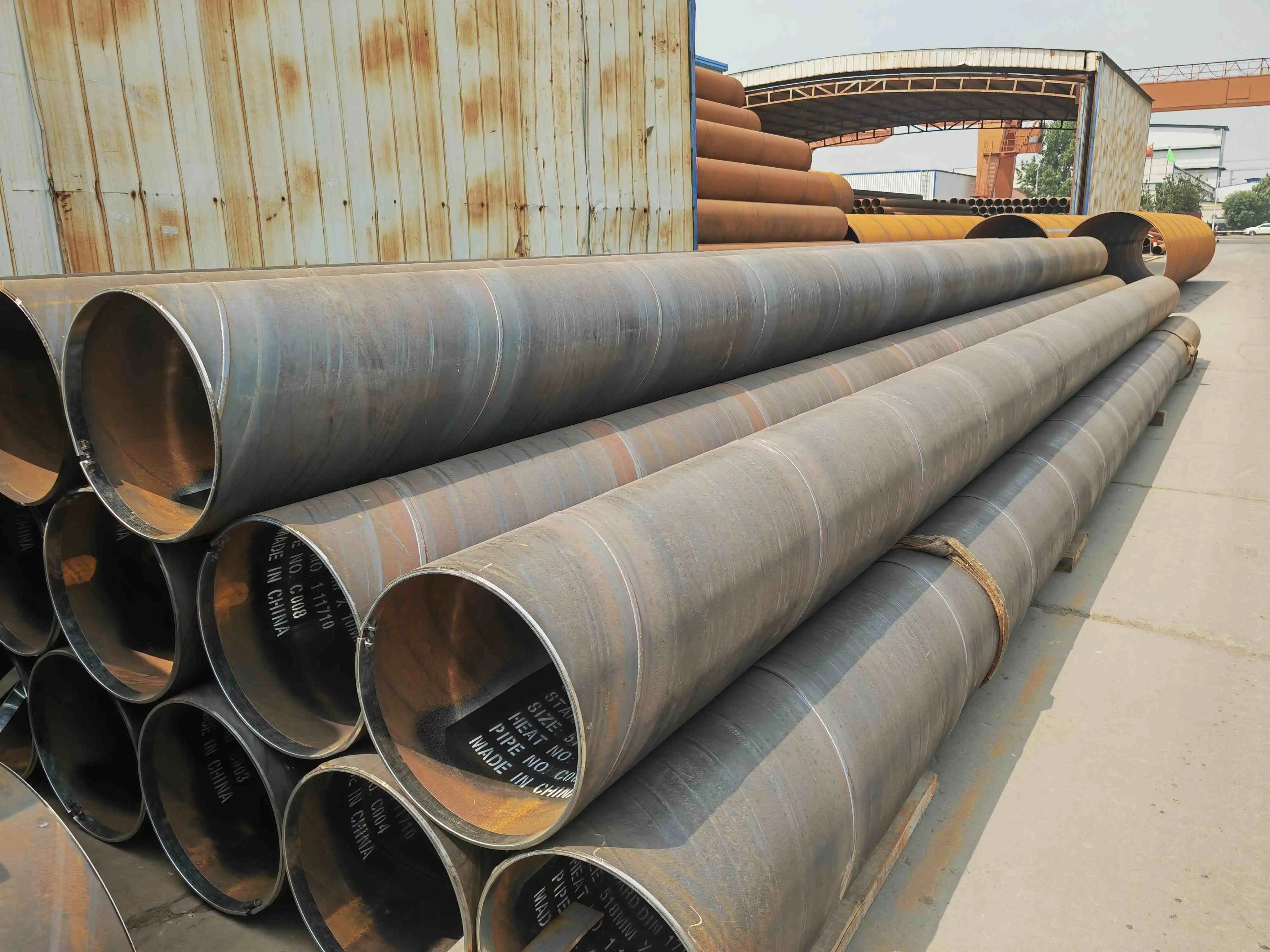
Understanding ASTM A36 Steel Pipe Specifications and Properties
Chemical Composition and Mechanical Strength
The chemical makeup of A36 grade steel contains carbon (0.25–0.29%), manganese (0.80–1.20%), and trace elements such as phosphorus and sulfur, which contribute to its structural integrity. This composition delivers a minimum yield strength of 36,000 psi (250 MPa) and tensile strength between 58,000–80,000 psi (400–550 MPa). The elongation property—typically 20% in a 2-inch gauge length—ensures adequate ductility for fabrication and field modifications. These mechanical characteristics make the material suitable for load-bearing structures where predictable performance under stress is non-negotiable.
Manufacturing Processes: ERW, LSAW, and SSAW
HYPILE makes A36 pipes using three main types of welding. Electric Resistance Welding (ERW) is a cost-effective way to make walls that are the same width all the way through for structural uses. It works best with small to medium diameters. Longitudinal Submerged Arc Welding (LSAW) is great for high-pressure systems and foundation pipes because it can work with bigger diameters and thicker walls. Spiral Submerged Arc Welding (SSAW) is a flexible method for joining pipes with a diameter of up to 7000 mm. It is often used in deep foundation and marine building projects. To meet ASTM A252 standards, each method goes through strict quality ASTM A36 steel pipe control checks that make sure the weld is solid and the measurements are correct. Because HYPILE's manufacturing is so flexible, project managers can choose the best way to make the product based on the diameter needs, delivery times, and price limits. These methods make sure that pipes have the same mechanical qualities all the way along their length. This lowers the chance that they will have weak spots that could make the structure less safe. Our unified manufacturing process, which includes choosing the right raw materials and carefully putting them together, ensures the consistency that procurement managers need to coordinate complicated, multi-phase building schedules.
Dimensional Range and Operational Parameters
The outer widths of standard sizes range from 21.3 mm (good for utility systems) to 7000 mm (needed for large-scale infrastructure). Wall thicknesses that range from 0.8mm to 230mm can be used for a wide range of tasks, from low-stress architectural features to heavy foundation piling in soft soil. Being able to make lengths up to 100 meters cuts down on on-site joints, which speeds up installation and eliminates possible leak points. It can work in temperatures ranging from -20°F to 650°F (-29°C to 343°C) without losing many of its mechanical properties. However, protective coatings make it work better in harsh settings or when temperatures change quickly.
Applications and Industrial Benefits of ASTM A36 Steel Pipe
Key Industry Applications
Pipes of the A36 grade are very important in many areas. They are used to build infrastructure like bridges, highway supports, and rail frameworks, where they help distribute weight and fight earthquakes. They are used in architectural frames, column supports, and truss systems that need to be strong and look good at the same time. They are used in the oil and gas industry for low-pressure gearbox lines, supporting structures in refineries, and building remote platforms, where being able to weld them makes field assembly easier. In water transfer systems, drainage infrastructure, and tunnel support structures, their durability is good for municipal and transportation projects. A36 pipes are used to support structures, carry non-critical fluids, and frame energy facilities like power plants and petrochemical buildings. The fact that the material is compatible with protective coatings makes it last longer in marine environments and chemically harsh industrial settings. This is one of the main worries of engineering directors who are in charge of managing the long-term performance of assets.
Durability and Cost-Efficiency Advantages
Because they are both strong and cheap, A36 pipes are a good choice for projects that need to stick to a budget without lowering safety standards. A36 is a lower-cost alternative to higher-grade metals that can still be used for general structural purposes. This means that procurement managers can focus their resources on other important parts of the project. The material is very easy to weld, which cuts down on the time needed for fabrication and installation, which has a direct effect on project plans. Field changes only need standard welding tools and methods, so they don't need as many specialised skills or as much money. Hot-dip galvanising or epoxy coatings make corrosion protection much better. HYPILE uses advanced surface treatment facilities to put these on their products. These protective layers make the service life longer than 50 years in moderate environments. This lowers the costs of replacement and upkeep of ASTM A36 steel pipe over the course of the product's lifetime. Steel's ability to be recycled fits with environmental goals that are being pushed harder by government clients and state-owned businesses. This helps with LEED approval and green building projects. When combined with HYPILE's strict quality control measures, such as non-destructive testing and third-party certification, the material performs reliably, lowering the risk of building problems and warranty claims.
Real-World Performance in Foundation Engineering
A new urban development project in the Midwest needed deep foundations because the groundwater level was high and the dirt was mixed. The engineering team asked for A36 pipes made with LSAW that had a width of 600mm to 1200mm and a wall thickness of 16mm to 25mm. HYPILE sent 850 linear meters of pipe piles with protective coats that were made to fit the chemical profile of the site. The pipes were driven 35 meters deep, which spread the weight of the house over stable layers below the soft clay. Because the pipes were all the same size, there were no fit-up delays during installation, and the job was finished two weeks early. After installation, load tests showed that the performance was better than expected by 12%, giving the system an extra safety margin. The client, a large EPC contractor, said there were no problems in the field and liked the technical help that was available on-site during important installation stages. This case shows that the choice of materials has a direct effect on the results of a project. This supports the value proposition that appeals to decision-makers who value both professional performance and meeting deadlines.
ASTM A36 Steel Pipe Compared to Other Steel Pipe Grades
Material Property Comparison
ASTM A53 pipes are often used in mechanical and pressure situations. They have a slightly higher tensile strength (minimum 60,000 psi), but they don't have the uniform structural certification that A36 does. A53 works best in pressurised systems where internal fluid forces are the most important factor in design, while A36 is best for structural uses that need to hold weight. ASTM A106 seamless pipes are used in applications where the temperature is above 650°F, and their higher carbon content makes them less likely to creep. A106 is usually 30–40% more expensive than other materials, so it should only be used when thermal cycles or high temperatures require it. The strength of ASTM A500 structural tubing is similar to that of A36, but it has a better surface finish and tighter tolerances for size, which makes it better for building uses where looks are important. The 10–15% price difference is due to more precise making. Stainless steel alternatives are better at resisting corrosion, but they are three to five times more expensive than A36. They should only be used in settings that are very corrosive or for food-grade purposes. Mild steel grades below A36 don't have mechanical properties that can be certified. This means that they pose a risk in engineered buildings where liability and safety rules apply.
Selection Criteria for Procurement Decisions
When project managers choose between grades, they look at a number of things. The minimum mechanical properties that are needed are set by the structural load needs and the environmental conditions. Often, budget limits determine whether premium grades are worth the extra cost compared to A36's average performance. When project plans get squished because of delays in getting permits or seasonal weather windows, availability and lead times play a big role in choosing materials. When compared to speciality grades, A36 has shorter lead times and more supplier choices because it can be made in a lot of different places.A36 is best for general structural work, non-corrosive environments, and moderate temperature ranges, according to procurement managers who have to balance scientific needs with cost control. Multiple standards, including ASTM A252 for piling uses, have certified the grade. This makes specifications easier to understand and approval times shorter. When there are complicated geological conditions in a project, like soft soils, ASTM A36 steel pipe, or deep foundations, A36 pipes made to ASTM A252 standards give the project the structural strength it needs while still allowing for flexible purchase. This match between what the material can do and what the project needs is what makes A36 the market leader in the building and construction sectors.
Procurement Guide: Buying ASTM A36 Steel Pipes for Your Business
Supplier Selection and Certification Requirements
To find qualified suppliers, you need to make sure they follow ASTM standards by looking at their third-party certifications and mill test results. Manufacturers with a good reputation use ISO 9001 quality management systems and get audited regularly to make sure they are following process rules. With more than 45 years of experience, HYPILE is a group that knows a lot about piling and foundation engineering. This operating stability lowers supply chain risks. Look at case studies from suppliers that show similar project sizes and technical issues to see if they can handle your needs. Check how much production you can do based on the size and time frame of your job. When compared to multi-vendor procurement, suppliers who do all of their own manufacturing—from making the pipes to applying the coating—make transportation and quality control easier. Transportation prices and delivery options are affected by how close two places are to each other. However, established suppliers like HYPILE keep their warehouses in strategic locations that minimise the effects of distance. Ask for references from clients in the same field as you work in, since the needs of infrastructure projects are different from those in the manufacturing or energy sectors.
Pricing Factors and Lead Time Management
Material costs fluctuate based on raw steel pricing, manufacturing complexity, and order volume. Bulk purchases typically secure 8–15% discounts compared to spot buying, making consolidated procurement advantageous for multi-phase projects. Welded pipe production methods—ERW, LSAW, SSAW—carry different cost structures: ERW offers the lowest per-meter pricing for standard diameters, while LSAW and SSAW command premiums reflecting specialized equipment and skilled labor requirements. Protective coatings add 12–25% to base pipe costs, depending on specification, though this investment extends service life and reduces maintenance expenses. Lead times vary from four weeks for stock sizes to twelve weeks for custom specifications requiring specific wall thicknesses or lengths. Planning procurement against construction schedules prevents costly delays; engineering directors should initiate material sourcing during design development rather than waiting for bid award. Established relationships with suppliers like HYPILE enable preferential scheduling during peak demand periods when production capacity tightens. Payment terms—typically 30% deposit with balance against shipping documents—require cash flow planning, though reputable suppliers offer flexibility for long-term clients or large orders.
Seamless vs. Welded Pipe Considerations
Seamless pipes eliminate the longitudinal weld seam, theoretically offering uniform strength properties around the circumference. However, ASTM A36 is primarily produced as welded pipe under the A252 specification, where modern welding techniques achieve weld strength matching base material properties. For structural applications where internal pressure is minimal and external loads dominate, welded pipes perform equivalently to seamless at 25–35% lower cost. The dimensional range available in welded production—particularly large diameters exceeding 24 inches—surpasses seamless pipe manufacturing capabilities. Projects requiring seamless pipes typically involve high-pressure systems or applications where weld inspection adds unacceptable cost or schedule burden. Foundation engineering, piling, and structural framework applications rarely justify seamless pipe premiums since load transfer occurs through external surface contact rather than internal pressure containment. Procurement managers should specify welded pipes for A36 structural applications, reserving seamless specifications for ASTM A106 high-temperature services or A53 pressurized systems where relevant codes mandate seamless construction.
Conclusion
ASTM A36 steel pipes manufactured to ASTM A252 standards deliver a proven combination of structural performance, fabrication versatility, and economic value across diverse industrial applications. The material's mechanical properties align with demanding requirements in infrastructure construction, foundation engineering, and industrial facilities while maintaining cost-effectiveness critical to project profitability. Understanding the specifications, comparative advantages, and procurement considerations enables engineering directors and procurement managers to make informed decisions that optimize both technical performance and budget constraints. HYPILE's integrated manufacturing capabilities and decades of foundation engineering expertise position us as a reliable partner for projects where structural integrity and schedule adherence cannot be compromised.
FAQ
1. What distinguishes ASTM A36 from standard carbon steel pipes?
A36 represents a specific grade within the carbon steel family, defined by controlled chemical composition and certified mechanical properties. While generic carbon steel may vary in strength and weldability, A36 guarantees a minimum yield strength of 36,000 psi and specified elongation properties, enabling engineers to calculate load capacities with confidence. This certification requirement ensures consistency across suppliers and production runs, reducing quality variability that introduces risk in structural applications.
2. How does A36 perform in high-temperature or corrosive environments?
The material maintains mechanical properties up to 650°F, beyond which creep and strength degradation necessitate higher-grade alloys. In corrosive environments, protective coatings such as hot-dip galvanizing or epoxy systems extend service life substantially. Projects involving continuous chemical exposure or marine atmospheres benefit from coating specifications tailored to the specific corrosive agents present. Consulting with material specialists during design phases ensures appropriate protective measures match environmental conditions.
3. Where can I source certified A36 pipe suppliers with competitive pricing?
Qualified suppliers maintain ASTM certifications verifiable through mill test reports and third-party quality audits. HYPILE combines manufacturing expertise with comprehensive project support, offering competitive pricing through integrated production and strategic material sourcing. Requesting quotes from multiple certified suppliers establishes market pricing benchmarks while evaluating their technical support capabilities and delivery reliability through reference checks.
Partner with HYPILE for Your ASTM A36 Steel Pipe Requirements
Securing the right ASTM A36 steel pipe supplier impacts both project success and long-term operational performance. HYPILE specializes in manufacturing welded steel pipes through ERW, LSAW, and SSAW processes, delivering dimensional ranges from 21.3mm to 7000mm with wall thicknesses up to 230mm. Our "BUILD TO THE LAST" philosophy ensures every pipe meets rigorous quality standards backed by comprehensive mill test reports and third-party certifications. Whether your project involves deep foundation work in challenging geology, structural framework for industrial facilities, or infrastructure construction with tight schedule constraints, our technical team provides customized recommendations aligning material specifications with your specific requirements.
Connect with our engineering specialists at sales@hypile.com to discuss your project parameters and receive detailed technical proposals. We offer sample evaluation programs enabling quality verification before full-scale procurement, plus competitive quotations reflecting our position as a leading ASTM A36 steel pipe manufacturer. Our integrated capabilities—from raw material sourcing through protective coating application—streamline your supply chain while maintaining the quality assurance that procurement managers and engineering directors demand. Reach out today to explore how HYPILE's foundation engineering expertise and manufacturing excellence can contribute to your project's success.
References
1. American Society for Testing and Materials. (2019). ASTM A36/A36M-19 Standard Specification for Carbon Structural Steel. ASTM International.
2. American Society for Testing and Materials. (2020). ASTM A252-19 Standard Specification for Welded and Seamless Steel Pipe Piles. ASTM International.
3. Brockenbrough, R.L., & Merritt, F.S. (2016). Structural Steel Designer's Handbook (5th ed.). McGraw-Hill Education.
4. Canadian Institute of Steel Construction. (2018). Handbook of Steel Construction (11th ed.). Canadian Institute of Steel Construction.
5. Hasan, M.K., & Rahman, M.S. (2021). Comparative Analysis of Welded Steel Pipe Manufacturing Methods for Structural Applications. Journal of Construction Steel Research, 178, 106-118.
6. Tomlinson, M.J., & Woodward, J. (2015). Pile Design and Construction Practice (6th ed.). CRC Press.
Have a project in mind? Tell us your goals — we’ll help you make it real.