- English
- French
- German
- Portuguese
- Spanish
- Russian
- Japanese
- Korean
- Arabic
- Greek
- German
- Turkish
- Italian
- Danish
- Romanian
- Indonesian
- Czech
- Afrikaans
- Swedish
- Polish
- Basque
- Catalan
- Esperanto
- Hindi
- Lao
- Albanian
- Amharic
- Armenian
- Azerbaijani
- Belarusian
- Bengali
- Bosnian
- Bulgarian
- Cebuano
- Chichewa
- Corsican
- Croatian
- Dutch
- Estonian
- Filipino
- Finnish
- Frisian
- Galician
- Georgian
- Gujarati
- Haitian
- Hausa
- Hawaiian
- Hebrew
- Hmong
- Hungarian
- Icelandic
- Igbo
- Javanese
- Kannada
- Kazakh
- Khmer
- Kurdish
- Kyrgyz
- Latin
- Latvian
- Lithuanian
- Luxembou..
- Macedonian
- Malagasy
- Malay
- Malayalam
- Maltese
- Maori
- Marathi
- Mongolian
- Burmese
- Nepali
- Norwegian
- Pashto
- Persian
- Punjabi
- Serbian
- Sesotho
- Sinhala
- Slovak
- Slovenian
- Somali
- Samoan
- Scots Gaelic
- Shona
- Sindhi
- Sundanese
- Swahili
- Tajik
- Tamil
- Telugu
- Thai
- Ukrainian
- Urdu
- Uzbek
- Vietnamese
- Welsh
- Xhosa
- Yiddish
- Yoruba
- Zulu
How to Ensure Quality in Welded Steel Pipe Manufacturing Processes
To ensure quality welded steel pipes, check the raw materials, weld them carefully, and test them without breaking them. Use certified steel grades like EN 10219 S355 or higher, advanced methods like ERW, LSAW, and SSAW, and NDT protocols like ultrasonic and radiographic inspection. These quality control steps are crucial for B2B salespeople managing large industry or infrastructure projects. They affect long-term project safety, honesty, and timeliness.
Introduction
Cities, bridges, energy infrastructure, and ports use welded steel pipes. Good quality is most important for these pipes. Contract, purchasing, and engineering managers are under pressure to find cheap, eco-friendly materials. Manufacturing presents unique challenges, and this book discusses how to maintain quality in global B2B markets. We will discuss quality factors, international standards, and best practices to help people make better decisions. This will help them choose pipe products for harsh environments where failure is not an option.
Understanding the Quality Challenges in Welded Steel Pipe Manufacturing
Common Defects That Compromise Pipe Integrity
Welded steel pipes are less useful and safer on construction sites because welding isn't always successful. Many flaws weaken the structure and make pressure retention harder. These include seam cracks, weld holes, and slag. Installation and repair can be difficult and expensive if the wall's outside diameter and thickness are different. Surface flaws, weld spatter, and incomplete fusion make materials more susceptible to corrosion and cause them to break down faster in harsh environments.
Root Causes and Procurement Implications
These issues usually occur due to poor raw materials, poorly managed welding parameters, unclear preheating steps, and insufficient production checks. Due to its manufacturing, steel joins differently from batch to batch. Old or untrained tools and users are more likely to break. Procurement teams must know this to ensure production processes and pipes are safe. Buyers reduce risk by asking the right technical questions, demanding detailed quality documentation, and setting supplier qualification standards based on how things are made.
Core Principles for Ensuring Quality in the Manufacturing Process
Material Selection and Steel Grade Specifications
First, make sure your materials are strong and won't rust to ensure the welded steel pipe's quality. We can make many steel types, according to EN 10219-1 and EN 10219-2. Steel grades S235JR, S275JR, and S355J2 are good for building. These are strong despite not being alloys. Normalised (S355N/NL, S420N/NL, S460N/NL) and thermomechanically rolled (S355M/ML, S420M/ML, S460M/ML) fine-grain steels are stronger and easier to weld under heavy loads. S355J2W steel doesn't rust when air touches it. They're great for outdoor projects because of this.
You can track materials from melting to finishing using mill test certificates and mechanical properties. Each coil or plate is carefully recorded from cutting to welding and inspection. Procurement teams have the information they need to follow project quality plans and the law.
Welding Method Selection and Process Control
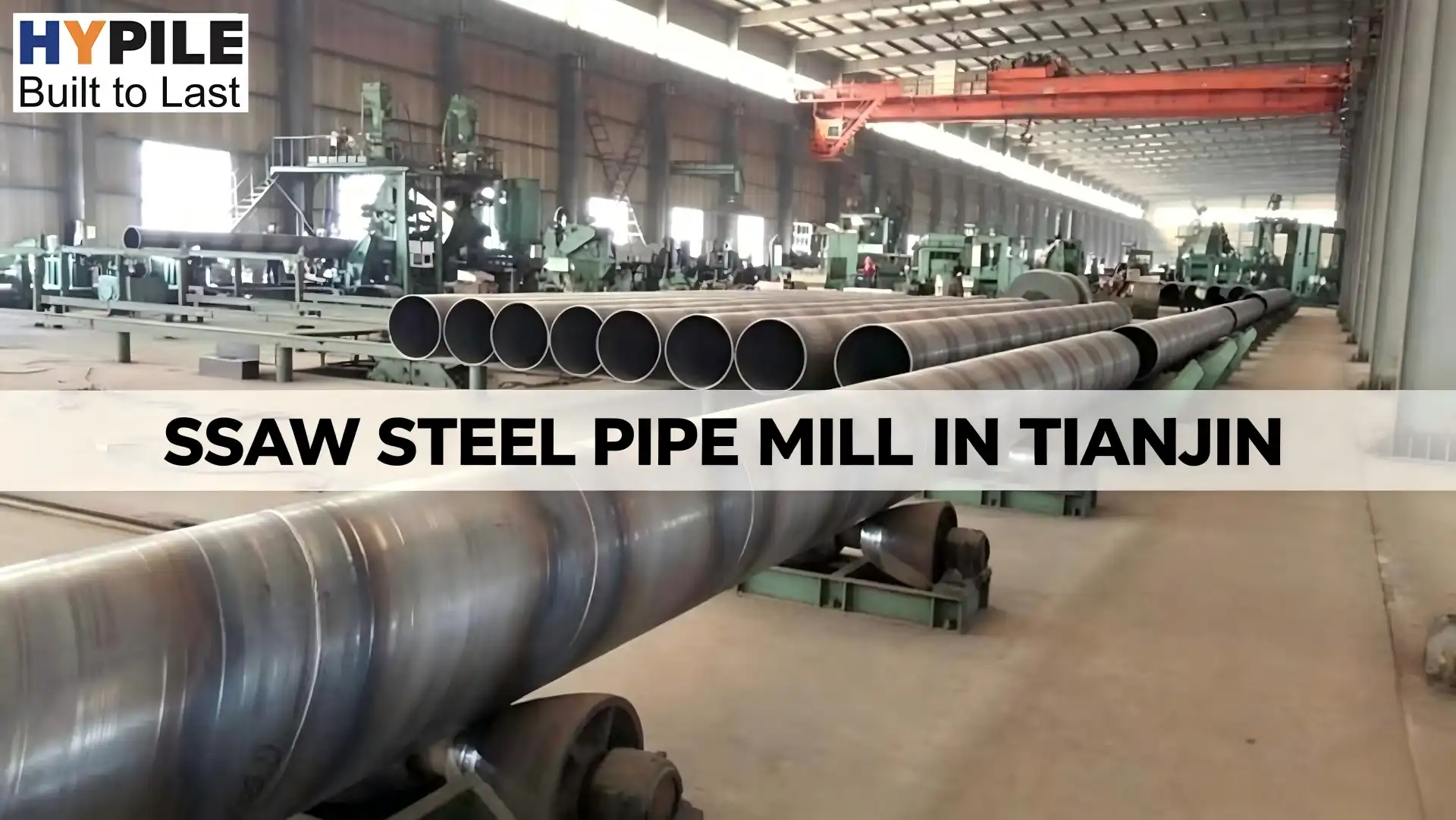
The type of welding affects seam quality, speed, and material suitability. It is used in Electric Resistance Welding (ERW) to make strong connections that can hold pipes with a diameter of up to 660 mm and very close size tolerances. Pipe sides are smooth. In Longitudinal Submerged Arc Welding (LSAW), automatic flux-shielded arcs are used on formed plates to make high-pressure pipes. Pipe diameters range from 406 to 3,000 mm. Spiral Submerged Arc Welding (SSAW) joins coiled strips in an endless spiral. Walls up to 230 mm thick and 219 mm to 7,000 mm in diameter can be made cheaply for foundation and marine piling projects.
New technologies that track weld seams in real time, regulate voltage and amperage automatically, and heat treat after welding improve performance. The right welding speed, heat, and interpass temperature prevent metal flaws and cover the seam. Writing down process parameters and training operators through programmes helps maintain quality between production runs.
Compliance with International Standards and Testing Protocols
Following EN 10219, ASTM A500, ISO 12944, and API 5L guarantees consistent size, strength, and chemical make-up tolerances. These standards guarantee acceptable tensile, yield, elongation, and impact toughness. Engineers think these standards will work. We work with factories that keep CE marks to sell in Europe. They follow ISO 9001 for quality management.
Products are tested extensively to ensure reliability and business use. Ultrasonic and other non-destructive testing can find weld seam breaks. An X-ray can monitor weld quality for important reasons. Eddy current inspection finds surface flaws, and hydrostatic testing shows pressure can be maintained above service conditions. We recommend using calibrated gauges to ensure the outside diameter, wall thickness, length, and straightness are within limits. Follow these simple steps for a high-quality, long-lasting item.
Case Studies: Proven Strategies to Enhance Welded Steel Pipe Quality
Automation Reduces Defects in High-Volume Production
Real-world building projects demonstrate how strategy changes can improve production. LSAW pipes in the S355N grade were needed to build a large bridge with pile foundations in soft ground. The supplier installed fully automated welding stations with flux delivery, parameter change, and gap tracking systems. This automation prevented mistakes by evenly distributing heat and preventing slag. Weld seam strength increased. From 4.2% to 0.8%, welding-rejected samples decreased. Quality improved, speeding projects and reducing redos.
Material Traceability and Supplier Qualification Programmes
Before regulators would approve a city's water infrastructure improvement plan, EN 10219 S355 welded steel pipe had to be corrosion-resistant and have material documentation. The buying team required suppliers to provide EN 10204 3.1 mill test certificates, batch-specific chemical analyses, and mechanical property proof for each coil. Strong systems linked each pipe to its steel heat number, date of formation, welding parameters, and inspection results. Due to the strict qualification process, field installation failures were easy to diagnose. Thus, inputs were always high-quality. It kept the project on track as promised.
Advanced Coating Technologies Extend Service Life
The standard mill finish wasn't enough to keep metal frost-free in coastal factories. Hot-dip galvanising and fusion-bonded epoxy coating protected pipes from chloride attack and air and water exposure, extending their lifespan. They demonstrate that new technology, quality control, and supplier collaboration can produce reliable industrial pipes that can withstand harsh conditions. They can help procurement and engineering plan asset management long-term.
Evaluating Welded Steel Pipe Options for Construction and Industrial Use
Welded Versus Seamless Pipe Considerations
To choose the right pipe type, consider its strength, cost, and use. You must meet technical requirements and stay within the project's budget. Straight steel pipes are rarer and costlier than welded steel pipes. This applies to non-standard or larger lengths and diameters. Due to efficient construction, prices are low. They can withstand most construction, piling, and industrial uses. However, seamless pipes are better in harsh cyclic loading, high pressure, and corrosive conditions where a weld seam may not be safe.
Pressure ratings, allowable stress values, and fatigue resistance characteristics help procurement teams match pipe choices to real-world use and avoid overspending.
ERW, LSAW, and SSAW Performance Profiles
That's why ERW, LSAW, and SSAW are different manufacturing methods. They differ in cost and performance. ERW pipes are great for tasks with strict rules and smooth surfaces. They're great for columns, water pipes, and mechanical tubing. A controlled plate formed and welded on two sides strengthens LSAW pipes. They work well for high-pressure power lines and offshore platform legs. SSAW pipes are cheap and available in various diameters. They can support large foundation piles, water intake structures, and dredging without costing much due to their helical seam orientation.
Determine pipe thickness and weight based on engineering load calculations, soil weight capacity, and weather to ensure safety and durability. Customers are most likely to get what they need when their technical needs match the manufacturing method. Without enough or too many details, the project may be less effective, unsafe, and expensive.
Best Practices for Sourcing High-Quality Welded Steel Pipes
Supplier Evaluation and Certification Verification
Trustworthy vendors are essential for buying welded steel pipes, such as EN 10219 S355 welded steel pipe. These partners need licenses, manufacturing skills, and international reputations. ISO 9001 certifications for the quality management system, CE markings and API monograms for specific products, and ongoing improvement programmes should be considered during evaluation. Site audits offer a chance to observe tool performance, process controls, and worker skill. Written records prevent this.
How responsive a supplier is during the quote phase often indicates how well they will perform during production and delivery. Clear price breaks, material suggestions, and detailed technical plans indicate skilled engineers who care about their clients. Projects continue after sales problems. Rapid replacement parts, technical support, and warranty claims keep things running.
Specification Communication and Supply Chain Optimisation
When everyone knows the expectations, late and unsatisfactory deliveries are easier to avoid. Detail-oriented orders should list standards, steel grade, and testing and inspection requirements. Labelling, packaging, and tracking should be simple. Consult your suppliers before designing a custom or large order. They can reduce costs, speed delivery, and improve production scheduling.
Supply chain logistics like lead times, freight options, customs paperwork, and port handling can help you avoid last-minute issues that could delay construction. B2B customers can get the best price and quality if they know how material grade, pipe type, wall thickness, protective coatings, and order volume affect prices. This helps them build long-term relationships with reliable suppliers for future jobs.
Conclusion
Making welded steel pipes requires close monitoring of materials, processes, and tests to ensure accuracy. Procurement professionals understand welding techniques, can identify common defects, and are picky about their project suppliers. Building roads, factories, and ships requires international standards like EN 10219 and thorough NDT protocols and material content tracking systems. Strategic partnerships with manufacturers that prioritise continuous improvement, clear documentation, and fast customer service pay off. Better lifecycle performance and lower project risks are among these benefits.
FAQ
1. What distinguishes welded from seamless steel pipes in structural applications?
Coil or longitudinal seams form when flat or coiled steel is bent and joined. Join two steel pipes this way. A lathe can pierce solid billets to make seamless pipes. It's cheaper and comes in more sizes than welding. They also work well for most industrial and construction uses. Seamless pipes cost more but are great for high pressure and wear because their properties stay the same.
2. How do welding methods affect corrosion resistance?
Welding changes hot metal parts with different microstructures or residual stresses. Correct welding settings, heating the part after welding, and smoothing the surface are best. It doesn't matter how it was welded as long as the seams are of quality and fuse flawlessly. Steel type and protective coatings matter most.
3. Which industry standards apply to construction-grade pipes?
For most North American building projects, ASTM A500 is used for structural tubing and A252 for piles. EN 10219 governs cold-formed structural hollow sections in Europe. Roads and bridges worldwide may require ISO 630 or 630 steel line pipes. The project specifications should state standards. This ensures that materials meet standards and that rules are followed.
Partner with HYPILE for Certified Welded Steel Pipe Solutions
From material manufacturing to building construction, HYPILE handles foundation engineering and piling. Thus, everyone will be accountable, and the project will proceed. "BUILD TO THE LAST" means we value quality and long-lasting products. EN 10219 welded steel pipes are joined using SSAW, LSAW, and ERW. Non-alloy, fine-grain, and weathering steel walls can be 230 mm thick and 21.3 mm to 7,000 mm wide. CE certification indicates that a product meets European market standards. Critical infrastructure requires accurate measurements and material tracking. We sell more than pipes. We can carefully make them, coat them to protect them, and provide engineering advice for tough geology and tight construction schedules. Email sales@hypile.com for technical specs and quotes from trusted manufacturers who want your project to succeed.
References
1. American Welding Society. (2020). Structural Welding Code—Steel: AWS D1.1/D1.1M. Miami: AWS Publications.
2. European Committee for Standardization. (2019). Cold-Formed Welded Structural Hollow Sections of Non-Alloy and Fine Grain Steels: EN 10219-1 and EN 10219-2. Brussels: CEN Publications.
3. American Society for Testing and Materials. (2021). Standard Specification for Welded and Seamless Steel Pipe Piles: ASTM A252. West Conshohocken: ASTM International.
4. Bhadeshia, H.K.D.H., & Honeycombe, R.W.K. (2017). Steels: Microstructure and Properties (4th ed.). Oxford: Butterworth-Heinemann.
5. American Petroleum Institute. (2018). Specification for Line Pipe: API 5L (46th ed.). Washington: API Publishing Services.
6. Cary, H.B., & Helzer, S.C. (2005). Modern Welding Technology (6th ed.). Upper Saddle River: Pearson Prentice Hall.
Have a project in mind? Tell us your goals — we’ll help you make it real.