- English
- French
- German
- Portuguese
- Spanish
- Russian
- Japanese
- Korean
- Arabic
- Greek
- German
- Turkish
- Italian
- Danish
- Romanian
- Indonesian
- Czech
- Afrikaans
- Swedish
- Polish
- Basque
- Catalan
- Esperanto
- Hindi
- Lao
- Albanian
- Amharic
- Armenian
- Azerbaijani
- Belarusian
- Bengali
- Bosnian
- Bulgarian
- Cebuano
- Chichewa
- Corsican
- Croatian
- Dutch
- Estonian
- Filipino
- Finnish
- Frisian
- Galician
- Georgian
- Gujarati
- Haitian
- Hausa
- Hawaiian
- Hebrew
- Hmong
- Hungarian
- Icelandic
- Igbo
- Javanese
- Kannada
- Kazakh
- Khmer
- Kurdish
- Kyrgyz
- Latin
- Latvian
- Lithuanian
- Luxembou..
- Macedonian
- Malagasy
- Malay
- Malayalam
- Maltese
- Maori
- Marathi
- Mongolian
- Burmese
- Nepali
- Norwegian
- Pashto
- Persian
- Punjabi
- Serbian
- Sesotho
- Sinhala
- Slovak
- Slovenian
- Somali
- Samoan
- Scots Gaelic
- Shona
- Sindhi
- Sundanese
- Swahili
- Tajik
- Tamil
- Telugu
- Thai
- Ukrainian
- Urdu
- Uzbek
- Vietnamese
- Welsh
- Xhosa
- Yiddish
- Yoruba
- Zulu
Durability of Welded Steel Pipes in Harsh Industrial Environments
When project managers and procurement workers look at piping options for tough industrial uses, it's very important to know how long welded steel pipe lasts. In places like oil refineries, chemical plants, power plants, and heavy industrial buildings, these pipes are essential to the infrastructure, and if they break, they can have serious operational and safety effects. High-quality materials, precise welding, and protective coatings that fight corrosion, temperature extremes, and mechanical stress make the welded steel pipe last a very long time. These are things that often cause cheaper alternatives to break early.
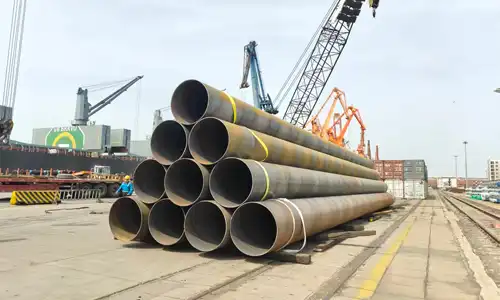
Understanding Welded Steel Pipe Durability in Industrial Settings
The longevity of piping systems in harsh conditions depends fundamentally on how well the material withstands continuous exposure to corrosive chemicals, high-pressure flows, thermal cycling, and mechanical vibration. Welded steel pipe durability emerges from carefully balanced engineering decisions made during material selection and manufacturing.
Material Properties That Define Longevity
How long a pipe lasts depends on the steel grade it is made of. We follow the rules set by EN 10219-1 and EN 10219-2 when we make things. For everyday uses, we use non-alloy steel grades like S235JR, S275JR, and S355JR. For tougher jobs, we use fine-grain steels like S355N/NL and S460N/NL, which can be rolled in normalised or thermomechanical ways. The yield strengths of these materials range from 235 MPa to 460 MPa, which ensures that structures stay strong under different loads. The carbon content, which is usually kept below 0.20%, keeps the steel's ability to be welded while also keeping its strength. This meets the needs for both fabrication flexibility and operational robustness. Some types of steel, like S355J2W, have copper, chromium, and nickel added to them to make an oxide layer that protects the steel from the elements, so it doesn't need to be painted when exposed to air. This metal advantage lowers upkeep costs over the life of the product by a large amount. This is especially useful for municipal water systems and exposed structures that are hard to reach for recoating.
How Welding Techniques Impact Structural Integrity
The way pipes are made has a direct effect on how well they work when they are under long-term stress. HYPILE uses three main welding methods: SSAW (Spiral Submerged Arc Welding), LSAW (Longitudinal Submerged Arc Welding), and ERW (Electric Resistance Welding). Each one is best for a certain width and thickness. LSAW makes very strong straight-seam pipes for high-pressure uses. The walls can be as thin as 0.8 mm or as thick as 230 mm, and the widths can go up to 7000 mm. The submerged arc process makes deep penetration welds that match the properties of the base material, getting rid of weak spots that make the weld less durable. ERW technology is cost-effective for smaller diameters while keeping quality high, thanks to controlled heat input and instant heat treatment after the weld. This method creates a uniform weld quality with a narrow heat-affected zone, protecting the mechanical properties of the material around it. Spiral welding is a good way to join large pipes together because it spreads stress along the helical seam instead of concentrating it along the longitudinal seam. This is helpful for applications that involve dynamic loading. After welding, heat treatment protocols like normalising, stress relieving, or full annealing reduce residual stresses that could otherwise cause fatigue cracks to start. As part of our quality control, we check every seam with ultrasonic and radiographic tools to make sure it fits the requirements for CE certification, so it can be sold in the EU market, and the tolerances for size set out in EN ISO 1127.
Corrosion Resistance and Protective Coatings
Aggressive acidic agents, such as acids, alkaline solutions, saltwater, and hydrogen sulfide, are found in industrial settings. When steel is exposed to this kind of damage, it breaks down quickly. But protective measures make steel last a lot longer. Hot-dip galvanising uses a layer of zinc that is metallurgically bonded to the metal. This layer acts as both a barrier and a sacrifice for protection. It works in pH ranges from 6 to 12.5 and stops atmospheric corrosion for decades. Fusion-bonded epoxy (FBE) coatings are better at resisting chemicals, especially acidic media and soil corrosion in buried pipelines. Three-layer polyethene systems include an epoxy primer, an adhesive, and a polyethene topcoat. They provide chemical and mechanical resistance for placements in the ground and at sea. The coating facilities at HYPILE use these systems in controlled environments to get bond strengths of more than 15 MPa and film thicknesses ranging from 200 microns to several millimetres that meet the needs of each project.
Comparison of Welded Steel Pipes and Alternatives for Durability
Procurement teams frequently debate whether welded or seamless construction better serves their durability needs. The decision involves balancing performance characteristics against project economics and availability.
Welded Versus Seamless: Performance Trade-offs
When solid billets are pierced to make EN 10219 S235JR Welded Steel Pipe seamless pipes, there is no weld seam, and the features should be the same all the way around. This benefit is important in ultra-high-pressure situations where even small differences in the metal's structure could cause it to break. Because of how they are made, seamless pipes can't have diameters larger than 600 mm, and they cost a lot more per metre than welded pipes. Welded pipes are just as reliable as seamless pipes when they are made and checked correctly. Modern weld quality meets the strength of the base material, and fracture toughness values show that failures rarely start at weld seams in pipes that have been properly made. When kilometres of pipe are needed for big infrastructure projects, the cost savings are clear: welded pipe costs 30–50% less than seamless pipe while meeting the same service standards.
SSAW, LSAW, and ERW: Selecting the Right Process
When it comes to high-pressure containment, longitudinally welded pipes work best because the straight seam is oriented parallel to the highest hoop stress. LSAW construction can handle wall thicknesses of more than 200 mm, making it a good choice for heavy industrial pressure tanks and legs for deepwater platforms. We can make pipes with diameters up to 7000 mm, which is larger than what seamless pipes can economically provide for municipal water transmission and industrial effluent systems. Spiral-welded pipes are different because the helical seam is oriented at an angle of about 45 degrees to the longitudinal axis, which changes how the stress is distributed. In bending uses, this shape is useful, and it makes good use of coil material for big diameters. For diameters between 400 mm and 3000 mm, spiral pipes are very good at resisting longitudinal splitting and are also very cost-effective. ERW pipes, on the other hand, are used for diameters from 21.3 mm to about 600 mm and offer the best mix of precision, strength, and cost-effectiveness. Tight tolerances on sizes are kept by the continuous manufacturing process, which is important for threaded connections and automatic welding in fabrication operations. Our ERW production has outside diameter tolerances of ±0.5% and wall thickness variations of less than ±10%. This allows engineers to make accurate estimates for pressure rating and structural capacity.
Manufacturing Processes Influencing Welded Steel Pipe Durability
Production methodology determines not just initial quality but how pipes perform throughout decades of service. Understanding these manufacturing factors enables informed procurement decisions.
Advanced Welding Technologies and Quality Control
In submerged arc welding, granular flux protects the liquid weld pool from airborne contaminants and adds alloying elements that improve the properties of the weld metal. The process works at high deposition rates and deep penetration, fusing the whole wall thickness in one or more passes, based on the gauge of the material. Automated control systems keep an eye on welding factors like current, voltage, travel speed, and flux delivery, making sure that they stay the same in a way that is impossible with manual methods. Post-weld inspection protocols use more than one way to make sure the integrity of the weld. With a sensitivity of 2 mm equivalent flaw size, ultrasonic testing can find internal discontinuities like lack of fusion, porosity, and slag inclusions. Radiographic examination keeps permanent records of the quality of the weld, which is needed for important tasks in the power production and petrochemical industries. Hydrostatic testing, which puts pipes under 150% of their rated working pressure to make sure the structure is strong enough, shows that they can contain pressure. After welding, heat treatment processes do more than one thing. Stress relief annealing at temperatures between 550°C and 650°C lowers residual stresses by 70–90%. This makes the material less likely to crack from stress corrosion and more stable in its shape during production. Normalising heat treatment improves toughness and ductility by finetuning grain structure. These are important qualities for making structures resistant to impact and earthquakes.
Wall Thickness and Dimensional Precision
The thickness of the wall has a direct effect on the pressure grade, the resistance to collapse, and the fatigue life. The minimum thickness is found by engineering calculations based on ASME B31.3 or EN 13480 standards. These calculations take into account internal pressure, allowed stress, corrosion allowance, and safety factors. HYPILE can make walls as thin as 0.8 mm or as thick as 230 mm, which can be used for a wide range of things, from HVAC ducts to offshore platform structures. Dimensional uniformity affects how well and how reliably joints work during installation. Accurate control of the outside width makes sure that couplings, flanges, and welded connections fit correctly. Our production keeps oval tolerances below 1% of nominal diameter, which keeps gasket sealing and automatic welding equipment from breaking down. Precision in length up to 100 meters in a single piece cuts down on field joints, which lowers installation costs and gets rid of possible leak points in important systems.
Material Traceability and Certification Documentation
Complex industrial projects demand comprehensive documentation EN 10219 S235JR Welded Steel Pipe proving material compliance and performance capability. HYPILE provides complete material traceability from steel mill certificates through final inspection records. Each pipe carries a heat number identification linking it to chemical analysis reports, mechanical test results, and manufacturing parameters. This documentation proves essential for regulatory compliance in sectors like nuclear power, pharmaceutical production, and food processing, where material verification requirements extend beyond standard commercial practice.CE marking demonstrates conformity with European safety, health, and environmental protection standards, enabling market access across EU member states. Our EN 10219 certification covers both dimensional standards (Part 1) and technical delivery conditions (Part 2), providing procurement teams with confidence that materials meet published specifications without the need for additional verification testing.
Choosing the Right Welded Steel Pipe for Harsh Industrial Applications
Selection methodology impacts project outcomes, extending decades beyond initial installation. Effective procurement balances immediate budget constraints against lifecycle performance and risk mitigation.
Key Procurement Criteria Beyond Price
Durability assessment begins with understanding the specific environmental challenges each application presents. Chemical processing plants may prioritise corrosion resistance over mechanical strength, while seismic zones demand high toughness and ductility. Temperature cycling in power generation requires materials resistant to thermal fatigue, whereas buried municipal infrastructure needs resistance to soil corrosivity and external loading. Regulatory compliance verification prevents costly project delays and liability exposure. Depending on jurisdiction and application, relevant standards may include ASTM A53, API 5L, EN 10208, or ISO 3183 for pipeline service, or EN 10210 and ASTM A500 for structural applications. Confirming supplier certifications and testing capabilities ensures materials arrive with documentation satisfying inspection authorities and project specifications.
Evaluating Supplier Capabilities and Reliability
Supplier selection extends beyond product comparison to evaluation of organisational capabilities. Manufacturing capacity determines delivery reliability, particularly for large-volume projects with tight schedules. HYPILE's integrated operations—from steel plate procurement through coating application and final inspection—eliminate coordination delays inherent in multi-vendor supply chains, reducing schedule risk that otherwise jeopardises project milestones. Technical support capabilities influence project success when engineering challenges arise. Our team provides design assistance in calculating pressure ratings, thermal expansion allowances, and seismic response characteristics. This expertise proves valuable during procurement specification development, helping teams avoid over-specification that inflates costs or under-specification that compromises safety margins. Quality management systems certification, particularly ISO 9001 and industry-specific standards like API Q1, demonstrates organisational commitment to consistent processes and continuous improvement. These systems provide assurance that quality results from systematic controls rather than individual effort, maintaining performance across production batches and time periods.
Practical Applications and Case Studies Demonstrating Durability
Real-world performance validates engineering theory and manufacturing claims. Examining how welded pipes perform across diverse industries provides insight into selection criteria and expected service life.
Oil and Gas Industry Reliability Requirements
Offshore platforms represent among the most demanding environments for welded steel pipe for structural materials, combining saltwater immersion, cyclic loading from wave action, and hydrocarbon exposure. Welded pipe piles supporting these structures endure these conditions for 25-year design lives and often exceed 40 years of actual service. HYPILE has supplied LSAW pipe piles with diameters reaching 2000 mm and wall thicknesses of 50 mm for Gulf Coast installations, where corrosion protection combines cathodic protection systems with multi-layer epoxy coatings. Post-installation inspections after 15 years of service revealed corrosion rates below 0.05 mm/year, validating protective system performance. Refinery process piping operates under equally challenging conditions with temperatures reaching 400°C and pressures exceeding 10 MPa while handling corrosive hydrocarbons. Grade S355J2 pipe with specified impact toughness maintains ductility across the operating temperature range, preventing brittle fracture during emergency shutdown events. The fine-grain structure achieved through controlled rolling provides Charpy V-notch values exceeding 27 Joules at -20°C, meeting stringent safety requirements for services where sudden failure could trigger catastrophic events.
Infrastructure and Municipal Engineering Applications
Water treatment facilities utilise large-diameter welded pipes for raw water intake, treatment process piping, and distribution mains. Diameters commonly range from 800 mm to 3000 mm, where SSAW construction offers economic advantages. A recent municipal project specified S275J0H grade pipe with fusion-bonded epoxy lining and polyethene exterior coating for a 10-kilometre transmission main. The 1500 mm diameter pipe operates at 1.0 MPa working pressure, designed for a 100-year service life with a corrosion allowance of 3 mm. Five years into operation, internal inspections show no measurable corrosion, with the smooth epoxy lining maintaining hydraulic efficiency within 2% of design calculations. Stormwater management systems increasingly employ welded steel pipe for detention basins and underground storage chambers where structural loading from soil overburden and traffic loads demands high ring stiffness. Corrugated steel pipe, manufactured through cold-forming ERW tubes, provides strength-to-weight advantages over concrete alternatives while accelerating installation schedules. Projects in coastal regions specify weathering steel grades that develop protective patina, eliminating painting requirements and associated maintenance access challenges.
Chemical Processing and Power Generation Sectors
Chemical plants use strong chemicals like sulphuric acid, caustic solutions, and organic solvents that can damage common pipe materials. Even though stainless steel welded lines aren't our main focus, they show how welding technology can be changed to fit specific needs. In these places, carbon steel pipes are used for non-corrosive utilities, structural supports, and fire protection systems. Because these materials are cheap, budgets can be used to buy more expensive materials for process-critical applications. Welded pipes are used in power plants for cooling water systems, ash handling, fuel gas distribution, and structural parts. For transporting fly ash, coal-fired plants need materials that don't wear away easily. The higher-strength S460ML grade lasts longer than normal grades. In heat recovery steam generators in combined cycle gas turbine plants, welded pipes are used. This is because thermal cycling requires materials that don't wear out easily over time. With a controlled nitrogen content and normalised heat treatment, our S355N grade gives you consistent toughness qualities that keep your structure strong through thousands of thermal cycles.
Conclusion
When looking for long-lasting pipe options for harsh industrial settings, you need to carefully consider the properties of the materials, the quality of the manufacturing, and the supplier's abilities. The technology behind welded steel pipes has come a long way. They now work as well as or better than seamless pipes in most situations, and they are also much cheaper. With manufacturing skills in SSAW, LSAW, and ERW, HYPILE makes pipes that meet strict EN 10219 standards and come with full CE approval and material traceability. With diameters from 21.3 mm to 7000 mm and wall thicknesses up to 230 mm, our product range can meet the needs of a wide range of projects, from light city infrastructure to heavy industrial construction. Our "BUILD TO THE LAST" philosophy makes sure that every pipe that leaves our buildings meets strict quality standards. This ensures that projects are successful by providing years of reliable service.
FAQ
1. What determines the service life of welded pipes in corrosive environments?
Service life depends on three primary factors: base material corrosion resistance, protective coating integrity, and environmental severity. Carbon steel typically corrodes at 0.1-0.3 mm/year in atmospheric exposure, but protective coatings reduce this to negligible levels. Regular inspection and maintenance extend life substantially beyond initial design periods.
2. How do welding techniques affect pipe fatigue strength?
Modern welding processes produce joints with fatigue strength equivalent to the base material when properly executed. Post-weld heat treatment eliminates stress concentrations, while non-destructive testing verifies the absence of defects that could initiate cracks. Fatigue life in welded pipes typically exceeds 2 million cycles at design stress levels.
3. Which industry standards govern welded pipe quality?
European markets primarily reference EN 10219 for structural applications and EN 10217 for pressure purposes. North American projects specify ASTM A53, A500, or API 5L depending on the application. International projects increasingly adopt ISO 3183 and ISO 630 standards that harmonise regional requirements.
Partner With HYPILE for Superior Welded Steel Pipe Solutions
HYPILE delivers engineered piping systems built for the world's most challenging industrial applications. Our vertically integrated operations—from steel sourcing through precision fabrication and protective coating—ensure quality control at every production stage. We manufacture SSAW, LSAW, and ERW welded steel pipe conforming to EN 10219 standards, with comprehensive steel grade options including S355J2, S460ML, and weathering steel variants. Procurement managers gain competitive advantages through our material traceability documentation, CE certification, and technical support services that simplify specification development and regulatory compliance. Connect with our engineering team at sales@hypile.com to discuss your project requirements, obtain detailed technical specifications, welded steel pipe and receive competitive quotations from a trusted welded steel pipe manufacturer committed to operational excellence and long-term partnership success.
References
1. American Society of Mechanical Engineers. (2020). Process Piping: ASME Code for Pressure Piping, B31. New York: ASME Press.
2. European Committee for Standardization. (2019). Cold formed welded structural hollow sections of non-alloy and fine grain steels: Technical delivery conditions (EN 10219-2:2019). Brussels: CEN.
3. Revie, R.W., & Uhlig, H.H. (2008). Corrosion and Corrosion Control: An Introduction to Corrosion Science and Engineering (4th ed.). Hoboken: Wiley-Interscience.
4. American Petroleum Institute. (2018). Specification for Line Pipe (API Specification 5L, 46th ed.). Washington: API Publishing Services.
5. Bai, Y., & Bai, Q. (2014). Subsea Pipeline Design, Analysis, and Installation. Oxford: Gulf Professional Publishing.
6. Totten, G.E., & Xie, L. (2004). Mechanical Tribology: Materials, Characterization, and Applications. New York: Marcel Dekker.
Have a project in mind? Tell us your goals — we’ll help you make it real.