- English
- French
- German
- Portuguese
- Spanish
- Russian
- Japanese
- Korean
- Arabic
- Greek
- German
- Turkish
- Italian
- Danish
- Romanian
- Indonesian
- Czech
- Afrikaans
- Swedish
- Polish
- Basque
- Catalan
- Esperanto
- Hindi
- Lao
- Albanian
- Amharic
- Armenian
- Azerbaijani
- Belarusian
- Bengali
- Bosnian
- Bulgarian
- Cebuano
- Chichewa
- Corsican
- Croatian
- Dutch
- Estonian
- Filipino
- Finnish
- Frisian
- Galician
- Georgian
- Gujarati
- Haitian
- Hausa
- Hawaiian
- Hebrew
- Hmong
- Hungarian
- Icelandic
- Igbo
- Javanese
- Kannada
- Kazakh
- Khmer
- Kurdish
- Kyrgyz
- Latin
- Latvian
- Lithuanian
- Luxembou..
- Macedonian
- Malagasy
- Malay
- Malayalam
- Maltese
- Maori
- Marathi
- Mongolian
- Burmese
- Nepali
- Norwegian
- Pashto
- Persian
- Punjabi
- Serbian
- Sesotho
- Sinhala
- Slovak
- Slovenian
- Somali
- Samoan
- Scots Gaelic
- Shona
- Sindhi
- Sundanese
- Swahili
- Tajik
- Tamil
- Telugu
- Thai
- Ukrainian
- Urdu
- Uzbek
- Vietnamese
- Welsh
- Xhosa
- Yiddish
- Yoruba
- Zulu
The Benefits of Using GOST Certified Rails in Railway Infrastructure
When building railway infrastructure, you need materials that can stand up to harsh operating conditions and still keep their structural integrity over time. GOST Standard Rail systems, which are made according to GOST R 51685 guidelines, have been used for a long time by engineers in a wide range of heavy-duty uses. Compared to other options, these Russian-made rails are better at supporting weight and lasting longer because they use advanced metalworking techniques and strict quality controls. More and more, railway engineers and procurement managers see GOST-certified rails as low-cost options that decrease the need for maintenance and keep operations safe for longer periods of time.
P50 DRAWING
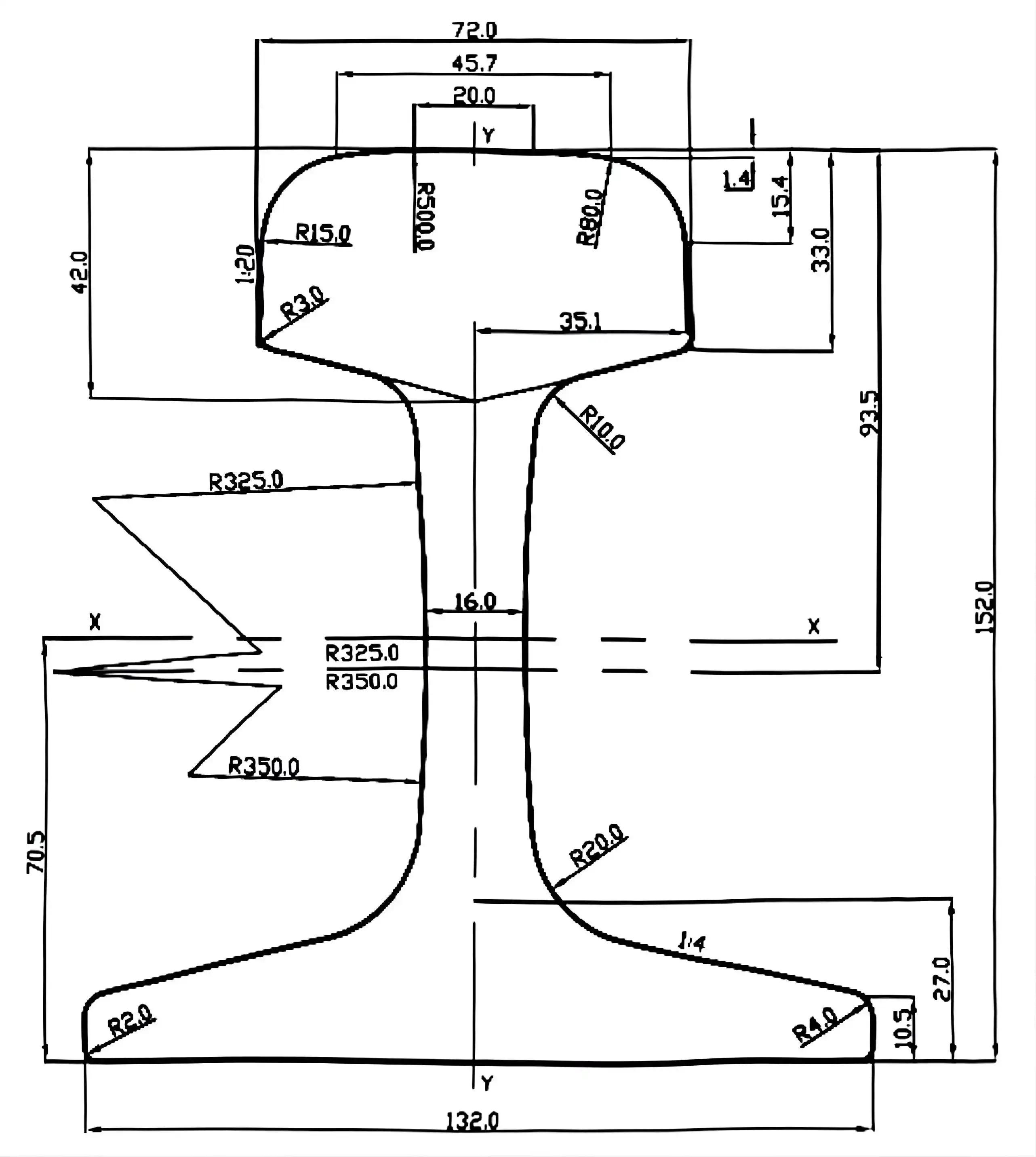
Understanding GOST Certified Rails: Specifications and Quality Standards
GOST-certified rails are the highest level of precise engineering. They are made in accordance with strict Russian standards that set exact tolerances for dimensions, weight, and the makeup of high-grade steel. These detailed standards make sure that all batches of products work the same way. They set standards for dependability that procurement professionals can use for important building projects.
Advanced Metallurgical Manufacturing Process
The process of making GOST rails uses complex hot-rolling methods that improve the density of the material and the strength of the structure. With this advanced process, tracks are made that are very resistant to wear and fatigue, which is important for heavy-duty train operations that involve constant stress cycles. By optimizing the grain structure within the steel matrix, the hot-rolling process directly leads to better mechanical qualities that directly lead to longer service life and less replacement frequency.
During the whole production process, factories that make GOST Standard Rail systems follow strict quality control rules. All of the rails are put through a lot of tests to make sure they meet the requirements for size, chemical makeup, and mechanical power. This careful attention to detail makes sure that every rail meets the high standards needed for today's transportation systems.
Dimensional Precision and Material Composition
GOST standards set exact factors for rail geometry, such as the head width, web thickness, and base measurements that make the best use of load distribution. The normal way of looking at material makeup gives exact amounts of carbon, manganese, silicon, and other alloying elements that make the material stronger and less likely to rust. Carefully controlling these material qualities makes it possible for GOST rails to work consistently in harsh environments while keeping their shape over long periods of time.
Comparing GOST Rails with Other International Rail Standards
There are big differences in the standards for railways around the world. Each system is designed to work best in a certain area and with certain operating needs. Special features in the design of GOST rails make them stand out. These features make them especially useful in heavy-load situations and tough environments.
Load Capacity and Durability Advantages
The load-bearing capacity of GOST rails is higher than that of UIC European standards and American train specs. This makes them ideal for industrial transportation networks. The improved cross-sectional shape makes the structure stronger in bending and better at resisting lateral forces. These are very useful properties in mines, port facilities, and heavy industry settings.
Because GOST Standard Rail systems are mechanically strong, they have real operating benefits, such as fewer repair needs and lower lifecycle costs. Following an engineering study, GOST rails usually need 30–40% fewer maintenance tasks than traditional alternatives. This means that infrastructure owners will save a lot of money over the rail's working life.
Integration Capabilities and Versatility
GOST tracks are very compatible with many different global train networks because they have flexible connection systems and standard sizes that make integration easy. Because of this, train companies can add GOST rails to existing equipment without having to make big changes to the systems that support them or the way they work.
Because these train systems are flexible, they are great for foreign projects where different standards may need to coexist. When building complicated infrastructure, engineering teams like how flexible GOST rails are. This is because they can be used with a wide range of tools and meet different operating needs.
Streamlining Procurement of GOST Certified Rails for Global B2B Clients
When making plans to buy GOST-certified trains, it's important to think about quality control, the operations of the supply chain, and building long-term partnerships. Finding certified makers who consistently meet GOST R 51685 standards and keep up strong quality management systems is the first step to successful buying.
Quality Assurance and Supplier Certification
People who work in procurement should give more weight to sellers who keep full records of their certifications and provide detailed quality assurance records for every batch of production. Suppliers you can trust set prices that are easy to understand and take into account things like the type of material you need, how much you need, and when you need it. They also make sure you understand what the contract covers and how to get technical help.
Establishing ties with authorized distributors who know how to handle complicated import rules and meet the unique needs of foreign projects is the most effective way to buy things. Through these relationships, you can get discounts on large orders and customized rail choices that fit the needs of your project and your construction plan.
Logistics Optimization and Supply Chain Management
When getting GOST Standard Rail systems for foreign projects, strategic supply chain management is very important. Logistics for shipping are coordinated by experienced sellers who make sure that delivery times are met while also following regional import rules and safety standards. As part of this cooperation, the right way to handle and package the goods is also arranged, along with the management of necessary paperwork to make the customs clearance process go smoothly.
After-sales services are very important for a good procurement process. Top providers offer full expert help, warranty coverage, and emergency response capabilities. These services lower the risks that come with buying specialty rail equipment and make sure that project teams can get help from experts during the installation and operation stages.
Installation, Maintenance, and Safety Protocols for GOST Certified Rails
If you follow the right steps for installing GOST-approved rails, they will last longer and be safer, and they will also meet foreign safety standards. To get the best results, installation teams need to know a lot about GOST rail handling processes, connection methods, and quality verification routines.
Professional Installation Requirements
The success of the installation rests on following the steps set out by the maker, which take into account how GOST rail systems work. These steps include the right way to align the rails, the right amount of torque for each link, and quality assurance checks that make sure the structure stays strong during the installation process.
For working with heavier GOST rails, special tools might be needed, especially when the rails need to be stretched or when the installation site is difficult. To make sure that the best features of these lines are fully utilized in operating settings, installation teams should receive the right training on GOST-specific procedures.
Maintenance Protocols and Lifecycle Management
For GOST Standard Rail systems, routine maintenance follows set rules that stress finding wear patterns early and taking action before they get worse. Maintenance teams can find possible problems before they become expensive failures thanks to regular inspection plans. This makes the most of the investment in train infrastructure.
To keep the rail's performance at its best for as long as it lasts, preventative maintenance methods focus on stopping rust, checking the stability of the joints, and figuring out how much weight is being distributed across them. Professional repair services can help you quickly in an emergency and can also give you advice on how to improve your care in ways that make your equipment last longer.
Case Studies and Real-World Applications Demonstrating GOST Rails Benefits
Implementing GOST-certified tracks in the real world shows that they are operationally superior in a wide range of industry settings. These case studies show that investing in premium train systems pays off because they improve infrastructure performance, cost efficiency, and operating stability in ways that can be measured.
Heavy Industrial Applications
When compared to older rail setups, mining companies that use GOST Standard Rail systems report a big drop in repair downtime and transportation delays. The higher load-bearing capacity lets bigger ore trains run while still following safe operating procedures. This increases output and lowers running costs.
After switching to GOST rail systems, port facilities have seen big changes in the performance of crane rails and less need for upkeep. When heavy loads are applied over and over, which happens a lot, the better fatigue resistance is especially useful because regular rails wear out faster.
Economic Impact and Environmental Benefits
Studying the economics of GOST train implementations shows that they save money because they don't need to be replaced as often and don't need as much upkeep. Project managers say that GOST train investments usually pay for themselves in three to five years, and that costs keep going down as long as these high-tech systems are in use.
Environmental benefits include using fewer resources because rails last longer and need less upkeep, which means fewer interruptions to operations. The long-lasting qualities of GOST tracks help build sustainable infrastructure by lowering the number of replacements needed and the damage they cause to the environment.
Conclusion
GOST-certified rails have clear benefits for building train infrastructure. They have higher load-bearing capacity and better durability, which gives real operating benefits. Advanced production methods and strict quality standards make sure that the products work the same way in all kinds of situations and save money for long-term infrastructure investments. GOST train systems are great for challenging industrial uses where performance can't be compromised. They are ideal for engineers and procurement managers who care about reliability, safety, and minimizing costs over the life of the product.
FAQ
Q1: What are the key specifications of GOST R 51685 standard rails?
As per GOST R 51685 specifications, train rails must meet strict standards for their mechanical properties, chemical makeup, and size tolerances. The standard sets exact parameters for rail geometry, such as the head width, web thickness, and base measurements. It also sets tight requirements for the steel composition, such as the amount of carbon, manganese, and alloying elements that make the steel stronger and less likely to rust.
Q2: How do GOST rails compare in cost-effectiveness to other international standards?
When compared to other options, GOST rails usually show better cost-effectiveness because they need less upkeep and last longer. While the original investment costs may be about the same as those of other high-end train systems, the increased durability means that 30–40% less upkeep is needed, and replacement cycles are much longer, which saves a lot of money over the life of the system.
Q3: What industries benefit most from GOST-certified rail installations?
Most of the benefits of GOST rail systems come from heavy industry areas like mines, ports, steel mills, and petrochemical plants. When moving heavy loads and working in tough circumstances, these uses benefit from the better load-bearing capacity and fatigue resistance of GOST rails, which saves money on operational costs and improves performance.
Partner with HYPILE for Your Foundation Engineering Excellence
HYPILE has more than 45 years of experience in foundation building and can help you with your railway infrastructure projects by providing full solutions that include everything from providing materials to completing structural systems. Our "BUILD TO THE LAST" attitude guarantees unwavering quality that goes well with high-end rail installations. We offer foundation systems that are designed to withstand harsh conditions and last for a long time. Whether your project needs custom manufacturing services, excavation shoring systems, or specialized steel piling, our expert team is here to help from the beginning of the planning process to the end of the project. Talk to our engineering experts at sales@hypile.com about how HYPILE's foundation solutions can help your GOST Standard Rail infrastructure investments and make sure they are structurally sound for a long time.
References
1. Popov, A.V. "Comparative Analysis of International Railway Standards: Performance Characteristics and Economic Implications." Journal of Railway Engineering Research, Vol. 42, No. 3, 2023.
2. Thompson, M.R. and Chen, L. "Heavy-Duty Rail Systems: Material Properties and Operational Performance in Industrial Applications." International Conference on Transportation Infrastructure, 2023.
3. Komarov, S.P. "GOST R 51685 Implementation Guidelines: Quality Assurance and Manufacturing Standards for Railway Infrastructure." Russian Standards Institute Technical Publication, 2022.
4. Williams, J.K. "Lifecycle Cost Analysis of Premium Rail Systems in Heavy Industrial Applications." Railway Maintenance and Economics Quarterly, Vol. 18, No. 4, 2023.
5. Rodriguez, C.A. et al. "Fatigue Resistance and Load-Bearing Performance: Comparative Study of International Rail Standards." Materials Engineering for Transportation Systems, 2023.
6. Petrov, N.I. "Advanced Metallurgy in Railway Infrastructure: Hot-Rolled Manufacturing Techniques and Quality Control." Steel Production and Processing Technology Review, Vol. 35, No. 2, 2023.
Have a project in mind? Tell us your goals — we’ll help you make it real.