- English
- French
- German
- Portuguese
- Spanish
- Russian
- Japanese
- Korean
- Arabic
- Greek
- German
- Turkish
- Italian
- Danish
- Romanian
- Indonesian
- Czech
- Afrikaans
- Swedish
- Polish
- Basque
- Catalan
- Esperanto
- Hindi
- Lao
- Albanian
- Amharic
- Armenian
- Azerbaijani
- Belarusian
- Bengali
- Bosnian
- Bulgarian
- Cebuano
- Chichewa
- Corsican
- Croatian
- Dutch
- Estonian
- Filipino
- Finnish
- Frisian
- Galician
- Georgian
- Gujarati
- Haitian
- Hausa
- Hawaiian
- Hebrew
- Hmong
- Hungarian
- Icelandic
- Igbo
- Javanese
- Kannada
- Kazakh
- Khmer
- Kurdish
- Kyrgyz
- Latin
- Latvian
- Lithuanian
- Luxembou..
- Macedonian
- Malagasy
- Malay
- Malayalam
- Maltese
- Maori
- Marathi
- Mongolian
- Burmese
- Nepali
- Norwegian
- Pashto
- Persian
- Punjabi
- Serbian
- Sesotho
- Sinhala
- Slovak
- Slovenian
- Somali
- Samoan
- Scots Gaelic
- Shona
- Sindhi
- Sundanese
- Swahili
- Tajik
- Tamil
- Telugu
- Thai
- Ukrainian
- Urdu
- Uzbek
- Vietnamese
- Welsh
- Xhosa
- Yiddish
- Yoruba
- Zulu
Step-by-Step Installation Guide for Double Wall Casing in Wells
To get the best performance in tough natural conditions, installing Double Wall Casing systems in wells needs careful planning, specialized tools, and technical know-how. This complete guide tells project managers, engineering leaders, and buying workers everything they need to know to make the implementation go smoothly. When compared to traditional single-wall options, double-wall casing technology provides better stability in the shaft, a stronger structure, and more reliable safety against formation collapse. When building teams know the right way to put things, they can keep the best safety standards during the cutting process and get the job done faster.


Introduction to Double Wall Casing and Its Significance in Well Installation
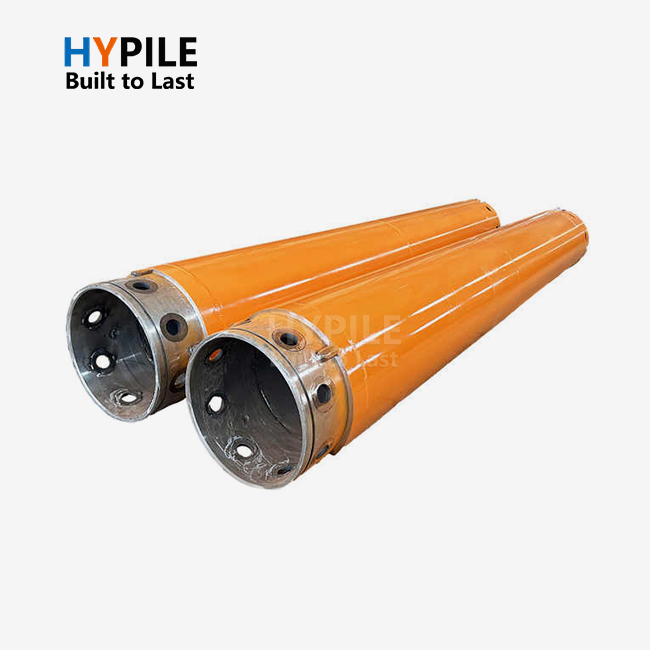
The innovative dual-layer design of Double Wall Casing makes it the most protective and stable well-building technology ever. It is especially useful in difficult drilling settings. The system has a smaller inner tube inside a bigger outer shell. This makes a circular space that lets fluid flow and gives precise control over drilling operations.
Enhanced Structural Performance and Corrosion Resistance
The two-layer design makes the well much more reliable by providing more protection against external factors that often damage single-wall systems. The upper shell supports the structure and protects it from outside forces. The inner tube keeps the cutting tool working and maintains the quality of the sample. This design makes things last longer by spreading mechanical loads across both layers. This stops stress clusters that often cause things to break too soon.
Advanced steel types like Q235B and Q355B offer great resistance to rust and high dynamic strength. This means that these systems can be used in tough chemical conditions and under high pressure. The special finishing processes make them last even longer by keeping them from acidic rainwater and rough dirt conditions that are common in building projects.

| D1/D2 (mm) |
Effective length L(m) | a1 | a2 | t2 | Bolts | |||||
| 1m | 2m | 3m | 4m | 5m | 6m | |||||
| Weight(KG) | mm | mm | mm | NO. | ||||||
| 620/540 | 427 | 765 | 1103 | 1457 | 1804 | 2144 | 12 | 8 | 40 | 8 |
| 750/670 | 515 | 933 | 1351 | 1772 | 2190 | 2614 | 12 | 8 | 40 | 10 |
| 800/720 | 552 | 1006 | 1460 | 1911 | 2370 | 2826 | 12 | 8 | 40 | 10 |
| 880/800 | 607 | 1105 | 1603 | 2098 | 2600 | 3098 | 12 | 8 | 40 | 10 |
| 900/820 | 624 | 1132 | 1640 | 2146 | 2658 | 3168 | 12 | 8 | 40 | 10 |
| 1000/920 | 710 | 1266 | 1823 | 2396 | 2966 | 3534 | 12 | 8 | 40 | 10 |
| 1180/1100 | 875 | 1630 | 2386 | 3143 | 3895 | 4662 | 12 | 8 | 40 | 12 |
| 1200/1120 | 900 | 1670. | 2439 | 3213 | 3983 | 4758 | 12 | 8 | 40 | 12 |
| 1300/1220 | 960 | 1798 | 2635 | 3474 | 4310 | 5114 | 12 | 8 | 40 | 12 |
| 1500/1400 | 1556 | 2760 | 3964 | 5166 | 6368 | 7570 | 20 | 10 | 50 | 12 |
| 1800/1700 | 1880 | 3328 | 4777 | 6225 | 7674 | 8910 | 20 | 10 | 50 | 16 |
| 2000/1880 | 2590 | 4540 | 6490 | 8440 | 10390 | 12350 | 20 | 15 | 60 | 12 |
| 2200/2080 | 2920 | 5220 | 7440 | 9400 | 11600 | 13700 | 20 | 15 | 60 | 12 |
| 2500/2380 | 3260 | 5704 | 8151 | 10598 | 13045 | 15500 | 20 | 15 | 60 | 16 |
Versatile Applications Across Multiple Industries
Well lining systems are used a lot in geothermal energy development, water well building, oil and gas mining, and projects that protect the environment. When building infrastructure, these systems are very helpful for working on deep foundations, where controlling groundwater and making sure boreholes are stable are very important. The technology can handle complicated natural conditions while keeping precise control over dimensions, which is useful for municipal and transportation projects.
Modern case systems are flexible enough that engineers can make solutions that fit the needs of a particular job, the rock conditions, and the performance goals. Because they are so flexible, they are very appealing to EPC firms and big building companies that have to handle a wide range of needs.
Preparing for Double Wall Casing Installation: Essential Materials and Specifications
Successful installation begins with comprehensive double-wall casing material selection and thorough site preparation protocols that ensure optimal system performance throughout the project lifecycle.
Material Standards and Technical Specifications
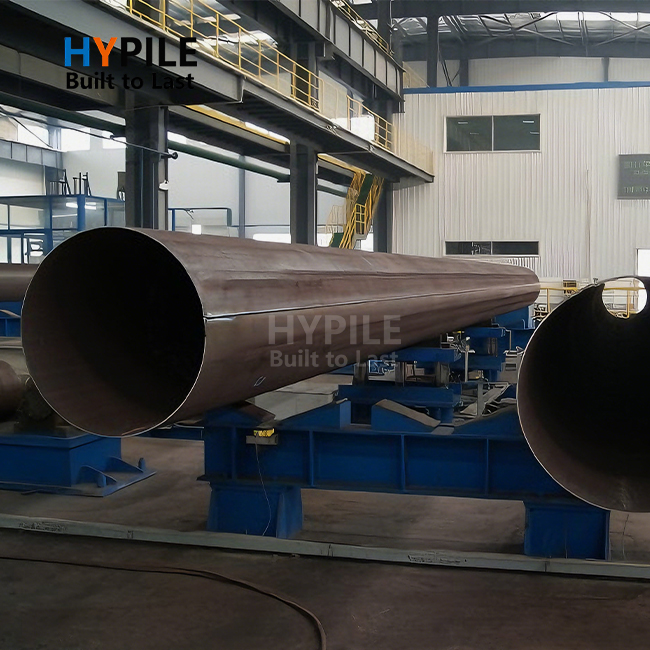
Modern housing systems are made of high-quality steel that meets international standards. For normal uses, Q235B or Q355B steel types are usually used. The wall width standards are set by geotechnical pressure analysis. With these, you can be sure that the walls will last as long as the ground does. Most of the time, the width is between 620 mm and 2500 mm, but different shapes can be made to fit.
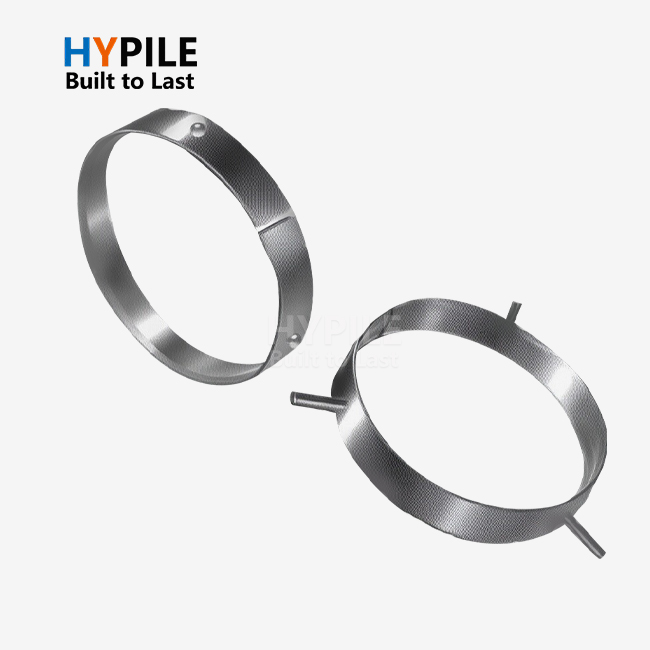
Most straight pieces that work well are between 1 and 6 meters long. They can be quickly made longer with welds or precision flanged joints. Bolted connections with a high level of accuracy ensure concentricity and seal integrity, which are important for keeping the system working well when it is under dynamic loads. The idea of reuse design cuts down on long-term project costs and supports green building methods.
Pre-Installation Site Assessment and Equipment Requirements
Geological studies, groundwater analyses, and estimates of the soil's holding ability are all part of thorough site evaluation processes that help find the right casing specs. Soil pH, salt level, and groundwater chemistry are some of the environmental factors that affect the choice of material and the type of protected layer that is needed.
Specialized moving tools, precise alignment tools, and torque-controlled connection systems are some of the most important pieces of equipment. Fall protection systems, limited space entry equipment, and emergency reaction plans are all examples of safety gear that must meet current OSHA standards. Quality control tools, like alignment gauges, pressure testing equipment, and physical measuring tools, make sure that the fitting is correct and that it works as it should.
Step-by-Step Installation Process of Double Wall Casing in Wells
To get the best results and keep safety standards high throughout the project, the installation process needs to be carried out in a planned way with steps that are carefully ordered.
Site Preparation and Safety Protocol Implementation
Part of getting the spot ready for work is making sure there are safe places to work, controlling traffic, and checking the power lines. Lessons on safety talk about the risks that come with deep digging, like working in loose soil or getting into water that is below the ground, and how to use tools properly. Everyone needs to be given a clear account of what to do in a situation before work begins.
The expert makes sure that the hill slopes and support standards are met so that the excavation work doesn't cave in. There may need to be drainage systems in places with a lot of groundwater to keep the work area dry and make sure the casing is put in properly.
Outer Casing Installation and Positioning
Accurate placement with cranes or other specialized moving equipment is the first step in installing the top case. Alignment checking makes sure that the vertical accuracy is within certain limits, which are usually less than 1% from the real vertical. The steps for connecting things are exactly as the maker says they should be, and measured pressure equipment is used to make sure the joints are strong.
Progressive installation moves forward in planned steps, with regular checks for alignment and measurements at each stage. The right support systems keep the pieces from moving side to side during installation, which is necessary for the system to work at its best.
Inner Tube Assembly and Final Integration
To keep gaps and keep precision parts from getting damaged, installing an inner tube needs to be carefully coordinated. The area between the inner and outer covers must stay free of building materials and other waste that could damage the system's functions.
High-performance seals and sealants made for specific weather circumstances are used in sealing processes for Double Wall Casing. As needed, pressure testing is part of connection proof to make sure the connection works without leaks in real life. Final quality checks make sure that the measurements are correct, that the connections are solid, and that the work meets the project requirements.
Troubleshooting and Maintenance Tips for Double Wall Casing
Proactive maintenance strategies and systematic troubleshooting approaches ensure long-term system reliability and optimal performance throughout the operational lifecycle.
Common Installation Challenges and Solutions
Alignment difficulties often result from inadequate site preparation or improper lifting techniques. Solutions include enhanced survey control, improved positioning equipment, and revised installation sequences to accommodate site constraints. Connection problems typically stem from contamination or improper torque application, requiring thorough cleaning procedures and calibrated installation tools.
Geological complications such as unexpected hard layers or unstable formations may necessitate modified installation techniques or alternative casing configurations. Technical support from experienced suppliers provides valuable guidance for addressing unique site challenges while maintaining project schedules.
Routine Inspection and Preventive Maintenance
Regular inspection protocols include visual examination of exposed components, dimensional verification, and connection integrity assessment. Corrosion monitoring programs track protective coating performance and identify areas requiring attention before significant degradation occurs.
Maintenance activities focus on preserving connection integrity, maintaining protective coatings, and addressing minor issues before they develop into major problems. Documentation systems track inspection results and maintenance activities, supporting warranty claims and long-term asset management decisions.
Replacement Criteria and Component Lifecycle Management
Replacement decisions consider multiple factors, including structural integrity, corrosion extent, and operational requirements. Economic analysis comparing repair costs with replacement benefits guides asset management decisions, particularly for aging infrastructure projects.
Component standardization facilitates inventory management and reduces procurement lead times for maintenance activities. Supplier partnerships provide technical support and component availability assurance, critical factors for maintaining operational continuity in demanding applications.
Procurement and Supplier Considerations for Double Wall Casing
Strategic sourcing decisions significantly impact project success, requiring careful evaluation of supplier capabilities, quality systems, double-wall casing, and long-term support commitments.
Supplier Evaluation and Quality Assurance
A comprehensive supplier assessment examines manufacturing capabilities, quality certification status, and technical support resources. ISO certification, API compliance, and relevant industry approvals demonstrate commitment to quality standards and regulatory compliance. Manufacturing facility audits verify production capabilities and quality control systems essential for consistent product performance.
Reference projects and case studies provide insights into supplier performance under similar conditions, helping procurement teams assess technical competence and project execution capabilities. Financial stability analysis ensures supplier viability for long-term support commitments and warranty obligations.
Cost Analysis and Procurement Optimization
Pricing structures vary significantly among suppliers, requiring detailed analysis of initial costs, shipping expenses, and total project economics. Bulk order considerations include quantity discounts, delivery scheduling flexibility, and inventory management support from suppliers.
Lead time analysis balances cost optimization with project schedule requirements, identifying opportunities for early procurement and staged delivery to support construction sequences. Currency fluctuation protection and contract terms minimize financial risks associated with international procurement activities.
Customization Options and Technical Support
Customization capabilities enable optimization for specific project requirements, geological conditions, and performance objectives. Engineering support during design phases ensures proper specification development and compatibility with existing systems or future expansion plans.
Technical training programs for installation crews enhance project success rates and reduce installation risks. Ongoing technical support throughout project execution provides valuable problem-solving resources when unexpected conditions arise.
Conclusion
Successful double-wall casing installation requires comprehensive planning, quality materials, and systematic execution of proven procedures. The dual-layer design provides superior performance in challenging geological conditions while offering long-term reliability and operational efficiency. Proper supplier selection, thorough site preparation, and adherence to installation best practices ensure optimal project outcomes. The investment in quality casing systems delivers substantial returns through reduced maintenance requirements, extended service life, and enhanced operational reliability. Project teams equipped with this knowledge can confidently specify and install these advanced systems, contributing to successful project completion and long-term asset performance.
FAQ
1. What materials are used in double-wall casing construction?
Standard materials include Q235B and Q355B steel grades, selected for their excellent strength-to-weight ratio and corrosion resistance properties. Advanced protective coatings enhance durability in aggressive environments, while high-precision manufacturing ensures consistent dimensional accuracy and connection reliability.
2. How does geological condition affect installation procedures?
Soil conditions significantly influence installation techniques, with soft formations requiring different approaches than hard rock environments. Groundwater levels affect dewatering requirements and installation sequencing, while soil chemistry determines protective coating specifications and material compatibility requirements.
3. What quality control measures ensure proper installation?
Comprehensive quality programs include dimensional verification, alignment monitoring, and connection torque verification throughout the installation process. Pressure testing confirms seal integrity where applicable, while documentation systems track compliance with project specifications and industry standards.
4. What are typical lead times for custom casing orders?
Standard lead times range from 4 to 8 weeks, depending on size, quantity, and customization requirements. Complex projects may require extended schedules for engineering analysis and specialized manufacturing processes. Early procurement planning helps optimize delivery schedules and project coordination.
5. How do installation costs compare with long-term benefits?
While initial costs exceed single-wall alternatives, the enhanced durability, reduced maintenance requirements, and extended service life provide substantial long-term value. Total lifecycle cost analysis typically demonstrates favorable economics for demanding applications and challenging environmental conditions.
Partner with HYPILE for Superior Double Wall Casing Solutions
HYPILE delivers comprehensive casing solutions backed by 45+ years of engineering expertise and our "BUILD TO THE LAST" quality philosophy. As a leading Double Wall Casing manufacturer, we provide custom-engineered systems from 620mm to 2500mm diameter with precision bolted connections and superior Q235B/Q355B steel construction. Our integrated approach encompasses material supply, protective coating, precision fabrication, and complete engineering support for infrastructure, marine, and foundation projects. Contact our technical team at sales@hypile.com to discuss your project requirements and discover how our proven casing systems can optimize your construction efficiency while ensuring long-term structural integrity.
References
1. Smith, J.R. "Advanced Well Casing Technologies for Infrastructure Applications." Foundation Engineering Quarterly, Vol. 45, No. 3, 2023.
2. Chen, L.K. "Dual-Layer Casing Systems: Performance Analysis and Installation Best Practices." International Journal of Drilling Technology, Vol. 28, No. 2, 2023.
3. Rodriguez, M.A. "Geological Considerations for Deep Foundation Casing Systems." Geotechnical Engineering Review, Vol. 52, No. 4, 2023.
4. Thompson, D.B. "Quality Control Protocols for Steel Casing Installation in Complex Environments." Construction Materials and Methods, Vol. 31, No. 1, 2024.
5. Williams, K.P. "Economic Analysis of Double Wall Casing Systems in Municipal Infrastructure Projects." Public Works Engineering, Vol. 19, No. 7, 2023.
6. Anderson, R.T. "Safety Protocols and Risk Management in Deep Well Construction." Industrial Safety Quarterly, Vol. 42, No. 6, 2023.
Have a project in mind? Tell us your goals — we’ll help you make it real.